Chain Link Fence Making Machine Price
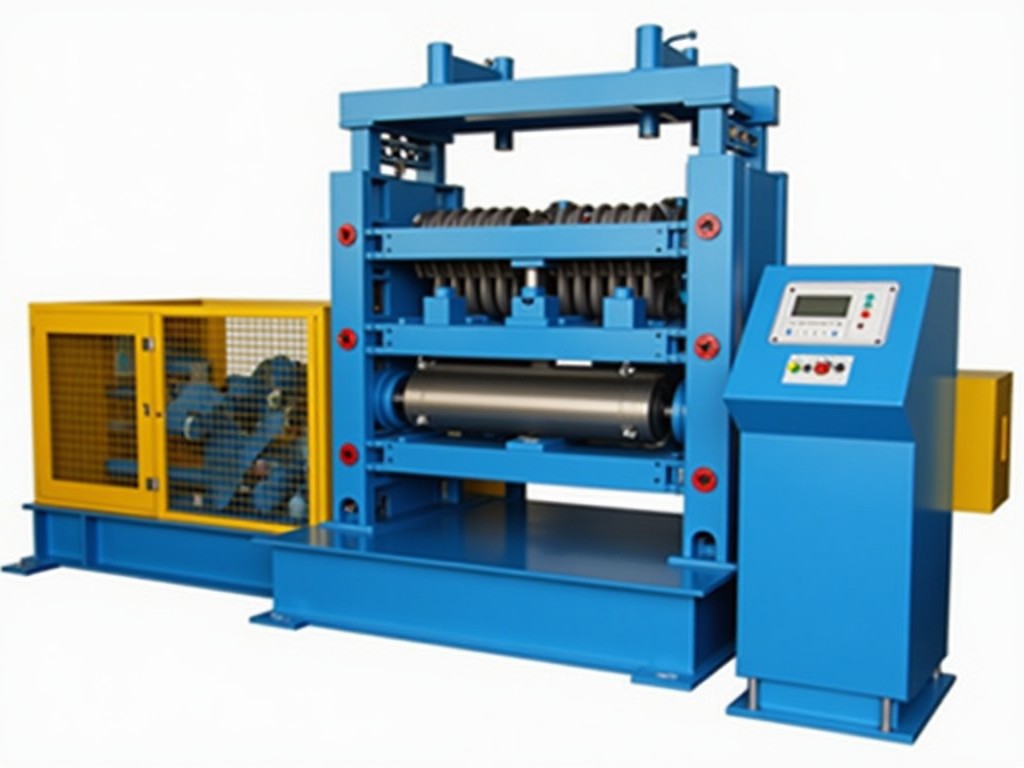
The price of a chain link fence making machine depends on technical specifications that directly affect production efficiency, material compatibility, and long-term operational costs. Buyers should
Chain Link Fence Making Machine Price
The price of a chain link fence making machine depends on technical specifications that directly affect production efficiency, material compatibility, and long-term operational costs. Buyers should evaluate machine capabilities beyond initial cost to assess total value.
Key factors influencing price include wire gauge range, mesh opening size, production speed, automation level, and required auxiliary equipment such as decoilers, tensioners, and cut-off mechanisms. Machines handling heavier gauges or wider mesh configurations typically command higher prices due to increased structural demands on frames, drives, and cutting systems.
Entry-level semi-automatic models suitable for small contractors or seasonal production generally start in the mid-five-figure USD range. Fully automated lines with programmable logic controllers (PLCs), synchronized feeding, and integrated packaging systems for high-volume industrial fencing suppliers can exceed six figures, reflecting investments in precision mechanics, electrical controls, and safety interlocks.
Technical Specifications Affecting Cost
Production capacity is a primary cost driver. Machines rated for 20–30 meters per minute of finished fence require robust motors, precision gearboxes, and durable forming rollers to maintain consistent mesh tension and dimensional accuracy at speed.
Wire feed systems vary significantly in price based on sophistication. Basic models use manual spool changes with mechanical brakes, while advanced versions feature motorized decoilers with dancer arm tension control, automatic splice detection, and programmable feed rates to minimize scrap during roll changes.
Cutting mechanisms also impact cost. Rotary shear systems offer clean, burr-free cuts at high speeds but require frequent blade maintenance. Pneumatic or hydraulic guillotine cutters provide lower initial cost but may produce slight deformation in galvanized or PVC-coated wire, affecting downstream coating integrity.
Automation and Control Systems
Control architecture influences both price and usability. Relay-based logic systems are less expensive upfront but offer limited flexibility for recipe changes or diagnostic feedback. PLC-based systems with touchscreen interfaces allow operators to store multiple mesh profiles, adjust overlap percentages, and monitor real-time production metrics such as wire consumption and cut count.
Safety integration adds to cost but is essential for compliance. Machines meeting ISO 13849 or ANSI B11.0 standards include light curtains, emergency stop circuits, and guarded access points. These features prevent accidents during operation and reduce liability for industrial buyers.
Data logging capabilities, while optional, increase value for quality-conscious manufacturers. Machines that log production parameters per roll enable traceability for customers requiring certification of material usage, tension consistency, or adherence to ASTM A392 or F1664 standards for zinc-coated or polymer-coated fence fabric.
Price Comparison by Configuration
| Configuration | Typical Wire Gauge Range | Production Speed (m/min) | Price Range (USD) |
|---|---|---|---|
| Semi-automatic, manual decoiler, mechanical brake | 1.6–2.5 mm (9–12 AWG) | 8–15 | $18,000–$28,000 |
| Semi-automatic, powered decoiler, dancer arm tension | 1.2–3.0 mm (8–16 AWG) | 15–25 | $28,000–$42,000 |
| Fully automatic, PLC-controlled, integrated cut-off | 1.0–4.0 mm (6–18 AWG) | 25–40 | $45,000–$75,000 |
| High-speed line with accumulator, dual cut-off, packaging | 1.0–4.0 mm (6–18 AWG) | 40–60 | $80,000–$120,000+ |
*Prices are indicative and vary based on regional specifications, optional accessories, and supplier scope. Final quotation requires technical consultation.
Long-Term Value Considerations
Operating costs over the machine’s lifespan often exceed the initial purchase price. Energy consumption of drive motors, maintenance frequency of forming rollers and cutting blades, and wire yield efficiency all affect total cost of ownership. Machines with precision-ground rollers and adjustable gap settings reduce wire deformation and scrap rates, improving material utilization.
Availability of spare parts and technical support influences uptime. Suppliers offering standardized components (e.g., common bearings, gears, or PLC modules) reduce downtime compared to those using proprietary or custom-fabricated parts. Buyers should verify lead times for critical wear items such as forming dies and cutter blades.
Resale value is higher for machines with documented maintenance histories, compatible control systems (e.g., Siemens or Rockwell PLCs), and adaptability to multiple wire types. Machines locked into proprietary software or single-gauge configurations may depreciate faster due to limited market appeal.
For detailed technical evaluation and a formal quotation based on your specific wire gauge, mesh size, and production volume requirements, contact our engineering team.
Request Technical Consultation
Product Categories


Send Inquiry
If you are interested in our products, leave your information here and we will be in touch shortly.