Chain Link Wire Mesh Price And Source Factory
Chain link wire mesh, also known as diamond mesh or cyclone fencing, is a woven steel product formed by interlocking galvanized or coated steel wires into a uniform hexagonal pattern. Its structural
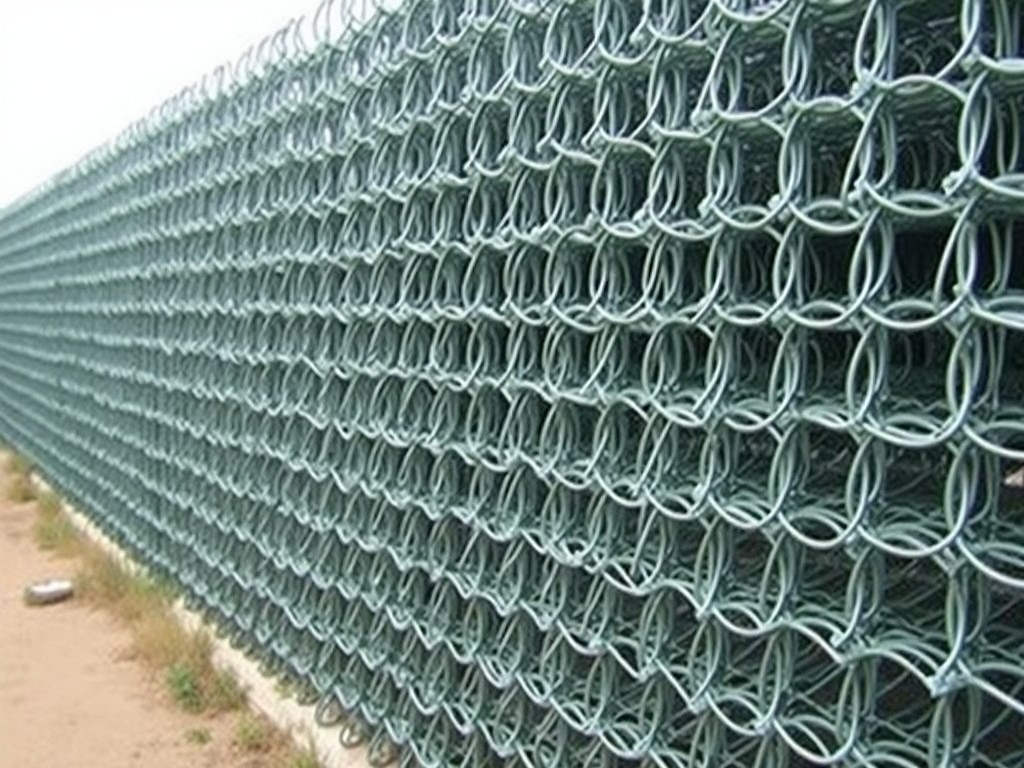
Chain Link Wire Mesh Price and Source Factory
Chain link wire mesh, also known as diamond mesh or cyclone fencing, is a woven steel product formed by interlocking galvanized or coated steel wires into a uniform hexagonal pattern. Its structural integrity derives from the continuous helix formed by each wire, creating a flexible yet load-distributing mesh suitable for perimeter security, animal containment, and industrial partitioning. Unlike welded mesh, chain link does not rely on point welds, eliminating weak points prone to corrosion-induced failure. The open area ratio typically ranges from 70% to 85%, depending on mesh size and wire diameter, providing visibility while maintaining barrier effectiveness.
Mesh specifications are defined by three primary parameters: wire gauge ( diameter ), mesh opening size ( distance between parallel wires ), and coating type. Wire diameters commonly range from 2.0mm to 4.0mm for industrial applications, with 2.5mm and 3.0mm being prevalent for general security fencing. Mesh openings vary from 50mm to 100mm, where smaller openings increase climb resistance and material usage. Coating options include hot-dip galvanized (HDG) zinc, zinc-aluminum alloy (Galfan), and PVC or PE polymer over galvanized cores, each affecting service life and environmental resistance. The weight per square meter increases non-linearly with wire diameter; for example, a 3.0mm wire with 50mm opening weighs approximately 3.8 kg/m², while a 4.0mm wire with the same opening reaches 6.7 kg/m².
Pricing for chain link wire mesh is influenced by raw material costs, particularly zinc and steel scrap indices, which fluctuate quarterly. Base prices are typically quoted per kilogram of finished mesh or per square meter, depending on customer preference. Additional cost factors include coating thickness (measured in grams per square meter for zinc), roll width (standard widths: 0.9m, 1.2m, 1.5m, 1.8m, 2.0m, 2.4m), roll length (commonly 10m to 50m), and edge finish (knuckled or twisted). A standard 2.5mm HDG mesh with 50mm opening, 1.2m width, and 25m length typically falls within a price range of $2.80 to $3.50 per square meter, excluding freight and duties. Custom specifications such as non-standard widths, colored PVC coating, or reinforced selvages incur additional tooling or setup charges.
Sourcing directly from a manufacturer eliminates intermediary markups and allows technical collaboration on specifications. Factories with in-house wire drawing and galvanizing lines maintain tighter control over raw material quality and coating adhesion. Vertical integration reduces lead times by avoiding external processing delays. When evaluating a source factory, verify capabilities in wire tensile strength testing (typically 350–550 MPa for low-carbon steel), zinc coating uniformity (per ASTM A123 or EN 10244-2), and mesh width consistency (tolerance usually ±3mm). Factories offering mill test certificates (MTC) for each batch demonstrate traceability, which is critical for infrastructure projects requiring compliance documentation.
| Specification | Typical Range | Impact on Price/Performance |
|---|---|---|
| Wire Diameter | 2.0mm – 4.0mm | Price increases ~25% per 0.5mm step; strength and corrosion resistance improve linearly |
| Mesh Opening | 50mm – 100mm | Smaller openings increase material cost by 15–30%; enhance anti-climb properties |
| Coating Type | HDG, Galfan, PVC/PE | HDG: 60–120 g/m² zinc; Galfan: better cut-edge protection; PVC: adds UV/color stability, +20–40% cost |
| Roll Width | 0.9m – 2.4m | Non-standard widths may require slitting; standard widths optimize material yield |
| Edge Finish | Knuckled or Twisted | Knuckled: safer handling, lower cost; Twisted: increased rigidity, +5–10% cost |
Quality assurance in chain link manufacturing begins with raw material inspection. Incoming steel wire is tested for elongation, tensile strength, and coating adhesion before weaving. During production, mesh width is monitored via laser sensors to maintain dimensional consistency. Post-weaving, rolls undergo tension testing to verify uniform elasticity and resistance to sagging. Coating weight is verified using magnetic induction or gravimetric methods, with samples taken from each roll. For PVC-coated mesh, adhesion and flexibility tests ensure the polymer remains bonded under thermal cycling. Factories adhering to ISO 9001 typically maintain batch records for at least three years, enabling root cause analysis if field performance deviates.
Applications of chain link wire mesh extend beyond perimeter fencing. In mining, it serves as rockfall protection on slopes, where energy absorption and flexibility prevent rigid fracture. In agriculture, it forms poultry enclosures and crop protection barriers, with smaller mesh sizes (50mm) deterring rodent ingress. Industrial facilities use it for machine guarding, warehouse partitioning, and conveyor belt side shields, where visibility and airflow are essential. The mesh’s ability to conform to uneven terrain makes it suitable for temporary site enclosure during construction. Its recyclability—steel and zinc are both recoverable—supports circular economy goals in infrastructure projects.
To obtain an accurate quotation, provide the following technical details: required wire diameter, mesh opening size, coating preference (HDZ, Galfan, or polymer type/color), roll dimensions (width and length), edge finish, and quantity. Specify if the mesh will be installed above ground, buried, or submerged, as this affects coating selection. For projects requiring certification, indicate whether ASTM, EN, or other standards must be met. Factories may request a sketch or layout drawing to optimize roll lengths and minimize scrap. Lead times typically range from 10 to 25 days for standard specifications, extending to 4–6 weeks for custom coatings or non-standard widths.
Ready to discuss your chain link wire mesh requirements?
Provide your specifications for a detailed, no-obligation quotation. Our technical team will review mesh dimensions, coating needs, and delivery logistics to ensure accurate pricing and feasibility.
Product Categories


Send Inquiry
If you are interested in our products, leave your information here and we will be in touch shortly.