China 4X8 Perforated Metal Sheet Panels
Perforated metal sheets measuring 4 feet by 8 feet (1220 mm × 2440 mm) are standardized panel dimensions widely used in industrial and architectural applications. These panels are manufactured from
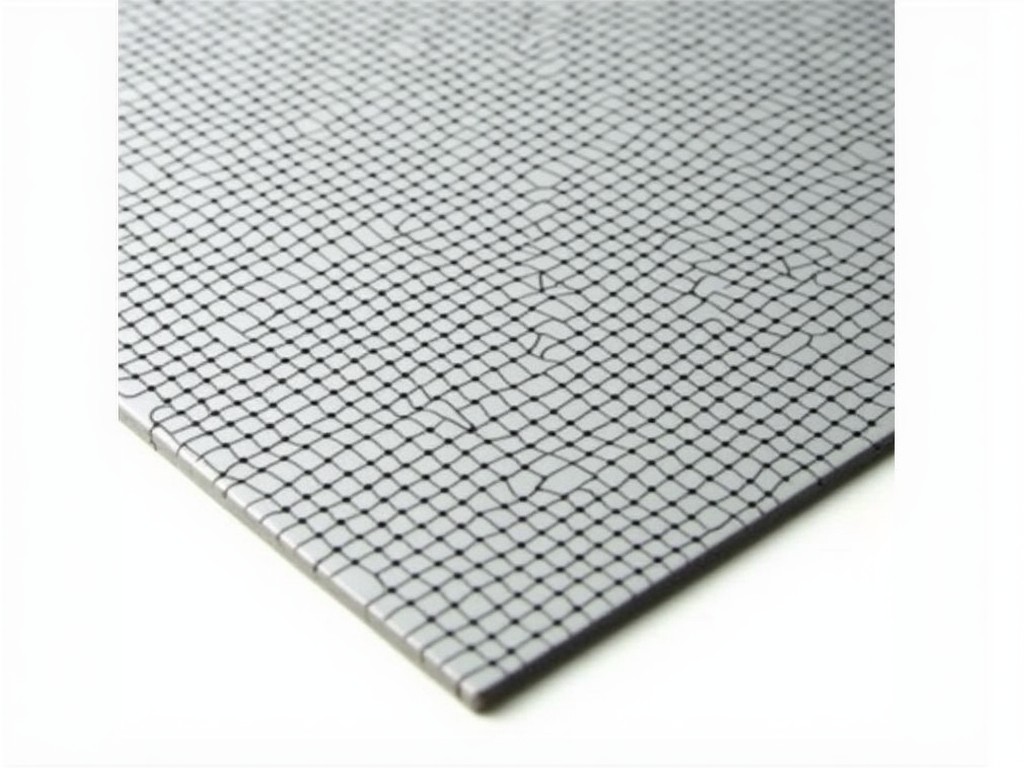
China 4x8 Perforated Metal Sheet Panels
Perforated metal sheets measuring 4 feet by 8 feet (1220 mm × 2440 mm) are standardized panel dimensions widely used in industrial and architectural applications. These panels are manufactured from coil or plate stock through precision punching processes that create repeating hole patterns while maintaining structural integrity. The 4x8 format optimizes material yield, handling efficiency, and compatibility with common framing systems in construction, HVAC, and equipment manufacturing.
Standard perforated panels in this size range typically feature hole diameters from 0.8 mm to 12.5 mm, with open area percentages ranging from 15% to 60% depending on pattern and spacing. Material thickness options commonly span 0.5 mm to 6.0 mm, selected based on load requirements, corrosion resistance needs, and fabrication methods. Panels are supplied flat or with minor curvature from coil processing, and edges may be left raw, deburred, or finished with hemmed or flanged treatments per specification.
Material Selection and Properties
Material choice directly influences perforation feasibility, long-term performance, and suitability for environmental conditions. Common base materials include cold-rolled steel (SPCC/SPHC), hot-rolled steel (Q235), galvanized steel (SGCC/Z275), stainless steel (304/316), and aluminum alloys (3003/5052). Each material exhibits distinct characteristics affecting punchability, edge quality, and resistance to deformation during perforation.
For instance, stainless steel 304 requires higher punch tonnage than mild steel due to its work-hardening properties, often necessitating slower press speeds or lubrication to prevent tool wear and burr formation. Aluminum alloys, while easier to perforate, demand precise die clearance to avoid tearing or excessive edge roll. Galvanized coatings may experience localized zinc loss at hole edges, requiring post-perforation passivation or sealing in corrosive environments.
Material thickness must align with hole size and pattern density to prevent web tearing between holes or excessive distortion. As a general guideline, the minimum practical thickness is approximately 25% of the hole diameter for round perforations in steel; thinner materials risk deformation, while thicker materials increase tooling costs and may require multi-stage punching. Selection balances manufacturability, mechanical performance, and lifecycle cost.
Perforation Patterns and Open Area
The arrangement, shape, and spacing of perforations define functional properties such as airflow, light transmission, sound absorption, and visual screening. Standard patterns include round, square, slot, hexagonal, and decorative designs, each governed by geometric parameters: hole diameter (or width), pitch (center-to-center distance), and stagger angle. These variables directly calculate open area percentage, a critical metric for performance prediction.
For example, a 60-degree staggered round hole pattern with 3 mm diameter holes on 5 mm pitch yields approximately 38% open area, suitable for moderate airflow applications like equipment guards or speaker grilles. In contrast, a straight-row square hole pattern with 5 mm holes on 8 mm pitch delivers 39% open area but offers different directional flow characteristics and higher lateral strength. Slot perforations (e.g., 3 mm × 15 mm slots on 6 mm pitch) can achieve up to 50% open area with enhanced sound-dampening properties due to edge diffraction effects.
Pattern selection also influences structural behavior. Staggered arrangements generally provide more uniform load distribution and higher buckling resistance compared to aligned rows. Designers must evaluate trade-offs between open area, structural rigidity, and fabrication constraints—such as minimum pitch limits (typically 1.2× hole diameter to prevent web failure) and edge margin requirements (usually ≥1.5× hole diameter from panel edge to avoid cracking).
Typical Industrial Applications
Perforated 4x8 metal panels serve functional roles where controlled passage of air, light, sound, or particles is required alongside physical protection or support. In HVAC systems, they function as diffuser faces, return air grilles, and duct liners—where open area and pattern symmetry ensure even airflow distribution without excessive pressure drop. The 4x8 size aligns with standard duct widths and plenum dimensions, reducing cutting waste during installation.
In industrial machinery, these panels act as guards for moving parts, allowing visual inspection and heat dissipation while preventing contact with hazards. Hole patterns are often customized to balance visibility (requiring smaller holes or higher density) with airflow needs (favoring larger openings). For example, CNC machine enclosures frequently use 2 mm round holes on 4 mm pitch (≈23% open area) in 1.2 mm steel to contain chips while maintaining motor cooling.
Architectural applications include sunshades, facade cladding, and interior partitions, where perforation patterns create controlled light filtration and aesthetic depth. Here, visual appeal often drives pattern choice—such as architectural-grade slots or custom logos—while material selection prioritizes weather resistance (e.g., 316 stainless steel or powder-coated aluminum). Acoustic panels in auditoriums or studios utilize perforated backing over absorbent cores, with hole size and spacing tuned to target frequency ranges via Helmholtz resonance principles.
Manufacturing Considerations
Producing 4x8 perforated panels involves trade-offs between coil-fed high-speed stamping and sheet-fed press operations. Coil processing enables continuous punching of full-length sheets followed by shearing to 4x8 dimensions, ideal for high-volume orders of consistent patterns. However, coil set (longitudinal curvature) and edge waviness may require flattening post-perforation, especially in thicker gauges (>2.0 mm) or high-strength materials.
Sheet-fed processing, while slower, eliminates coil-related distortions and allows greater flexibility for varying patterns, thicknesses, or material changes between runs. It is preferred for prototyping, short runs, or panels requiring secondary operations like bending, welding, or edge finishing after perforation. Tooling costs are similar between methods, but coil feeding demands higher tension control and precision looping to maintain registration accuracy over 2440 mm lengths.
Post-perforation treatments address burrs, stress relief, and surface quality. Deburring methods include tumbling, brushing, or electrochemical processes, selected based on material and hole geometry. Stress-relief annealing may be specified for stainless steel after heavy perforation to reduce spring-back during subsequent forming. Surface treatments—such as galvanizing, powder coating, or anodizing—are often applied post-perforation to ensure complete coverage of hole edges, though masking or selective plating may be used when only one side requires protection.
Standard Specifications Table
| Parameter | Typical Range | Notes |
|---|---|---|
| Panel Size | 1220 mm × 2440 mm (4 ft × 8 ft) | Standard nominal dimension; actual cut size may vary ±3 mm |
| Material Thickness | 0.5 mm – 6.0 mm | Dependent on material grade and hole size; thicker gauges available for structural use |
| Hole Diameter (Round) | 0.8 mm – 12.5 mm | Smaller or larger sizes possible with specialized tooling |
| Open Area Percentage | 15% – 60% | Calculated from hole size, pitch, and pattern; affects airflow and light transmission |
| Common Materials | SPCC, Q235, SGCC, SS304, SS316, 3003-Al, 5052-Al | Material choice affects perforation ease, corrosion resistance, and cost |
| Edge Treatment | Raw, deburred, hemmed, flanged | Selected per safety, handling, or assembly requirements |
Quality Control and Inspection
Dimensional accuracy and hole consistency are critical for interchangeability and performance. Inspection typically verifies panel dimensions (±1.5 mm tolerance on length/width), squareness (<2 mm diagonal difference), and hole registration. Hole diameter is measured at multiple locations using gauges or optical systems, with tolerances commonly ±0.1 mm for precision applications or ±0.2 mm for general industrial use. Open area variation is derived from hole size and pitch measurements.
Edge quality is assessed for burr height and roll, particularly important in safety guards or food-grade equipment where loose particles pose contamination risks. Burr limits are often specified (e.g., <0.05 mm height) and verified via profilometry or tactile testing. Surface defects such as scratches, dents, or coating imperfections are inspected under standardized lighting, with acceptance criteria based on visibility at 500 mm distance under 30° viewing angle.
Material verification includes mill test certificates for chemical composition and mechanical properties. For corrosion-resistant grades, salt spray testing (per ASTM B117) may be conducted on sample panels to validate coating adhesion and edge protection. Flatness is measured using a straightedge and feeler gauge, with typical tolerances of 3 mm/m for architectural panels and 5 mm/m for industrial guards, depending on end-use rigidity requirements.
Packaging and Logistics
Proper packaging prevents deformation, surface damage, and corrosion during transit and storage. Panels are typically stacked horizontally on pallets with interleaving materials such as kraft paper, plastic film, or corrugated cardboard between sheets to prevent abrasion. Edge protectors (angular or U-shaped) are applied to vulnerable corners and edges, especially for pre-finished or coated panels. Bundles are secured with steel or polyester strapping, and moisture-barrier wrap is used for overseas shipments.
For thin-gauge materials (<1.0 mm) or highly decorative finishes, vertical storage in A-frame racks may be recommended to minimize bending stress. Each pallet is labeled with material grade, dimensions, pattern specification, quantity, and heat/lot number for traceability. Weight calculations account for material density and open area—e.g., a 2.0 mm thick steel panel with 40% open area weighs approximately 12.8 kg/m², allowing accurate load planning for truck or container shipment.
Export packaging adheres to ISPM 15 standards for wood pallets when required, and desiccant packs are included in humid climates to mitigate condensation-induced staining. Handling instructions (e.g., “Keep Dry,” “Do Not Stack Flat Items on Top”) are printed on external packaging. Lead times depend on material availability, tooling readiness, and order volume, typically ranging from 10–25 days for standard specifications after drawing approval and deposit.
Get a Quote for Custom Perforated Panels
To receive a detailed quotation for 4x8 perforated metal sheets tailored to your project, provide the following: base material and grade, thickness, hole size and pattern (or open area target), edge treatment, surface finish, and required quantity. Indicate any secondary operations such as bending, notching, or welding preparation. Include delivery destination and timing requirements for accurate logistics planning.
Product Categories


Send Inquiry
If you are interested in our products, leave your information here and we will be in touch shortly.