China 9 Gauge Expanded Metal Sheet Thickness
Expanded metal sheet thickness is a critical parameter that directly influences structural performance, open area, and manufacturing cost. For 9 gauge material, the nominal thickness is 0.148 inches
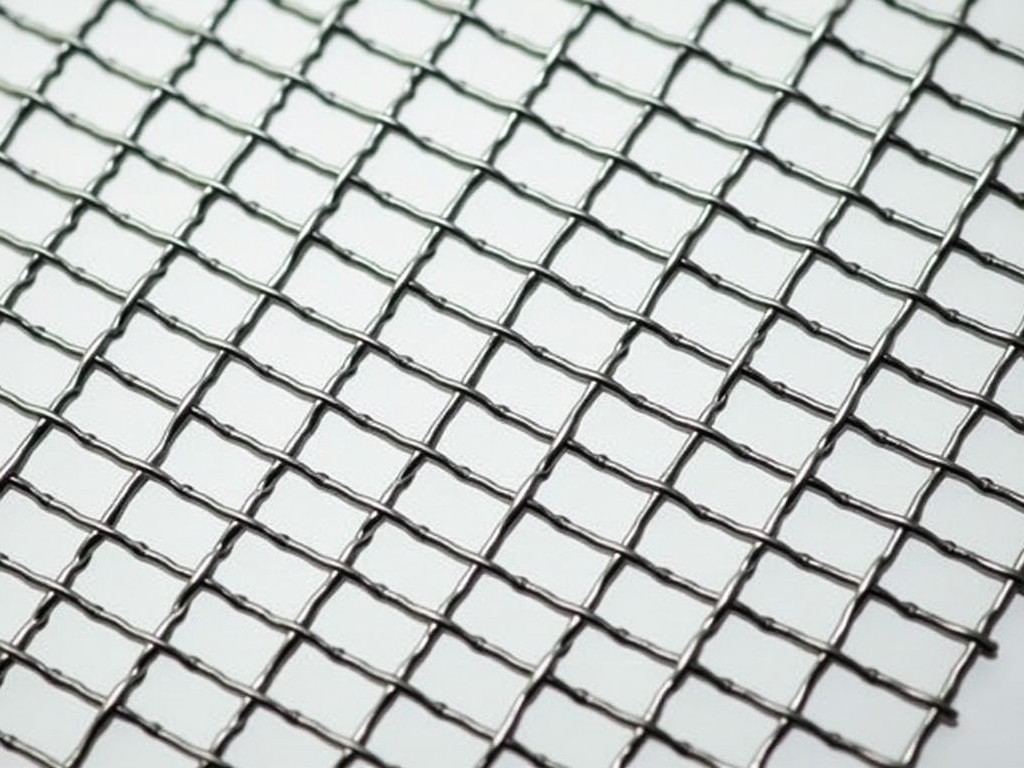
China 9 Gauge Expanded Metal Sheet Thickness
Expanded metal sheet thickness is a critical parameter that directly influences structural performance, open area, and manufacturing cost. For 9 gauge material, the nominal thickness is 0.148 inches (3.76 mm) based on the American Wire Gauge standard. This dimension represents the base metal thickness before the expanding process, which simultaneously stretches and slits the sheet to create the diamond-shaped openings. The final product maintains this base thickness throughout the strands and bonds, providing uniform mechanical properties across the sheet surface. Understanding this specification is essential for engineers calculating load-bearing capacity, deflection limits, or weight per square foot in industrial applications.
The expanding process alters the effective thickness perception but does not reduce the actual material cross-section. When measured perpendicular to the plane of the sheet, the thickness remains consistent with the original 9 gauge blank. However, due to the angled nature of the strands, the apparent thickness when viewing the sheet edge-on may vary slightly depending on the strand width and bond geometry. Manufacturers typically specify thickness as the base metal thickness for consistency in engineering calculations. Tolerances for 9 gauge expanded metal generally follow ASTM standards, with acceptable variation ranging from ±0.005 inches for thickness, ensuring predictable performance in structural roles.
Material selection significantly impacts how thickness translates to real-world performance. Carbon steel is the most common base material for 9 gauge expanded metal, offering a balance of strength, ductility, and cost. Stainless steel grades (such as 304 or 316) are available for corrosive environments, maintaining the same 0.148-inch thickness while providing enhanced resistance to oxidation. Aluminum options exist but require careful consideration—due to its lower density, an aluminum sheet of the same gauge would have different mechanical properties despite identical nominal thickness. Engineers must verify material grade alongside thickness to ensure compliance with project specifications.
| Property | Typical Value (9 Gauge) | Unit |
|---|---|---|
| Base Metal Thickness | 0.148 | inches |
| Base Metal Thickness | 3.76 | mm |
| Thickness Tolerance | ±0.005 | inches |
| Strand Width (Typical) | 0.100–0.150 | inches |
| Bond Thickness | Equal to base thickness | inches |
Open area percentage is inversely related to strand thickness and width—thicker strands reduce the open area for a given expanded pattern. For 9 gauge expanded metal, common configurations range from 30% to 60% open area depending on the diamond size and strand count per inch. A standard #9 gauge 1/2-inch #16 expanded metal (indicating 1/2-inch nominal diamond width and 16 strands per foot) typically yields approximately 45% open area. This balance makes it suitable for applications requiring both visibility and light structural support, such as machine guards, ventilation panels, or safety barriers where direct impact loads are moderate.
Load-bearing capacity depends on thickness, material grade, opening size, and support conditions. A 9 gauge carbon steel expanded metal sheet with 1/2-inch openings can uniformly support approximately 50–70 psf (pounds per square foot) when simply supported on all four edges over a 24-inch span, depending on the exact pattern and alloy. Deflection under load must be evaluated using the effective moment of inertia of the expanded section, which accounts for the discontinuous nature of the material. Finite element analysis or manufacturer-provided load tables are recommended for critical structural applications rather than relying solely on flat sheet calculations.
Weight per square foot is a direct function of thickness and material density. For 9 gauge carbon steel (density ~0.284 lb/in³), the theoretical weight is approximately 2.15 lbs/ft² before expanding. After expanding, the actual weight remains nearly identical since no material is removed—only redistributed. Practical weights range from 2.10 to 2.20 lbs/ft² due to minor variations in strand width and bond thickness. Stainless steel versions weigh slightly more (~2.30 lbs/ft²) due to higher density, while aluminum equivalents are significantly lighter (~0.75 lbs/ft²) despite the same gauge thickness, highlighting why material specification must accompany gauge references.
Customization options allow engineers to tailor thickness-related performance to specific needs. While 9 gauge serves as a standard reference, manufacturers can produce equivalent structural performance using different gauges adjusted for material type—for example, using 11 gauge stainless steel to match the stiffness of 9 gauge carbon steel in corrosive environments. Conversely, thicker gauges (e.g., 7 or 8) may be selected for higher load requirements, while thinner gauges (10 or 11) reduce weight and cost where structural demands are lower. Custom strand widths and opening sizes further refine the relationship between thickness, open area, and mechanical behavior.
Quality verification begins with thickness measurement at multiple points across the sheet using calibrated micrometers or ultrasonic gauges. Measurements should be taken on flat sections away from edges to avoid edge distortion. Reputable suppliers provide mill test reports confirming base metal thickness and material grade compliance with standards such as ASTM A1008/A1008M for steel or ASTM B209 for aluminum. Visual inspection ensures uniform expansion without cracks or thin spots in the bonds, which could indicate over-expanding or material defects. Dimensional checks of strand width and opening size complement thickness data to validate conformance to the specified pattern.
Packaging and handling considerations stem from the product’s thickness and rigidity. 9 gauge expanded metal sheets are stiff enough to resist significant bending during transport but flexible enough to require support over long spans to prevent sagging. Standard packaging includes flat stacking on pallets with edge protectors and moisture-barrier wrapping. For lengths exceeding 8 feet, intermediate supports or custom crating may be necessary to maintain flatness. Unlike thinner gauges that can roll or deform easily, 9 gauge material retains its shape well under normal handling, reducing the risk of installation issues caused by pre-existing deformation.
In summary, the 0.148-inch thickness of 9 gauge expanded metal sheet provides a well-defined baseline for engineering calculations across material grades and applications. Its significance extends beyond a simple dimension—it directly affects strength, weight, open area, and cost. Buyers should always confirm whether thickness refers to base metal (as standard) or another metric, and verify material grade alongside gauge to avoid mismatched expectations. By focusing on measurable characteristics rather than subjective claims, engineers can accurately assess suitability for filtration, guarding, architectural, or structural roles, ensuring the selected product meets performance requirements with minimal risk.
For technical specifications, custom quotes, or sample requests regarding 9 gauge expanded metal sheet thickness, contact our engineering team.
Request Technical Details
Product Categories


Send Inquiry
If you are interested in our products, leave your information here and we will be in touch shortly.