China Diamond Expanded Metal Mesh Sizes
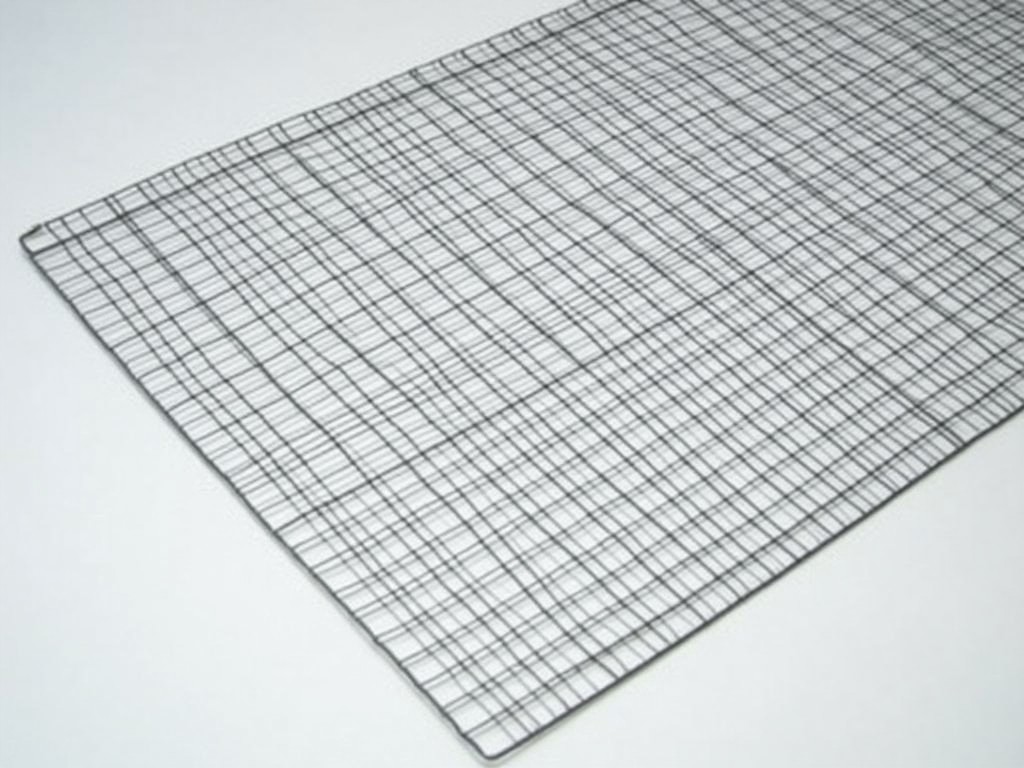
Diamond expanded metal mesh is manufactured by slitting and stretching a metal sheet into a pattern of interconnected diamond-shaped openings. This process creates a material with high
China Diamond Expanded Metal Mesh Sizes
Diamond expanded metal mesh is manufactured by slitting and stretching a metal sheet into a pattern of interconnected diamond-shaped openings. This process creates a material with high strength-to-weight ratio, excellent ventilation, and inherent rigidity without welding or joints. The size of the mesh—defined by strand width, strand thickness, and opening dimensions—directly influences its load-bearing capacity, open area percentage, and suitability for specific industrial applications. Understanding these dimensional relationships is essential for engineers specifying mesh for filtration, security, architectural, or mechanical purposes.
Standard Size Ranges for Diamond Expanded Metal Mesh
Expanded metal mesh sizes are typically referenced by the nominal dimensions of the diamond openings: Short Way of Diamond (SWD) and Long Way of Diamond (LWD), along with strand width and thickness. These parameters are interdependent—increasing SWD or LWD generally reduces structural density, while thicker strands increase weight and rigidity. Standard production ranges accommodate common industrial needs, though custom dimensions are frequently required for specialized equipment or architectural integration.
| Parameter | Typical Range (mm) | Notes |
|---|---|---|
| Short Way of Diamond (SWD) | 6 – 50 | Smaller SWD increases open area and flexibility |
| Long Way of Diamond (LWD) | 10 – 100 | LWD is typically 1.5x to 2x SWD in standard patterns |
| Strand Width | 1.0 – 6.0 | Wider strands increase load resistance and reduce open area |
| Strand Thickness | 0.5 – 4.0 | Thicker strands improve durability in high-abrasion environments |
Material Considerations Affecting Size Selection
The base material influences achievable dimensions due to differences in ductility and tensile strength. Aluminum allows for larger openings with thinner strands due to its high elongation, while carbon steel requires thicker strands to maintain integrity during stretching. Stainless steel grades (e.g., 304, 316) offer corrosion resistance but demand higher forming forces, limiting extreme aspect ratios. Selecting the appropriate material-size combination ensures long-term performance in environments ranging from dry indoor settings to marine or chemical exposure.
- Aluminum: Commonly used for SWD 10–40 mm with strand thickness 0.8–2.0 mm in lightweight architectural screens
- Carbon Steel: Preferred for SWD 6–25 mm with strand thickness 1.5–3.0 mm in industrial walkways and machine guards
- Stainless Steel: Typically specified for SWD 8–30 mm with strand thickness 1.0–2.5 mm in food processing or outdoor drainage applications
Open Area and Structural Implications
Open area percentage—the ratio of open space to total surface—is a critical design parameter influenced by SWD, LWD, strand width, and thickness. Higher open area improves airflow, light transmission, and fluid drainage but reduces load-bearing capacity. For example, a mesh with SWD 15 mm, LWD 25 mm, strand width 2 mm, and thickness 1.5 mm yields approximately 65% open area, suitable for ventilation panels. In contrast, a security mesh with SWD 8 mm, LWD 12 mm, strand width 3 mm, and thickness 2 mm achieves ~40% open area, prioritizing shear resistance over permeability.
Engineers must balance these trade-offs based on functional requirements: filtration systems favor high open area with fine strands, while anti-intrusion barriers prioritize small openings and thick strands to resist cutting tools. Dimensional consistency across batches is vital for modular installations where misalignment could compromise structural integrity or aesthetic uniformity.
Customization and Tolerance Capabilities
While standard sizes cover many applications, industrial projects often require non-standard dimensions to match existing frames, conform to curved surfaces, or meet specific flow dynamics. Customization is achieved by adjusting the die geometry during the expanding process, allowing precise control over SWD, LWD, strand width, and thickness. Tolerances typically hold within ±0.5 mm for opening dimensions and ±0.1 mm for strand thickness, depending on material and equipment calibration.
Secondary processes such as flattening, edge trimming, or surface treatment (e.g., galvanizing, powder coating) can be applied post-expansion without altering the fundamental mesh geometry. Flattened diamond mesh offers a smoother surface for walking or conveyor use, while raised mesh provides enhanced slip resistance. Edge finishing options include welded bands, folded edges, or留边 for direct fastening, each affecting the effective usable width and installation method.
Quality Verification and Dimensional Inspection
Dimensional accuracy is verified using calibrated gauges, optical comparators, or coordinate measuring machines (CMM) on sample pieces from each production batch. Inspection protocols check SWD, LWD, strand width, thickness, and flatness against approved drawings. For critical applications, statistical process control (SPC) may be applied to monitor variation over time. Surface defects such as tearing, uneven stretching, or burrs are assessed visually and tactilely, as they can indicate improper lubrication, die wear, or material inconsistencies during manufacturing.
Bulk shipments often include dimensional reports summarizing average measurements and standard deviations across multiple samples. This documentation supports traceability and helps buyers confirm compliance with specifications before integration into assembly lines or structural systems. Consistent dimensional control reduces the risk of field modifications, delays, or performance shortfalls in operational environments.
Application-Driven Size Selection Guidelines
In architectural facades, larger diamond openings (SWD 30–50 mm) with moderate strand dimensions create visually permeable screens that diffuse light while providing fall protection. The reduced material density minimizes wind load on structures, making large-format panels feasible. For industrial flooring or treads, smaller openings (SWD 6–15 mm) with wider strands (3–5 mm) prevent small object accumulation and provide a slip-resistant surface underfoot, even when coated with oil or debris.
Filtration and sorting equipment benefit from precise, uniform openings—often SWD 2–8 mm—to control particle passage without blinding. Here, material choice (e.g., stainless steel 316) is as critical as dimensions to resist corrosion from process fluids. In security applications such as fence infill or machine guarding, tight mesh (SWD <10 mm) with high strand density deters climbing and tool penetration, where the aspect ratio (LWD/SWD) is kept low to maximize rigidity in both directions.
Specifying the correct diamond expanded metal mesh size requires evaluating mechanical demands, environmental exposure, and functional priorities—not just selecting from a catalog. Dimensional trade-offs between open area, strength, and weight must be analyzed in the context of the final assembly to ensure long-term reliability and performance.
For technical consultation on size selection, material compatibility, or custom fabrication to meet your project’s exact dimensions, contact our engineering team. Provide your application details, required opening sizes, strand preferences, and environmental conditions to receive a detailed feasibility assessment and quotation.
Product Categories


Send Inquiry
If you are interested in our products, leave your information here and we will be in touch shortly.