China Stainless Steel Welded Mesh Price
Understanding the price of stainless steel welded mesh from Chinese manufacturers requires evaluating material specifications, production methods, and dimensional tolerances rather than relying on
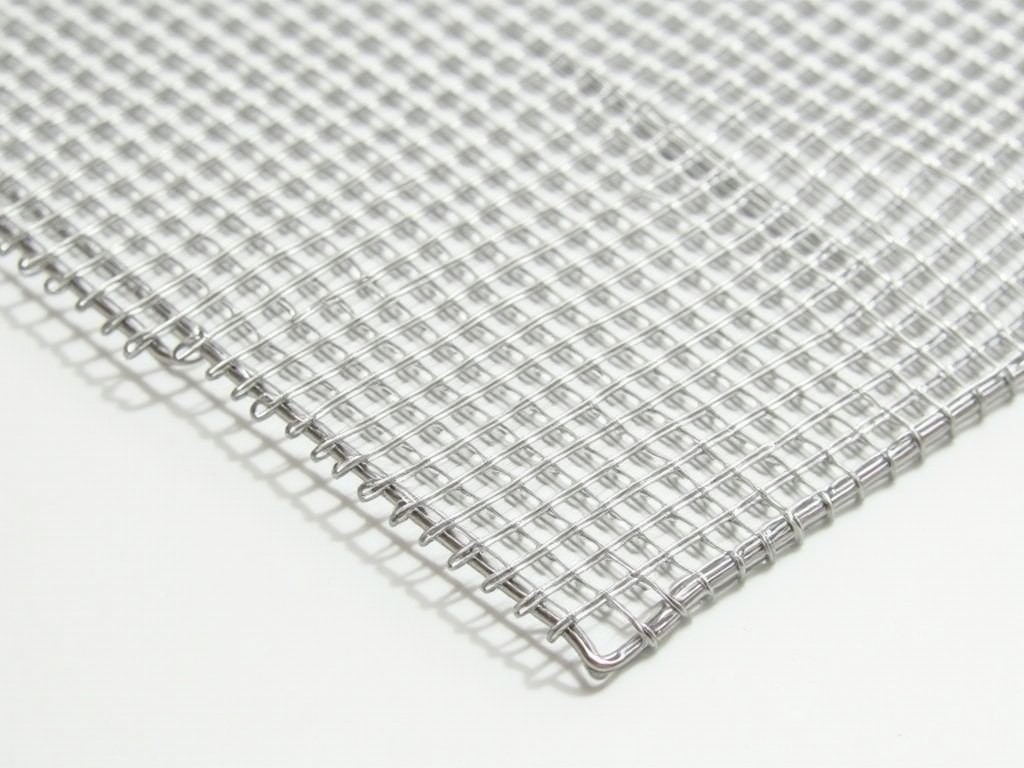
China Stainless Steel Welded Mesh Price: Technical Factors and Market Considerations
Understanding the price of stainless steel welded mesh from Chinese manufacturers requires evaluating material specifications, production methods, and dimensional tolerances rather than relying on generic quotations. This page explains the engineering variables that directly influence cost, enabling procurement teams to request accurate quotes and compare offers based on technical equivalence.
Material Grade and Composition Impact on Pricing
The base material cost constitutes the largest variable in welded mesh pricing. AISI 304 stainless steel, containing approximately 18% chromium and 8% nickel, typically commands a 15–25% premium over 201 grade due to superior corrosion resistance in humid or chemically exposed environments. For applications requiring resistance to chlorides or marine atmospheres, AISI 316 (with 2–3% molybdenum) increases material costs by 30–40% compared to 304 but is often necessary to avoid premature failure. Buyers should specify the exact grade in their RFQ, as substituting 201 for 304 to reduce cost may result in rust staining or structural degradation within 6–18 months in outdoor installations.
Wire Diameter and Opening Size Relationship to Cost
Mesh pricing scales non-linearly with wire diameter due to increased material usage and higher welding energy requirements. For example, increasing wire diameter from 2.0 mm to 3.0 mm in a 50×50 mm aperture mesh raises material volume by approximately 125%, directly increasing raw material costs. Simultaneously, finer apertures (e.g., 10×10 mm vs. 50×50 mm) increase welding points per square meter by 25x, significantly raising labor and machine time. A 1.2 mm wire, 20×20 mm mesh uses less material but incurs higher welding costs per square meter than a 3.0 mm wire, 100×100 mm mesh due to the density of welds. Optimal cost efficiency often occurs in mid-range specifications like 2.5 mm wire with 50×50 mm openings for general industrial use.
Surface Finish and Post-Weld Treatments
Surface condition affects both price and long-term performance. As-welded mesh retains oxide scale and heat tint near welds, requiring pickling and passivation to restore corrosion resistance—adding 8–12% to processing costs. Electropolishing, which smooths the surface and enhances passive layer formation, adds 18–25% but is justified in food processing or pharmaceutical applications where cleanability is critical. Some manufacturers offer pre-galvanized wire before welding to reduce cost, but this compromises corrosion protection at weld zones where zinc is burned away during welding, making it unsuitable for wet environments. Buyers must clarify whether quoted prices include post-weld treatment to avoid unexpected field performance issues.
Typical Price Ranges and Quantity Effects
| Specification | Wire Diameter (mm) | Opening (mm) | Material Grade | Price Range (USD/m²) |
|---|---|---|---|---|
| Light-duty safety mesh | 1.2 | 20×20 | AISI 304 | 8–12 |
| General industrial filtration | 2.0 | 50×50 | AISI 304 | 15–22 |
| Chemical processing screen | 2.5 | 40×40 | AISI 316 | 28–38 |
| Heavy-duty security barrier | 3.0 | 75×75 | AISI 304 | 22–30 |
Price ranges reflect FOB Shanghai or Ningbo ports for orders exceeding 500 m². Quantities below 200 m² often incur a 20–35% surcharge due to setup costs and inefficient material utilization. Volume discounts typically begin at 1,000 m², with incremental reductions of 5–10% per additional 500 m² tier. Custom dimensions, edge treatments (such as folding or framing), or special packaging (e.g., waterproof wrapping for sea freight) are priced separately and should be itemized in the quotation.
Technical Data Required for Accurate Quotation
To eliminate pricing ambiguity, buyers should provide the following specifications in their inquiry: exact wire diameter (with tolerance, e.g., 2.0 ±0.05 mm), aperture size (center-to-center or clear opening), material grade (with mill test certificate requirement), roll width and length, edge condition (raw, folded, or framed), and required surface finish (as-welded, pickled, passivated, or electropolished). Including a sketch or DXF file for custom shapes prevents misinterpretation. Requesting a sample lot (typically 1–2 m²) before full production allows verification of weld consistency, flatness, and surface quality—reducing the risk of costly rework or rejection upon delivery.
For detailed specifications, custom quotes, or sample requests regarding stainless steel welded mesh from certified Chinese manufacturers, please contact our technical team to discuss your project requirements.
Product Categories


Send Inquiry
If you are interested in our products, leave your information here and we will be in touch shortly.