China Stainless Steel Wire Mesh Price
When evaluating stainless steel wire mesh for industrial applications, procurement decisions require more than surface-level pricing. Engineers and buyers must understand how material grade, wire
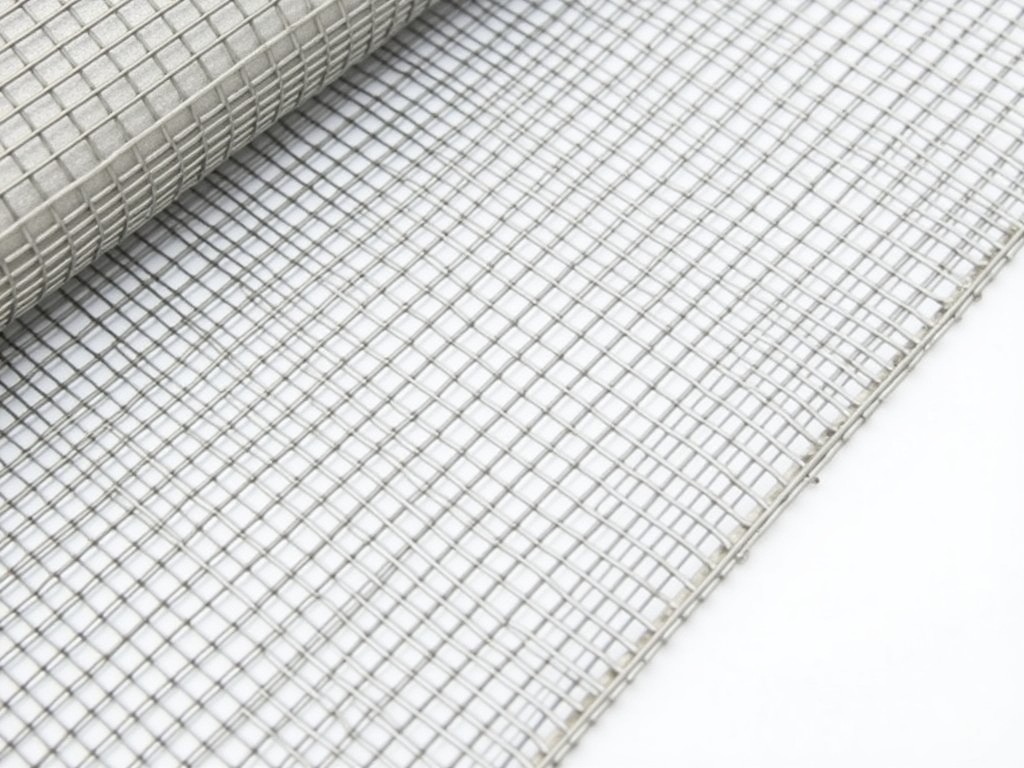
Stainless Steel Wire Mesh: Technical Specifications and Pricing Considerations from China Manufacturers
When evaluating stainless steel wire mesh for industrial applications, procurement decisions require more than surface-level pricing. Engineers and buyers must understand how material grade, wire diameter, aperture size, and weaving pattern directly influence performance, lifespan, and total cost of ownership. This page explains the technical factors that affect pricing from Chinese manufacturers and how to interpret quotations accurately for industrial use cases.
Material Grade and Corrosion Resistance: The Foundation of Price Variation
The base material is the most significant driver of stainless steel wire mesh pricing. AISI 304 (1.4301) and 316L (1.4404) are the two most common grades supplied by Chinese manufacturers, but their cost difference reflects fundamental differences in alloy composition and corrosion resistance. 304 contains approximately 18% chromium and 8% nickel, offering adequate resistance to atmospheric corrosion and mild chemicals. 316L adds 2-3% molybdenum, significantly improving resistance to chlorides and acidic environments — critical for marine, chemical processing, or wastewater applications. This molybdenum addition increases raw material cost by approximately 20-25% compared to 304, which is directly reflected in the mesh price.
Lower-cost alternatives like 201 or 430 stainless steel are sometimes offered but contain higher manganese or lower nickel content, reducing ductility and corrosion resistance. These grades may appear economical initially but often lead to premature failure in humid or chemically exposed environments, increasing long-term replacement and downtime costs. Reputable suppliers will specify the exact AISI or EN grade and provide material test certificates upon request — a key indicator of technical reliability.
Wire Diameter and Aperture: Engineering Trade-offs in Mesh Design
Wire diameter and aperture size are interdependent variables that determine both the mechanical strength and open area percentage of the mesh. A finer wire (e.g., 0.2mm) with a small aperture (e.g., 0.5mm) creates a dense mesh suitable for filtration or screening fine particulates, but requires more raw material and precision weaving, increasing cost per square meter. Conversely, a coarser wire (e.g., 1.0mm) with larger apertures (e.g., 5mm) used for structural support or animal fencing uses less material and allows faster weaving, resulting in lower unit pricing.
The open area percentage — calculated as the ratio of open space to total surface area — directly impacts flow dynamics in filtration or ventilation applications. For example, a 1mm wire with 2mm aperture yields approximately 44% open area, while the same wire diameter with 4mm aperture increases open area to about 69%. Engineers must balance required tensile strength, flow rate, and particle retention when specifying these parameters, as deviations can compromise process efficiency or safety.
Weaving Pattern: How Construction Method Affects Performance and Cost
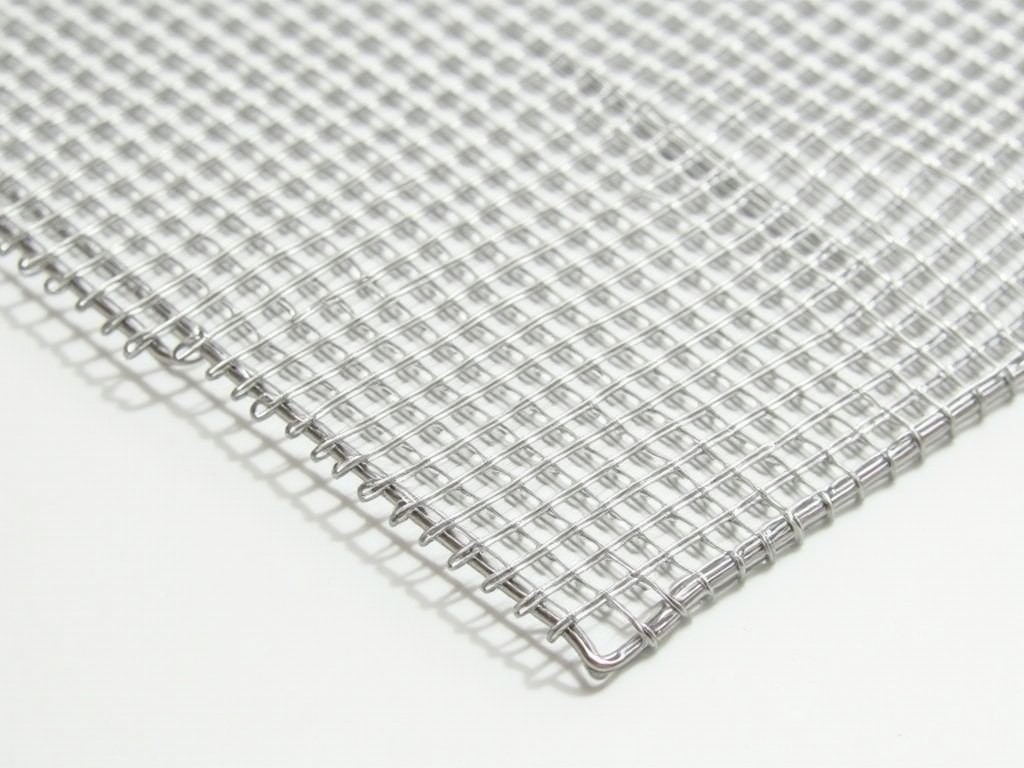
The weaving pattern determines the mesh’s structural integrity, surface smoothness, and resistance to deformation. Plain weave (over-under) is the most common and economical, offering symmetrical strength in both directions and consistent aperture dimensions. Twill weave (over-two, under-two) allows for heavier wire diameters in the same aperture, increasing strength and rigidity while maintaining a smooth surface — beneficial in conveyor belts or architectural screening where abrasion resistance matters. Dutch weave, with varying wire diameters in warp and weft directions, creates a tighter filtering surface on one side and is often used in precision filtration, though it requires more complex looms and higher labor input.
Each pattern affects production speed and material utilization. Plain weave runs at the highest speed on standard looms, minimizing labor cost. Twill and Dutch weaves require specialized equipment and slower operation, increasing manufacturing time by 15-30%. These process differences are reflected in pricing, with twill weave typically costing 10-15% more than plain weave for identical wire and aperture, and Dutch weave commanding a 20-25% premium due to lower yield and higher setup complexity.
Typical Price Ranges and What They Include
Stainless steel wire mesh pricing from Chinese manufacturers is typically quoted per square meter (m²) and varies significantly based on the factors above. Below are representative price ranges for common industrial specifications, assuming FOB China ports and standard packaging. These values are indicative only — actual quotes depend on order volume, material certification requirements, surface finish (e.g., annealed vs. spring temper), and whether custom cutting or edging is needed.
| Specification | Typical Price Range (USD/m²) | Notes |
|---|---|---|
| AISI 304, 0.5mm wire, 2mm aperture, plain weave | $8.50 – $12.00 | Common for general screening, guards, and low-pressure filtration |
| AISI 316L, 0.3mm wire, 1mm aperture, twill weave | $14.00 – $19.00 | Used in chemical filtration, marine environments, and food processing |
| AISI 304, 1.2mm wire, 6mm aperture, plain weave | $6.00 – $9.00 | Structural applications: conveyor supports, security fencing, machine guards |
| AISI 316L, 0.1mm wire, 0.3mm aperture, Dutch weave | $25.00 – $35.00 | Precision filtration: pharmaceutical, semiconductor, and fine particle separation |
These prices assume standard roll widths (typically 0.914m or 1.22m) and lengths (20m–50m per roll). Narrower widths or custom lengths may incur slitting or handling fees. Surface finishes such as bright annealed (for hygienic applications) or passivated (for enhanced corrosion resistance) add $1–$3/m² depending on the process. Orders under 10m² often attract higher per-unit pricing due to setup and handling inefficiencies, while volumes exceeding 500m² may qualify for volume discounts — always confirm terms with the supplier.
Technical Due Diligence: What to Request Before Purchase
To avoid discrepancies between quotation and delivered product, industrial buyers should require specific technical documentation. A material certificate (EN 10204 3.1 or equivalent) confirming the exact stainless steel grade and chemical composition is non-negotiable for critical applications. Additionally, request a mesh specification sheet detailing wire diameter tolerance (typically ±0.01mm for precision mesh), aperture uniformity, and tensile strength values. For filtration uses, ask for bubble point or air permeability test data to validate performance claims.
Inspect samples for edge quality — burrs or inconsistent weaving can indicate poor process control. Verify roll tightness and uniformity; loose winding suggests inadequate tension during manufacturing, which may lead to aperture distortion during use. For applications involving repeated flexing (e.g., conveyor belts), inquire about the wire’s temper condition — full hard vs. annealed — as this affects fatigue life. Suppliers who hesitate to provide these details may lack the quality systems needed for industrial reliability.
Long-Term Value: Beyond the Initial Quotation
The lowest price per square meter rarely equates to the lowest total cost. A 316L mesh with proper corrosion resistance may cost 30% more upfront than a 304 equivalent in a chloride-rich environment, but if the 304 version requires replacement every 6–12 months due to pitting or stress corrosion cracking, the cumulative cost of downtime, labor, and reinstallation quickly exceeds the initial savings. Similarly, a mesh with insufficient tensile strength may deform under load, causing process contamination or equipment damage — risks that are difficult to quantify but carry significant operational consequences.
Chinese manufacturers capable of consistent industrial supply typically invest in traceable raw material sourcing, calibrated weaving equipment, and in-house quality testing. Look for suppliers who offer technical support during specification — not just sales quotes — and who can explain how their manufacturing process ensures dimensional stability and mechanical reliability. Transparency in these areas builds confidence that the product will perform as engineered over its intended service life, reducing uncertainty for the buyer.
Product Categories


Send Inquiry
If you are interested in our products, leave your information here and we will be in touch shortly.