China Standard Perforated Sheet Sizes
Perforated sheets manufactured to Chinese national standards (GB/T) are widely used in industrial applications requiring consistent hole patterns, predictable open area, and dimensional stability.
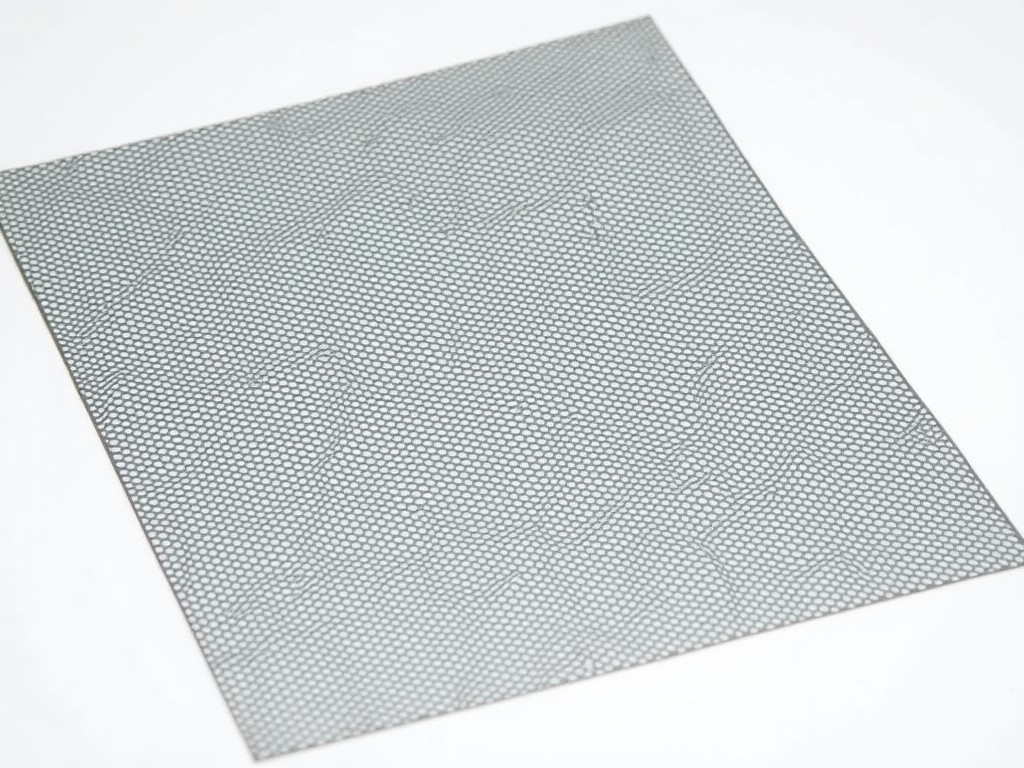
China Standard Perforated Sheet Sizes
Perforated sheets manufactured to Chinese national standards (GB/T) are widely used in industrial applications requiring consistent hole patterns, predictable open area, and dimensional stability. These standards define nominal dimensions, hole arrangements, and material thickness ranges to ensure interchangeability and ease of integration into structural, filtration, and architectural systems. Understanding these specifications helps engineers specify components that meet both functional and regulatory requirements without custom tooling delays.
Standard Sheet Dimensions per GB/T
Chinese standard perforated sheets are produced in fixed nominal widths and lengths to align with common fabrication practices and material handling equipment. The most frequently specified dimensions are 1000 mm × 2000 mm and 1250 mm × 2500 mm, which correspond to standard coil widths and press brake capacities in domestic manufacturing. These dimensions allow for efficient nesting during secondary processing such as bending, punching, or laser cutting, reducing scrap and setup time in downstream operations.
Thickness options typically range from 0.5 mm to 6.0 mm, depending on material type and hole size. Thinner gauges (0.5–1.5 mm) are common in decorative and filtration applications, while thicker sheets (2.0–6.0 mm) are used in load-bearing platforms, machine guards, and industrial flooring. The standard length increment is 500 mm, allowing for modular design in large-scale installations without requiring custom cutting.
Standard Hole Patterns and Open Area
Hole patterns in GB/T-standard perforated sheets follow defined arrangements such as staggered (60°), straight line, and square grids, with hole diameters ranging from 1.0 mm to 50.0 mm. The open area percentage—calculated as the ratio of hole area to total sheet area—is a critical design parameter affecting airflow, light transmission, and structural strength. Standard patterns are engineered to balance these factors, with common open area values between 20% and 40% for general industrial use.
For example, a 3 mm diameter hole on a 6 mm staggered pitch yields approximately 23% open area, suitable for machine guarding where visibility and protection are both required. A 5 mm hole on a 10 mm straight pitch delivers 25% open area, often selected for HVAC diffuser panels. These values are not arbitrary; they result from standardized tooling sets that minimize setup costs and ensure repeatability across production batches.
Material Options and Compatibility
Standard perforated sheets are available in carbon steel, stainless steel (grades 201, 304, 316), aluminum alloys (1050, 3003, 5052), and galvanized steel, each selected based on environmental exposure, mechanical demands, and corrosion resistance needs. Carbon steel is typical for indoor structural uses where cost is a priority, while 304 stainless steel is preferred in food processing or outdoor environments due to its oxidation resistance. Aluminum is chosen when weight reduction is critical, such as in ceiling panels or transportation equipment.
Material thickness and hole size combinations are constrained by the capabilities of standard CNC punching presses and tooling libraries. For instance, holes smaller than 1.0 mm are generally not feasible in materials over 2.0 mm thick due to tool breakage risk, while holes larger than 25 mm in thin gauges (<1.0 mm) may cause edge deformation. These limits are documented in standard machining guides and are reflected in the available size charts provided by manufacturers.
Typical Standard Size Table
| Nominal Size (mm) | Thickness Range (mm) | Common Hole Diameters (mm) | Typical Open Area (%) |
|---|---|---|---|
| 1000 × 2000 | 0.5 – 3.0 | 1.5, 2.0, 2.5, 3.0, 4.0, 5.0 | 18 – 35 |
| 1250 × 2500 | 0.8 – 6.0 | 2.0, 3.0, 4.0, 5.0, 6.0, 8.0, 10.0 | 20 – 40 |
| 1000 × 1000 | 0.5 – 4.0 | 1.0, 1.5, 2.0, 2.5, 3.0 | 15 – 30 |
| 1250 × 1250 | 0.8 – 5.0 | 2.0, 2.5, 3.0, 4.0, 5.0 | 22 – 38 |
The table above reflects commonly stocked configurations based on GB/T standards and typical CNC punching tooling sets. Actual dimensions may vary slightly due to material tolerances and punching clearance, but nominal sizes are held within ±0.5 mm for length and width, and ±0.05 mm for hole diameter in precision applications. Engineers should verify critical dimensions with suppliers when tight tolerances are required for mating parts or sealing interfaces.
Application-Driven Selection Logic
Choosing a standard perforated sheet size is not merely about matching dimensions—it involves aligning hole pattern, open area, and material thickness with the functional demands of the application. In acoustic panels, for example, a 40% open area with 3 mm holes on a 5 mm staggered pitch provides optimal sound absorption while maintaining panel rigidity. In contrast, a safety guard for rotating machinery may require a 15% open area with 2 mm holes to prevent finger ingress while allowing sufficient airflow for motor cooling.
Architectural facades often use 1250 × 2500 mm sheets with 6 mm holes in 304 stainless steel to achieve a balance of visual openness, weather resistance, and structural span capability without intermediate supports. These selections are informed by engineering calculations—such as buckling resistance under wind load or pressure drop across filtration media—not aesthetic preference alone. Standard sizes simplify specification by reducing the number of variables in the design phase.
Quality Control and Standard Compliance
Manufacturers adhering to GB/T standards implement inline inspection to verify hole positional accuracy, edge deformation, and material flatness. Positional tolerance is typically maintained within ±0.1 mm for hole centers relative to sheet edges, ensuring consistent alignment when sheets are joined or stacked. Flatness is controlled to less than 3 mm/m deviation to prevent issues during welding or fastening. These controls are essential for applications where perforated sheets serve as structural components or precision filtration media.
Material test certificates (MTCs) are provided upon request, confirming chemical composition and mechanical properties such as yield strength and elongation. Surface finish is also specified—common options include mill finish, brushed, or powder-coated—depending on the intended environment. Compliance with GB/T is not optional for projects requiring government or industrial certification; it ensures traceability and reduces the risk of rejection during inspection.
Customization Within Standard Frameworks
While standard sizes offer economies of scale, minor adjustments such as custom hole patterns, non-standard widths, or edge treatments (e.g., deburring, rounding) are frequently accommodated without full tooling changes. For example, a customer may request a 1100 mm width derived from slitting a 1250 mm master coil, or a transition from staggered to straight hole pattern at a specific zone for directional airflow control. These modifications are treated as secondary operations and quoted separately.
True customization—such as entirely new hole diameters or asymmetric layouts—requires new punching dies and affects lead time and cost. However, even in these cases, starting from a standard sheet size (e.g., 1250 × 2500 mm) reduces material waste and simplifies logistics. Engineers are advised to consult with suppliers early to determine whether a desired specification can be achieved through standard tooling with minor adjustments, or if it necessitates a bespoke solution.
Product Categories


Send Inquiry
If you are interested in our products, leave your information here and we will be in touch shortly.