Metal Mesh For Concrete Source Factory
Metal mesh reinforcement is a critical component in modern concrete construction, providing tensile strength to counteract concrete’s inherent weakness under tension. Unlike plain concrete, which
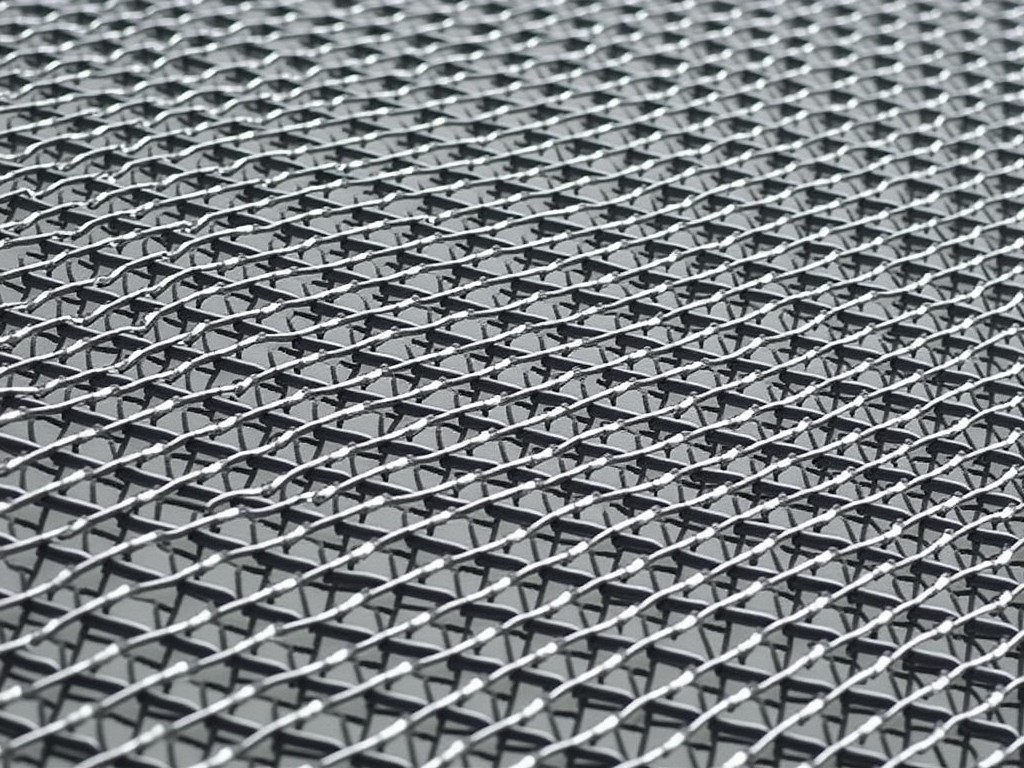
Metal Mesh for Concrete – Source Factory Solutions
Metal mesh reinforcement is a critical component in modern concrete construction, providing tensile strength to counteract concrete’s inherent weakness under tension. Unlike plain concrete, which cracks easily under load, reinforced concrete combines the compressive strength of cementitious material with the ductility and load-distribution capability of embedded steel reinforcement. Metal mesh, specifically welded wire reinforcement (WWR), offers a grid-like structure that efficiently distributes stresses across slabs, walls, and precast elements, reducing crack width and improving long-term durability. The effectiveness of mesh reinforcement depends on wire diameter, spacing, tensile strength, and bond characteristics with the surrounding concrete matrix.
Industrial buyers specify metal mesh not only for structural performance but also for constructability advantages. Prefabricated mesh reduces on-site labor compared to tying individual rebar, accelerates installation schedules, and improves consistency in reinforcement placement—particularly important in large-area pours like industrial floors, parking decks, and precast panels. The mesh geometry ensures uniform coverage, minimizing weak points that can arise from uneven manual rebar layout. Properly selected mesh also mitigates plastic shrinkage cracking during early curing and controls temperature-induced cracking in mass concrete applications.
As a source factory specializing in welded wire reinforcement, we manufacture mesh to precise dimensional and mechanical tolerances, ensuring compatibility with design specifications and international standards such as ASTM A185, EN 10223-2, and GB/T 1499.2. Our production process involves cold-drawn high-carbon steel wires, resistance welding at every intersection, and stringent quality control to verify weld shear strength, wire diameter accuracy, and aperture consistency. This vertical integration allows us to control material traceability, lead times, and customization flexibility—key considerations for engineers and procurement teams managing complex projects.
Technical Specifications and Material Options
Our metal mesh is manufactured using cold-drawn steel wire with tensile strength typically ranging from 450 MPa to 650 MPa, depending on wire grade and diameter. Wire sizes available span from 2.0 mm to 12.0 mm nominal diameter, with corresponding cross-sectional areas engineered to meet specific load requirements. Aperture (opening) sizes are customizable, commonly ranging from 50 mm × 50 mm to 200 mm × 200 mm center-to-center, allowing designers to optimize reinforcement density based on slab thickness, expected loads, and crack control objectives.
The welding process employs automated resistance welding machines that fuse wires at each intersection without adding filler material, creating a metallurgical bond with shear strength typically exceeding 80% of the parent wire’s tensile capacity. This ensures the mesh behaves as a monolithic grid under load, preventing localized failure at joints. Post-welding, mesh sheets undergo straightening and cutting to precise dimensions, with edge wires often reinforced or folded to prevent injury during handling and improve edge load distribution in structural elements.
Surface condition options include bare (uncoated) steel for applications where epoxy coating or galvanization is specified downstream, or pre-galvanized wire (Zn-coated) for enhanced corrosion resistance in humid or chemically aggressive environments. For projects requiring higher durability, hot-dip galvanized or stainless steel (e.g., grades 304, 316) wire mesh is available upon request, particularly for marine structures, wastewater treatment facilities, or architectural exposed concrete where long-term aesthetics and corrosion performance are critical.
Applications in Concrete Construction
In slab-on-grade applications, such as warehouse floors or distribution center foundations, metal mesh controls cracking induced by subgrade settlement, drying shrinkage, and thermal contraction. By limiting crack width to acceptable levels (typically under 0.3 mm for serviceability), mesh maintains floor flatness and prevents spalling at joints, reducing maintenance needs over the structure’s lifespan. The mesh also improves load transfer across cracks, enhancing fatigue resistance under repeated traffic from forklifts and pallet jacks.
For elevated slabs in multi-story buildings or parking structures, mesh reinforcement works in conjunction with rebar to resist positive and negative bending moments. In two-way slab systems, the mesh provides isotropic reinforcement, simplifying design and ensuring adequate strength in both directions. Its use in topping slabs over precast planks or composite steel decks helps control cracking due to differential shrinkage and thermal movement between layers.
In precast concrete manufacturing, metal mesh is integral to producing beams, columns, wall panels, and architectural elements. Consistent mesh placement ensures uniform flexural and shear capacity, critical for elements subjected to handling stresses during demolding, transportation, and erection. Mesh also reduces the risk of surface cracking during steam curing, improving surface finish quality and reducing rejection rates in precast yards.
Beyond structural roles, mesh is used in shotcrete applications for slope stabilization, tunnel linings, and repair work, where it provides immediate tensile support to the sprayed concrete layer. In ultra-thin overlays or repair mortars, fine mesh (e.g., 2.0–3.0 mm wire) prevents delamination and improves bond between old and new concrete substrates, extending service life of rehabilitated infrastructure.
Customization and Manufacturing Flexibility
As a source factory, we offer full customization of mesh geometry to match project-specific reinforcement drawings. Customers can specify wire diameter, spacing in both longitudinal and transverse directions, sheet dimensions, and edge treatments. Non-rectangular shapes, such as L-shaped or U-shaped mesh for corners and edges, are produced using automated bending and cutting systems, reducing field fabrication time and improving placement accuracy.
We support both metric and imperial unit systems, with standard sheet sizes including 2.4 m × 3.0 m, 2.0 m × 4.0 m, and 2.5 m × 5.0 m, though custom lengths and widths are available to minimize waste and optimize handling on-site. For high-volume projects, we can produce mesh in continuous rolls or coiled formats for automated placement equipment, particularly beneficial in slip-form paving or large-area floor installations.
All custom orders undergo engineering review to verify compliance with design intent and manufacturability constraints. We provide shop drawings and bending schedules upon request, facilitating coordination between designers, contractors, and rebar detailers. This collaborative approach reduces the risk of field errors and ensures that the delivered mesh aligns with the structural model and placement drawings.
Quality Control and Testing Protocols
Quality assurance begins with incoming wire inspection, where diameter, tensile strength, elongation, and coating weight (if applicable) are verified against mill certificates and internal standards. Each batch undergoes chemical analysis to confirm carbon content and alloy composition, ensuring hardenability and weldability characteristics are consistent. Wire straightness and surface cleanliness are checked to prevent welding defects and ensure proper embedment in concrete.
During production, weld strength is monitored through destructive testing of sample intersections, measuring shear resistance according to ASTM A370 or equivalent standards. Visual and dimensional inspections are conducted on every sheet to verify aperture accuracy, wire alignment, and overall flatness. We maintain statistical process control (SPC) charts for critical dimensions, enabling real-time adjustments to welding pressure, wire feed, and electrode alignment.
Final inspection includes dimensional verification of sheet size and squareness, edge condition assessment, and bundle labeling with heat numbers, wire specifications, and production date. We provide mill test reports (MTRs) and certificates of conformance upon request, documenting compliance with customer specifications and relevant standards. For projects requiring third-party verification, we facilitate independent testing and inspection at the factory before shipment.
Packaging and Logistics
To prevent deformation and corrosion during transit, mesh sheets are bundled using steel straps or plastic banding, with corner protectors applied to bundle edges. Bundles are typically stacked on wooden or steel pallets, secured with stretch film or shrink wrap to resist moisture ingress and shifting during handling. For export shipments, we use fumigated pallets and comply with ISPM 15 standards, ensuring smooth customs clearance in destination countries.
Standard packaging units range from 0.5 to 2.0 tonnes per bundle, optimized for container loading and truck transport. We offer both loose bulk stacking and cage pallet options, depending on customer unloading equipment and site storage conditions. Each bundle is clearly marked with part number, dimensions, weight, and handling instructions, facilitating inventory management and traceability from factory to installation point.
Lead times vary based on customization complexity and current production load, but standard mesh items typically ship within 2–4 weeks after order confirmation. For urgent projects, we maintain safety stock of common sizes and grades, enabling expedited shipment within 5–7 business days. Our logistics team coordinates with freight forwarders to provide real-time tracking and delivery notifications, reducing uncertainty in supply chain planning.
Comparison: Welded Wire Mesh vs. Alternatives
| Characteristic | Welded Wire Mesh | Loose Rebar (Bar Mat) | Fiber Reinforcement (Steel/Polypropylene) |
|---|---|---|---|
| Installation Speed | Fast – prefabricated sheets | Slow – labor-intensive tying | Fast – mixed directly into concrete |
| Placement Accuracy | High – uniform grid | Variable – depends on crew skill | N/A – randomly dispersed |
| Crack Width Control | Effective – continuous reinforcement | Effective – if properly placed | Limited – mainly plastic shrinkage |
| Structural Load Capacity | High – designed for flexure/shear | High – standard rebar equivalent | Low – non-structural unless engineered |
| Edge Protection | Includes reinforced edges | Requires separate detailing | Not applicable |
| Customization Flexibility | High – geometry, size, wire | Moderate – length/bending | Low – dosage and type only |
This comparison highlights the distinct advantages of welded wire mesh in applications where placement efficiency, structural performance, and geometric consistency are priorities. While fiber reinforcement excels in controlling early-age cracking and loose rebar remains standard for complex geometries, welded wire mesh offers an optimal balance for slab-on-grade, precast, and overlay applications where speed and uniformity directly impact project timelines and quality outcomes.
Engineering Considerations for Specification
When specifying metal mesh for concrete, engineers should evaluate the ratio of mesh area to concrete cross-section, ensuring sufficient steel percentage to resist cracking and carry tensile loads. The effective depth of mesh placement—typically measured from the tension face to the centroid of the reinforcement—directly influences flexural capacity and must align with design assumptions. For slabs on ground, minimum concrete cover over mesh is usually 20–30 mm to prevent corrosion and ensure adequate bond development.
Thermal and shrinkage strain calculations inform the required steel ratio to limit crack width to acceptable serviceability levels (e.g., 0.3 mm for indoor floors, 0.5 mm for exposed surfaces). In restrained elements, such as walls or pavements with fixed ends, mesh must be sufficient to resist tensile forces from temperature drop and drying shrinkage. Over-reinforcement should be avoided, as it can lead to congestion and poor concrete consolidation around wires.
Compatibility with concrete mix design is another consideration. High-slump or self-consolidating concrete (SCC) flows easily around mesh, reducing the risk of voids, while low-slope mixes may require vibration to ensure full encapsulation. In shotcrete applications, mesh stiffness must resist deformation under spray pressure, necessitating adequate wire diameter and spacing to prevent sagging or bulging during application.
Inquiry and Technical Support
Our engineering team is available to assist with mesh selection, customization requests, and technical documentation for your concrete reinforcement needs. We provide detailed product data sheets, CAD-compatible drawings, and sample sections upon request to support design validation and quality planning. To initiate a discussion or request a quotation, please share your project requirements, including dimensions, wire specifications, quantity, and delivery timeline.
We recommend providing reinforcement sketches or reference standards (e.g., ASTM, EN, or project-specific details) to accelerate the quoting process. Our factory can accommodate both prototype samples and full production runs, with flexibility to adjust specifications based on feedback from pre-production trials. For technical consultations or to arrange a factory audit, contact us through the link below.
Product Categories


Send Inquiry
If you are interested in our products, leave your information here and we will be in touch shortly.