Metal Net For Cage Source Factory
Industrial metal netting for animal enclosures, poultry cages, and containment systems requires precise engineering to balance structural integrity, corrosion resistance, and operational longevity.
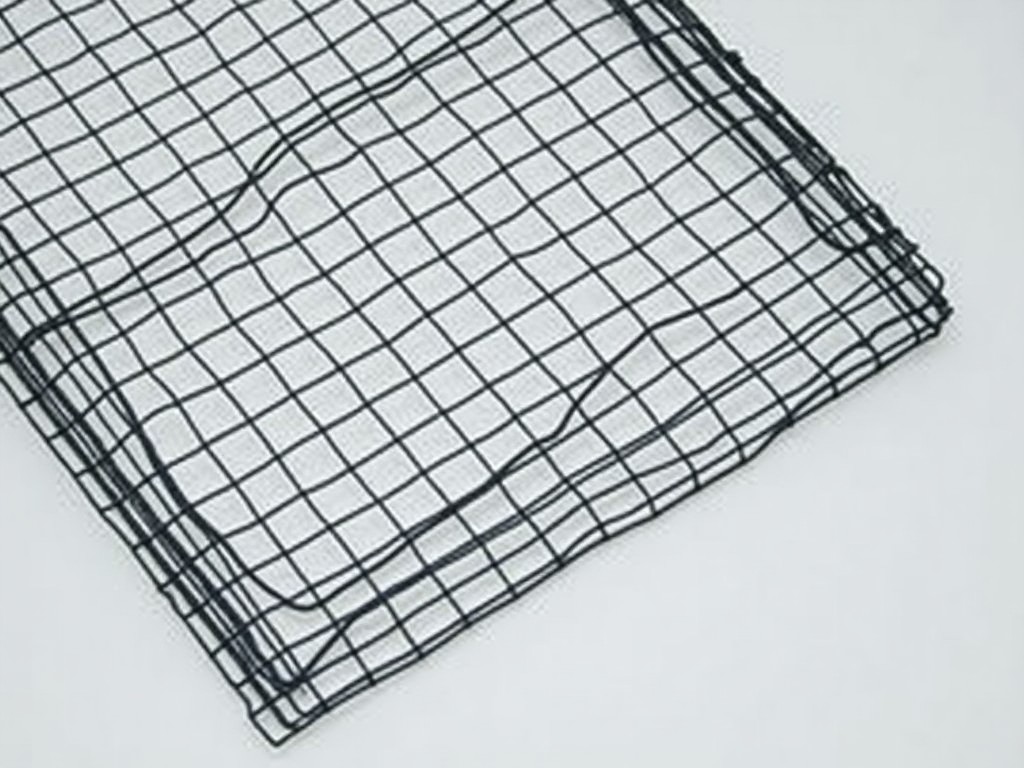
Metal Net for Cage – Source Factory Specifications
Industrial metal netting for animal enclosures, poultry cages, and containment systems requires precise engineering to balance structural integrity, corrosion resistance, and operational longevity. This page details the technical specifications, material options, and manufacturing considerations for welded and woven metal nets sourced directly from production facilities.
Material Composition and Mechanical Properties
The base material determines long-term performance in humid, abrasive, or chemically exposed environments. Common options include low-carbon steel wire (Q195/Q235), galvanized steel, and stainless steel grades (304, 316L). Wire diameter typically ranges from 0.8mm to 3.0mm, directly influencing tensile strength and impact resistance. For example, a 2.0mm galvanized steel wire achieves approximately 450 MPa tensile strength, while 304 stainless steel of the same diameter maintains corrosion resistance in chloride-rich environments up to 1000 hours neutral salt spray (NSS) testing.
Welded joints in prefabricated nets provide uniform load distribution compared to woven alternatives, reducing point stress concentrations. Mesh opening sizes are standardized to animal size and containment requirements—common configurations include 25mm x 25mm for small poultry, 50mm x 50mm for rabbits or medium livestock, and 75mm x 75mm for larger species. Opening tolerance is typically held within ±1.5mm to prevent entrapment hazards while maintaining material efficiency.
Manufacturing Process and Quality Control
Production begins with wire drawing to precise diameter tolerances (±0.02mm), followed by cleaning and coating application. For galvanized nets, hot-dip immersion ensures a minimum zinc coating of 60 g/m² (both sides), measured per ISO 1461. Stainless steel variants undergo passivation to enhance surface chromium oxide layer integrity. Welding uses resistance spot welding with controlled current (typically 8–12 kA) and duration (0.1–0.3 seconds) to achieve fusion without wire burn-through or excessive heat-affected zones.
In-line inspection includes dimensional verification via laser scanning, weld tensile testing (minimum 70% of parent wire strength), and coating thickness measurement using magnetic induction. Batch testing follows ANSI/ASQ Z1.4 standards for sampling. Visual inspection checks for wire protrusions, inconsistent mesh alignment, or coating defects such as bare spots or drips, which could initiate corrosion or cause animal injury.
Customization Options and Engineering Considerations
Beyond standard rolls or panels, customization addresses specific installation constraints and load profiles. Edge finishing options include folded selvages (10–15mm hem) for hand safety, welded wire borders for frame attachment, or PVC-overmolded edges for reduced abrasion in high-contact zones. Panel dimensions are commonly supplied in widths up to 2.4m and lengths up to 30m, constrained by handling and transportation logistics; larger installations use modular panel systems with interlocking flanges or clip mechanisms.
For applications requiring non-standard opening shapes—such as hexagonal for reduced material usage or rectangular for directional strength—custom tooling is available upon request. Post-forming processes like bending or rolling to create cylindrical cages or curved panels are performed after welding to avoid weakening joints. Surface treatments beyond galvanization include powder coating (epoxy or polyester, 60–80μm thickness) or PVC dipping (0.5–1.0mm) for enhanced chemical resistance in feedlot or wastewater environments.
Typical Specifications Table
| Parameter | Typical Range / Value | Notes |
|---|---|---|
| Wire Diameter | 0.8mm – 3.0mm | Selected based on load and species |
| Mesh Opening | 15mm – 100mm | Square or rectangular; custom available |
| Material | Low-carbon steel, Galvanized, SS304, SS316L | Coating or alloy determines corrosion life |
| Coating (Galvanized) | 60–275 g/m² (Zn) | Hot-dip; heavier for aggressive environments |
| Tensile Strength (Wire) | 300–550 MPa | Depends on material and temper |
| Standard Roll Width | 0.5m – 2.4m | Limited by handling equipment |
| Length per Roll | 10m – 50m | Custom lengths available |
| Edge Treatment | Selvage, Welded border, PVC-overmold | Selected per installation method |
Applications and Environmental Suitability
In poultry farming, 25mm x 25mm galvanized nets with 1.6mm wire prevent bird escape while minimizing feed spillage and predator intrusion. The zinc coating withstands ammonia-rich atmospheres and periodic disinfectant washdowns. For aquatic species containment, such as shrimp or fish farming, 316L stainless steel nets with 50mm x 50mm openings resist pitting corrosion in saline conditions, maintaining structural integrity for over five years in submerged installations.
Industrial uses include machine guarding, where 40mm x 40mm openings with 2.5mm wire provide visibility and airflow while meeting ISO 14120 requirements for fixed guards. The welded construction ensures panels remain intact under impact loads, reducing maintenance frequency. In logistics and warehousing, heavier gauge nets (3.0mm wire, 50mm x 50mm) secure bulk materials on pallets or in cages, relying on high tensile strength to resist deformation during forklift handling or transit vibration.
Environmental factors directly influence material selection. Coastal installations favor stainless steel or PVC-coated galvanized steel to counteract chloride-induced corrosion. High-temperature environments, such as near drying ovens or furnaces, may require bare stainless steel to avoid coating degradation. UV exposure is generally not a degradation factor for metal nets, but polymeric coatings (PVC, powder) require stabilizers for outdoor longevity beyond three years.
Quality Assurance and Testing Protocols
Factory quality control extends beyond dimensional checks to include mechanical and chemical validation. Tensile testing of welded joints follows ISO 9016 procedures, with acceptance criteria set at 70% of the base wire’s ultimate tensile strength. Coating adhesion is assessed via cross-hatch and tape tests (ISO 2409), requiring minimal coating removal. For stainless steel, ferrite content is measured using magnetic induction to ensure austenitic stability and avoid sensitization during welding.
Corrosion resistance validation employs neutral salt spray (NSS) testing per ISO 9227, with typical durations of 240 hours for standard galvanized and 1000+ hours for heavy-duty or stainless variants. Cyclic corrosion testing (ISO 14993) may be used for environments with wet-dry cycles. Batch records document wire heat numbers, coating weights, welding parameters, and inspection results, enabling full traceability for OEM or regulated industry supply chains.
Final inspection includes visual checks under standardized lighting (500 lux) to detect surface defects, wire protrusions, or coating holidays. Packaging is designed to prevent deformation during transit—rolls are wrapped in polyethylene film, placed on cardboard cores, and secured in corrugated boxes or on pallets with edge protection. Custom labeling includes material grade, dimensions, coating weight, and batch number for ease of integration into customer inventory systems.
Inquiry and Technical Support
To initiate a quotation or request technical documentation, provide the following details: required mesh opening, wire diameter, material preference (e.g., galvanized, SS304), panel dimensions or roll length, edge treatment, and intended application (e.g., poultry cage, machine guard). Environmental conditions such as humidity, chemical exposure, or temperature ranges assist in recommending appropriate coatings or alloys. Drawings or sketches of installation configurations help optimize panel layouts and fastening methods.
Samples are available upon request for validation testing, typically delivered within 5–7 business days for standard configurations. Lead times for production depend on order volume and customization complexity—standard rolls usually ship within 10–14 days, while custom panels or coated variants may require 18–25 days. Export shipments comply with ISPM 15 for wood packaging and include desiccant packs to mitigate moisture during transit.
Request Technical Specification or Quote
Product Categories


Send Inquiry
If you are interested in our products, leave your information here and we will be in touch shortly.