Oem Pvc Coated Galvanised Wire Mesh
PVC coated galvanised wire mesh is engineered for applications requiring corrosion resistance, mechanical strength, and long-term durability in outdoor or chemically aggressive environments. The
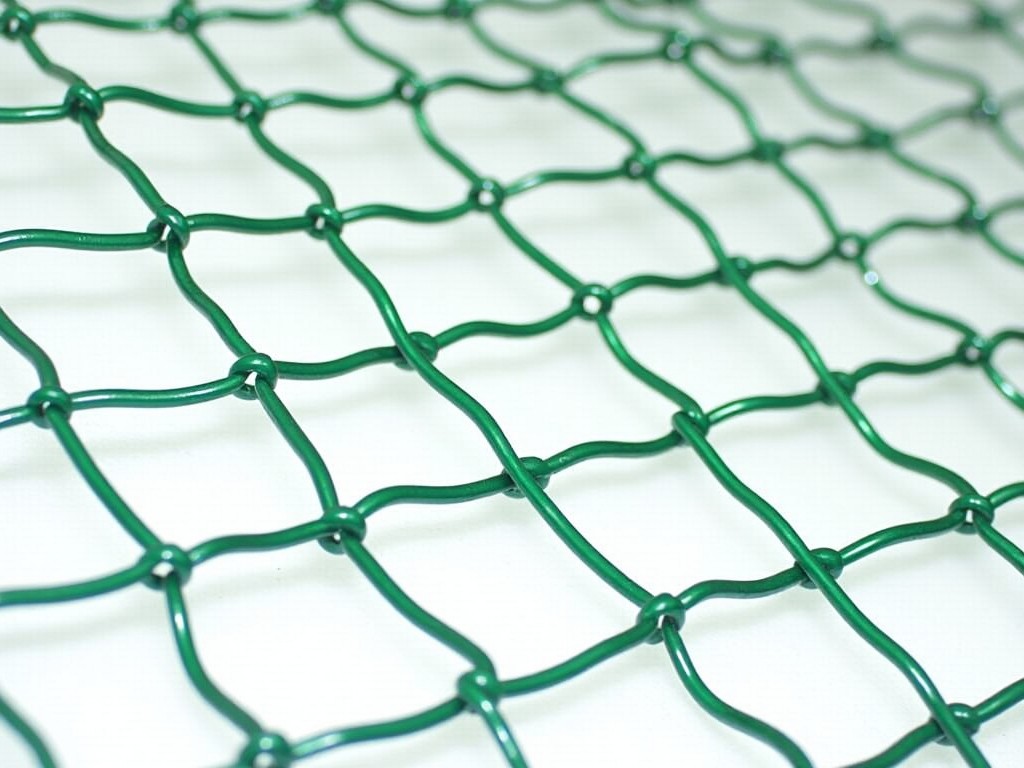
OEM PVC Coated Galvanised Wire Mesh
PVC coated galvanised wire mesh is engineered for applications requiring corrosion resistance, mechanical strength, and long-term durability in outdoor or chemically aggressive environments. The galvanised steel core provides structural integrity, while the PVC coating acts as a protective barrier against moisture, UV exposure, and chemical ingress. This combination extends service life significantly compared to bare or uncoated alternatives, particularly in fence systems, animal enclosures, and industrial partitioning.
Material Composition and Coating Process
The base wire is typically low-carbon steel, hot-dip galvanised to a minimum zinc coating of 200 g/m² (per EN 10244-2) to inhibit rust formation. Following galvanisation, the wire undergoes extrusion coating with UV-stabilised PVC, achieving a uniform thickness of 0.4–0.6 mm. This dual-layer protection ensures that even if the PVC layer is superficially abraded, the underlying zinc layer continues to provide sacrificial protection. Coating adhesion is validated via cross-hatch testing (ASTM D3359) to ensure no delamination under flexural or impact stress.
PVC formulations are selected based on end-use requirements: flexible grades for rollable mesh, rigid grades for welded panels, and flame-retardant additives for indoor industrial partitions. Color options include standard black, green, and grey, with custom RAL matching available for architectural or branding purposes. The coating process is continuous and monitored for thickness consistency using laser gauging systems to maintain tolerances within ±0.05 mm.
Mechanical and Performance Characteristics
Tensile strength of the galvanised core ranges from 350–550 MPa depending on wire diameter (0.8–3.0 mm), with elongation at break typically between 10–25%. The PVC coating adds negligible tensile strength but significantly improves abrasion resistance and flexibility at low temperatures (down to -20°C). Mesh opening sizes vary from 12.5 mm to 100 mm, with wire spacing precision maintained within ±1.5% during weaving or welding.
Wind load resistance is critical for perimeter fencing; mesh designs are evaluated for drag coefficient and structural deflection under 150 km/h gusts. For animal containment, aperture size is selected to prevent limb entrapment while maintaining visibility and airflow. In industrial screening applications, open area percentage (typically 40–70%) directly impacts flow efficiency and is customized based on particulate size and throughput requirements.
Customization Options for OEM Integration
OEM clients specify mesh dimensions, wire gauge, coating color, and roll length based on equipment integration needs. Common customizations include slit edges for safety, reinforced borders with steel framing, and pre-punched mounting holes for rapid installation. Roll lengths range from 5 m to 50 m, with width capabilities up to 2.5 m for welded panels and 3.0 m for woven mesh. Custom specification sheets include tensile test reports, coating thickness maps, and corrosion resistance data (e.g., salt spray test per ASTM B117).
Tooling adjustments allow for non-standard aperture shapes (e.g., rectangular, honeycomb) without increasing lead time, provided wire diameter remains within machine capabilities. Surface treatments such as anti-static or antimicrobial additives can be incorporated into the PVC formulation for specialized environments like food processing or cleanrooms. All customizations are documented in a product datasheet tied to the client’s part number for traceability.
Quality Control and Testing Protocols
Each batch undergoes incoming wire inspection for zinc coating weight and tensile properties. In-line monitoring during coating ensures uniform thickness and adhesion. Final inspection includes visual defect checks (under 500 lux illumination), dimensional verification via calibrated gauges, and pull-out force testing of the PVC-metal interface. Statistical process control (SPC) charts track key parameters to detect drift before it affects output.
Environmental simulation tests include 1,000-hour UV exposure (ASTM G154), thermal cycling (-20°C to +70°C), and chemical splash resistance (acids, alkalis, oils). Results are archived and available upon request. Packaging is designed to prevent coating damage during transit: rolls are wrapped in polyethylene film, placed in corrugated cores, and secured with biodegradable strapping. Edge protectors prevent abrasion during handling.
Applications Across Industries
In agricultural settings, PVC coated mesh is used for livestock fencing where animal safety and corrosion resistance are paramount — the smooth coating reduces injury risk compared to barbed or sharp-edged alternatives. For poultry enclosures, small aperture sizes (12.5–25 mm) prevent predation while allowing adequate ventilation. The coating’s resistance to ammonia and disinfectants ensures longevity in humid barn environments.
Industrial applications include machine guarding, where the mesh provides visibility and containment without compromising structural integrity. In mining, it serves as screen media for ore sorting, with abrasion-resistant grades extending service life in high-vibration systems. Infrastructure projects use it for slope stabilization and rockfall prevention, where the PVC coating withstands prolonged exposure to acid rain and airborne pollutants.
Architectural installations leverage the aesthetic flexibility of colored PVC for decorative screening, balcony infill, or parking garage facades. The material’s flexibility allows conformance to curved surfaces without cracking, and its low maintenance requirement reduces lifecycle costs. Coastal installations benefit from the chloride-resistant properties of the galvanised-PVC system, outperforming stainless steel in cost-to-performance ratio for non-structural barriers.
Comparison: PVC Coated vs. Alternatives
| Property | PVC Coated Galvanised Mesh | Plain Galvanised Mesh | Stainless Steel Mesh (304) |
|---|---|---|---|
| Initial Cost | Low | Very Low | High |
| Corrosion Resistance (Rural) | Excellent (15+ yrs) | Good (5–10 yrs) | Excellent (20+ yrs) |
| Corrosion Resistance (Industrial/Coastal) | Good (10–15 yrs) | Poor (<3 yrs) | Excellent (20+ yrs) |
| UV Resistance | Good (with stabilisers) | Not Applicable | Excellent |
| Flexibility / Impact Resistance | High | Medium | Low |
| Abrasion Resistance | Very High | Medium | Low |
| Typical Use Case | Fencing, enclosures, machine guards | Temporary barriers, low-cost partitions | Food processing, marine, chemical plants |
*Performance values are typical ranges; actual service life depends on environmental exposure, installation quality, and maintenance.
Ordering and Technical Support
To initiate an OEM inquiry, provide: required roll width and length, wire diameter, aperture size, coating color, and any special additives (UV, flame retardant, antimicrobial). Include intended application and environmental conditions (e.g., indoor/outdoor, chemical exposure, temperature range) to enable accurate material selection. Drawings or sketches are helpful for custom edge treatments or panel configurations.
Quotations include tooling fees (if applicable), material cost, and lead time — typically 2–4 weeks for standard specifications, 4–6 weeks for custom formulations. Samples are available upon request, usually dispatched within 3–5 business days. Technical datasheets, REACH compliance statements, and ISO 9001 certification details are provided with every order.
For detailed specifications, customization requests, or to discuss your project requirements, contact our technical team.
Request Technical Specification or Quote

Product Categories


Send Inquiry
If you are interested in our products, leave your information here and we will be in touch shortly.