Oem Stainless Steel Sheet With Holes
Perforated stainless steel sheets are engineered for applications requiring controlled airflow, fluid passage, light transmission, or particle separation while maintaining structural integrity. The
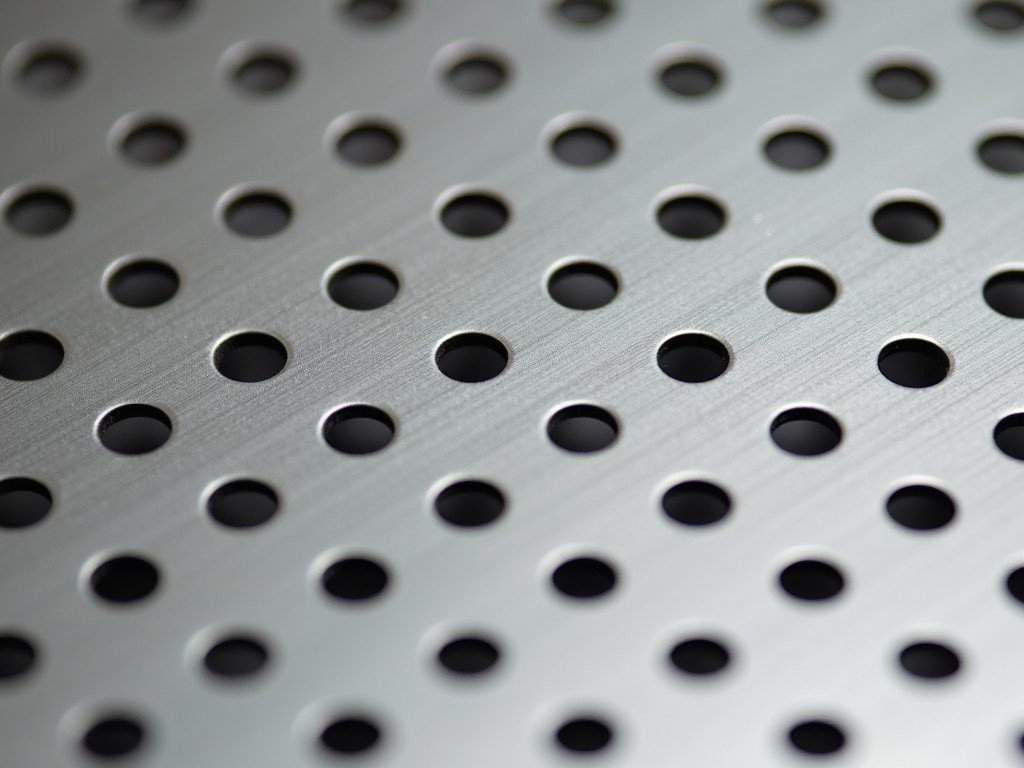
OEM Stainless Steel Sheet with Holes
Perforated stainless steel sheets are engineered for applications requiring controlled airflow, fluid passage, light transmission, or particle separation while maintaining structural integrity. The combination of corrosion-resistant alloy and precision hole patterns enables reliable performance in demanding industrial environments.
Hole geometry, open area percentage, and material thickness directly influence functional behavior such as pressure drop, sound attenuation, or filtration efficiency. Engineers select specific configurations based on process requirements rather than generic specifications.
Common alloys include 304 and 316 stainless steel, chosen for their resistance to oxidation and chemical exposure. 304 offers balanced performance in mild environments, while 316 provides enhanced chloride resistance for marine or chemical processing applications.
Material Specifications and Hole Patterns
Sheet thickness typically ranges from 0.5 mm to 6.0 mm, with thinner gauges suitable for decorative or light-duty filtration and thicker plates used in load-bearing or high-pressure differential applications. Tolerances on thickness adhere to ASTM A240 or EN 10088-2 standards.
Hole shapes include round, square, slotted, and hexagonal patterns, each affecting flow dynamics and structural stability differently. Round holes offer uniform stress distribution, while slotted patterns provide directional flow control.
Open area—the percentage of sheet surface occupied by holes—ranges from 10% to over 60%, calculated based on hole diameter, pitch, and arrangement. This metric directly correlates with airflow capacity or liquid throughput in filtration systems.
Manufacturing Process and Tolerances
Perforation is achieved via CNC turret punching or laser drilling, depending on hole size, material thickness, and required edge quality. Turret punching excels in high-volume production of standard patterns, while laser processing accommodates complex geometries and thinner materials without burr formation.
Positional tolerance for hole centers typically holds within ±0.1 mm for precision applications, with edge burr height controlled below 0.05 mm through secondary deburring or optimized punch clearance. These tolerances ensure consistent performance in automated assembly lines.
Sheet flatness after perforation is maintained to within 3 mm/m deviation, critical for applications requiring seamless integration into enclosures or machinery. Stress-relief annealing may be applied post-perforation to reduce distortion in thicker gauges.
Typical Industrial Applications
In HVAC systems, perforated sheets serve as diffuser plates or return air grilles, where hole pattern and open area are calibrated to achieve desired air distribution and noise reduction. The stainless construction ensures longevity in humid or chemically treated air streams.
Food processing equipment utilizes these sheets as drainage screens, washing trays, or protective guards, where 316L variant resists corrosion from frequent washdowns and acidic food residues. Hole sizes are selected to retain product while allowing efficient liquid runoff.
Industrial machinery incorporates perforated sheets as machine guards, ventilation panels, or coolant baffles. Structural rigidity is maintained through strategic hole spacing and edge reinforcement, preventing deformation under vibration or impact loads.
Architectural applications include facade cladding, sunscreens, and interior partitions, where the interplay of light and shadow through patterned holes creates visual interest while providing solar shading or acoustic dampening.
Customization Options
Customers specify hole diameter, pitch (center-to-center distance), pattern layout (straight, staggered, or custom), and open area percentage based on functional requirements. Non-standard shapes such as decorative motifs or flow-optimized slots are available upon request.
Sheet dimensions can be cut to length and width, with standard widths up to 1500 mm and lengths up to 3000 mm, though larger formats are feasible with segmented production and edge joining techniques. Custom slitting to narrow widths is also supported.
Surface finishes include No. 4 brushed, No. 8 mirror, or 2B mill finish, selected based on aesthetic or hygienic requirements. Post-processing options such as bending, forming, or welding preparation are discussed during quoting to ensure manufacturability.
Quality Control and Testing
Dimensional verification includes hole size, pitch, and positional accuracy using calibrated optical comparators or CMM systems. Open area is validated through flow testing or image analysis to confirm design intent.
Material certification (EN 10204 3.1) is provided upon request, confirming chemical composition and mechanical properties of the base alloy. Visual inspection checks for surface defects, burrs, or deformation under standardized lighting.
For critical applications, additional testing such as salt spray resistance (ASTM B117) or burst pressure validation may be performed. All inspection records are retained for traceability and available for customer review.
| Parameter | Typical Range / Options |
|---|---|
| Stainless Steel Grade | 304, 316L, 430 (available upon request) |
| Sheet Thickness | 0.5 mm – 6.0 mm |
| Hole Diameter | 0.8 mm – 50.0 mm |
| Open Area | 10% – 65% |
| Standard Width | Up to 1500 mm |
| Standard Length | Up to 3000 mm |
Engineers evaluating perforated stainless steel for OEM integration should provide hole pattern details, material thickness, sheet dimensions, and alloy preference to receive accurate quotations and lead times. Environmental exposure, cleaning methods, and mechanical loads influence material and finish selection.
Samples are available for functional testing, allowing validation of airflow, filtration efficiency, or structural behavior under actual operating conditions. Technical support assists in translating application requirements into manufacturable specifications.
Lead times typically range from 2 to 4 weeks for standard configurations, with expedited options available for urgent projects. Packaging includes protective interleaving and palletizing to prevent surface damage during transit.

Product Categories


Send Inquiry
If you are interested in our products, leave your information here and we will be in touch shortly.