Oem Stainless Steel Wire Mesh Standard Sizes
Stainless steel wire mesh is specified by three primary parameters: wire diameter, aperture size, and mesh count. These dimensions directly influence flow rates, filtration efficiency, structural
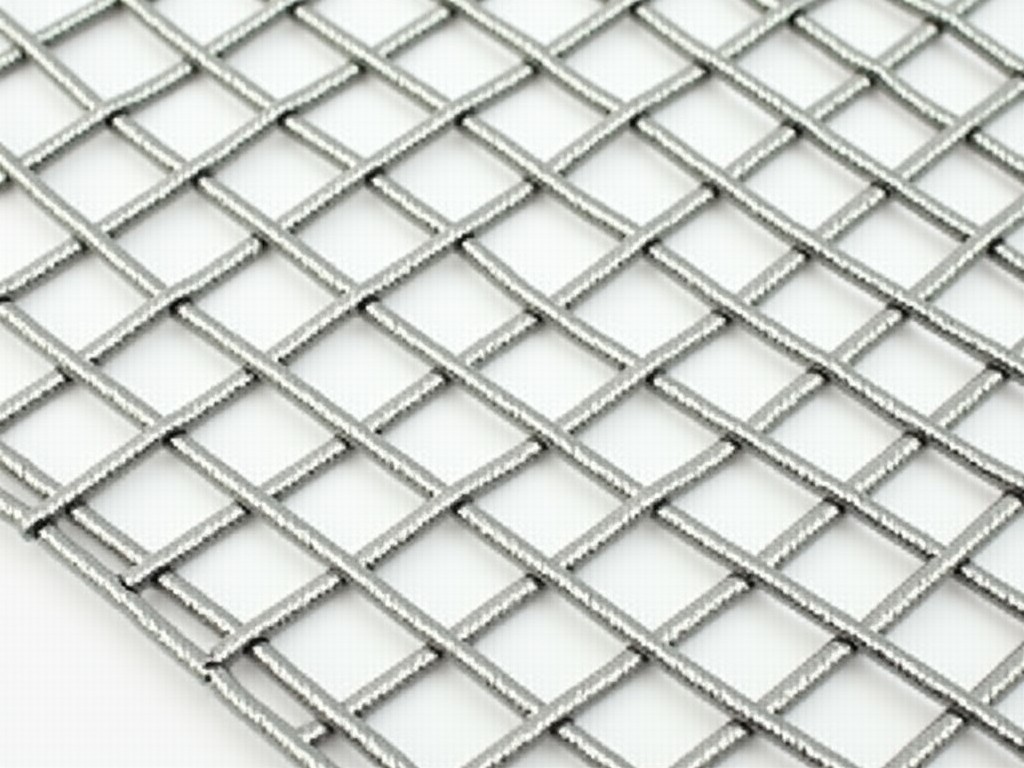
OEM Stainless Steel Wire Mesh Standard Sizes
Stainless steel wire mesh is specified by three primary parameters: wire diameter, aperture size, and mesh count. These dimensions directly influence flow rates, filtration efficiency, structural integrity, and compatibility with mating components in industrial systems. Standard sizes are established to streamline procurement, reduce lead times, and ensure interchangeability across equipment designs.
Mesh count refers to the number of openings per linear inch, calculated from the center of one wire to the center of the next. Aperture size is the clear opening between adjacent wires, determined by subtracting wire diameter from the pitch (1/mesh count). Wire diameter affects both mechanical strength and pressure drop across the mesh.
Standard Size Ranges for Common Applications
Standard stainless steel wire mesh sizes are grouped into ranges based on typical industrial use cases. Finer meshes (higher mesh count) are used for precision filtration, while coarser meshes serve in screening, shielding, or structural roles. The following table outlines commonly stocked standard sizes across grades 304 and 316L stainless steel.
| Mesh Count | Wire Diameter (mm) | Aperture Size (mm) | Typical Applications |
|---|---|---|---|
| 8 | 1.20 | 1.97 | Aggregate screening, security fencing |
| 10 | 0.90 | 1.64 | Vibrating screens, gravel separators |
| 20 | 0.50 | 0.77 | Sand filtration, seed cleaning |
| 40 | 0.30 | 0.33 | Powder sieving, insect screening |
| 60 | 0.20 | 0.22 | Food processing, chemical filtration |
| 80 | 0.15 | 0.17 | Pharmaceutical drying, catalyst support |
| 100 | 0.10 | 0.15 | Laboratory filtration, hydraulic fluid filtering |
| 150 | 0.08 | 0.09 | Precision coating, aerosol filtration |
These standard sizes represent the most frequently requested configurations in OEM supply chains. Mesh counts below 8 or above 200 are typically classified as specialty items due to increased manufacturing complexity and limited demand, though they remain available upon request.
Material Considerations for Standard Sizes
While the dimensional standards apply across stainless steel grades, material selection impacts performance in specific environments. Grade 304 offers adequate corrosion resistance for general indoor and mildly outdoor environments. Grade 316L, with added molybdenum, is preferred for chloride exposure, marine atmospheres, or chemical processing where pitting resistance is critical.
Wire diameter tolerances for standard mesh typically follow ASTM E2016 specifications, with allowable deviations of ±0.01 mm for finer wires and ±0.03 mm for heavier gauges. Aperture uniformity is maintained through precise weaving tension control during production to ensure consistent open area percentage.
Selection Logic for OEM Integration
OEM engineers select standard mesh sizes based on functional requirements rather than availability alone. For filtration applications, the target particle size determines the maximum allowable aperture, with a common design rule specifying mesh openings at 70–80% of the particle size to prevent blinding. In structural or shielding roles, open area percentage and tensile strength become primary drivers.
Open area percentage is calculated as (aperture² / (aperture + wire diameter)²) × 100. Higher open area reduces pressure drop in fluid systems but decreases mechanical load capacity. Standard sizes are chosen to balance these competing factors within known operating limits.
Quality Assurance for Standard Inventory
Standard-sized wire mesh undergoes dimensional verification at multiple stages: incoming wire inspection, in-process width and mesh count checks, and final roll assessment. Width tolerance is typically held to ±3 mm for rolls under 1.5 meters, with edge straightness monitored to prevent feeding issues in automated cutting or slitting operations.
Surface condition is inspected for weld marks, splitting, or uneven weaving that could indicate tension irregularities. While standard meshes are not individually laser-measured, statistical process control ensures batch consistency meets published specifications. Mill test reports confirming wire grade and diameter are available upon request.
Roll lengths for standard sizes are commonly 30 meters or 50 meters, minimizing splice points in high-volume applications. Custom lengths can be accommodated but may affect pricing and lead time due to non-standard processing.
Product Categories


Send Inquiry
If you are interested in our products, leave your information here and we will be in touch shortly.