Plain Weave Stainless Steel Wire Mesh
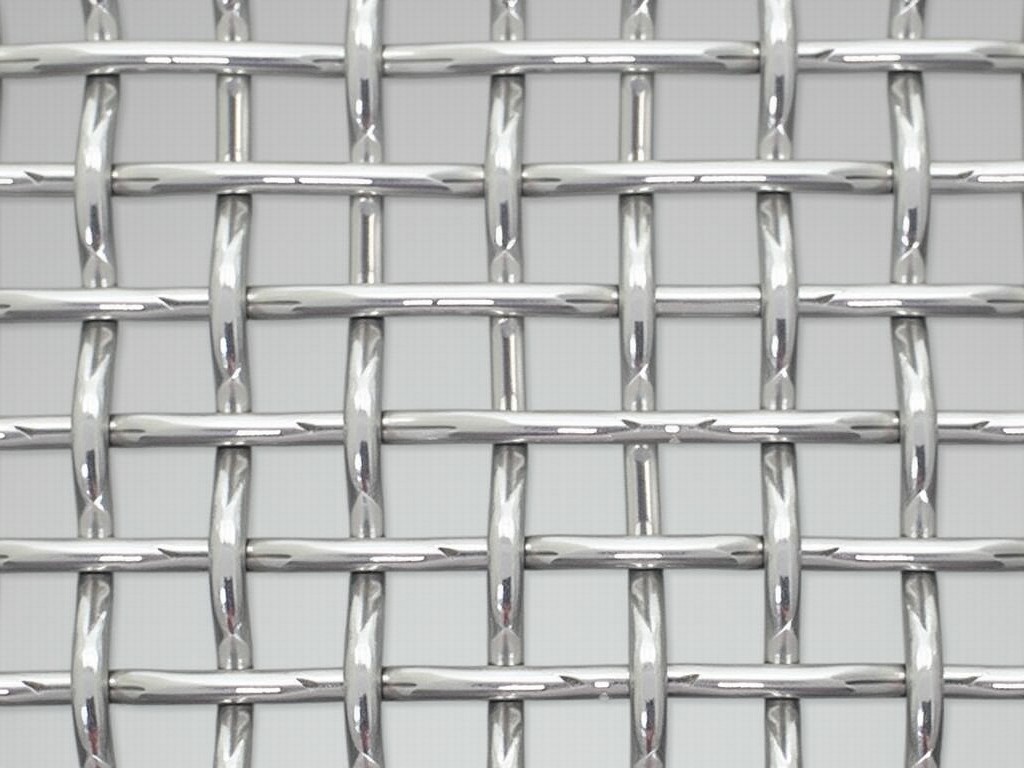
Plain weave stainless steel wire mesh is constructed with warp and weft wires interlaced in a simple over-one, under-one pattern, forming a uniform grid of square openings. This basic weave structure
Plain Weave Stainless Steel Wire Mesh
Plain weave stainless steel wire mesh is constructed with warp and weft wires interlaced in a simple over-one, under-one pattern, forming a uniform grid of square openings. This basic weave structure provides balanced tensile strength in both directions, making it suitable for applications requiring consistent filtration, screening, or barrier performance. The inherent corrosion resistance of stainless steel ensures long-term stability in harsh environments, while the precise aperture control supports repeatable process outcomes.
Material Specifications and Performance Characteristics
The mechanical and chemical properties of plain weave mesh are primarily determined by the stainless steel grade selected. Common grades include 304 for general-purpose corrosion resistance and 316 for enhanced resistance to chlorides and acidic environments, particularly in marine or chemical processing applications. Wire diameter typically ranges from 0.025 mm to 3.0 mm, while aperture sizes can vary from 25 microns to over 50 mm, allowing customization for fine filtration or coarse screening needs.
Tensile strength of the wire itself depends on the grade and temper, with austenitic stainless steels like 304 and 316 offering typical tensile strengths between 500–750 MPa in the annealed condition. The mesh’s open area percentage—calculated as the ratio of open space to total surface area—directly influences flow rate and pressure drop; for example, a 2 mm aperture with 0.5 mm wire yields approximately 44% open area. These values are critical when designing systems where flow efficiency and structural integrity must be balanced.
Manufacturing Process and Quality Control
Production begins with precision-drawn stainless steel wire, which is wound onto bobbins and fed into industrial weaving looms. The loom interlaces warp (lengthwise) and weft (transverse) wires according to the plain weave pattern, maintaining consistent tension to ensure uniform aperture size and wire alignment. Post-weaving, the mesh may undergo rolling or calendering to flatten the surface and improve dimensional stability, especially for finer meshes where wire deformation during weaving can distort openings.
Quality control involves multiple inspection stages: wire diameter is verified via micrometer or laser gauging, aperture size is measured using optical comparators or image analysis systems, and tensile strength is validated through spot testing of raw wire. Visual inspection checks for defects such as broken wires, skips, double picks, or uneven tension. For critical applications, additional tests like bubble point testing (for filtration meshes) or corrosion resistance validation may be performed per customer specifications or industry standards such as ASTM E2016.
Typical Applications Across Industries
In the food and beverage industry, plain weave mesh is used for sieving powders, filtering liquids, and separating solids during processing, where hygiene and non-reactivity are essential. The smooth surface and ease of cleaning make it compliant with food safety standards when manufactured from appropriate grades like 304 or 316L. In pharmaceutical manufacturing, it supports aseptic filtration and containment of particulates during active ingredient handling, helping maintain product purity.
Chemical processing plants employ this mesh as a catalyst support, gas distributor, or liquid barrier in reactors and filtration units, benefiting from its resistance to a wide range of chemicals and ability to maintain structural integrity at elevated temperatures. In automotive manufacturing, it serves as a debris screen in fluid systems, a protective guard for sensors, or a uniform coating substrate in powder deposition processes. Environmental applications include use in air filtration units, water pretreatment screens, and solid-liquid separation in wastewater treatment, where durability and corrosion resistance reduce maintenance frequency.
Customization Options and Ordering Considerations
Buyers can specify wire diameter, aperture size, mesh count (wires per linear inch or centimeter), width, length, and edge finish (such as selvaged or cut edges) to match exact process requirements. Roll lengths are typically available in standard increments (e.g., 30 m, 50 m) but can be customized for continuous processing lines to minimize splices. Widths range from narrow strips (under 50 mm) for precision instruments to wide formats exceeding 2 meters for large-scale industrial screens.
Surface treatments such as passivation or electropolishing may be requested to enhance corrosion resistance or improve cleanliness for hygienic applications. For integration into existing equipment, the mesh can be supplied as cut-to-size panels, formed cylinders, or framed assemblies with mounting features like flanges or gasket channels. When requesting a quotation, providing details on operating temperature, chemical exposure, mechanical load, and required open area helps ensure the recommended specification aligns with functional demands.
| Parameter | Typical Range | Notes |
|---|---|---|
| Stainless Steel Grade | 304, 316, 316L, 304L | 316L preferred for welded assemblies or chlorides |
| Wire Diameter | 0.025 mm – 3.0 mm | Aperture size must be larger than wire diameter |
| Aperture Size | 25 µm – 50 mm | Determines filtration rating or open area |
| Mesh Count | 1 – 635 wires per inch | Inversely related to aperture and wire size |
| Width | 10 mm – 2500 mm | Custom widths available upon request |
| Length (Roll) | Up to 100 m | Longer lengths available as spliced or custom orders |
| Open Area | 10% – 70% | Calculated from aperture and wire diameter |
Frequently Asked Questions
Can the mesh be customized to specific aperture and wire dimensions?
Yes, plain weave mesh is highly customizable. Wire diameter and aperture size can be tailored within the limits of the weaving process—typically, the aperture should be at least 2–3 times the wire diameter for stable weaving. Extreme ratios (very fine wire with large openings or coarse wire with tiny apertures) may require special processing or alternative weave types. Engineers should consult with manufacturers early in the design phase to confirm feasibility.
What information is needed to receive an accurate quotation?
To generate a precise quote, suppliers typically require: stainless steel grade, wire diameter, aperture size or mesh count, desired width and length, edge finish, and any additional treatments (e.g., passivation). Details about the operating environment—such as temperature, chemical exposure, pressure differential, or food contact requirements—help recommend the most suitable specification. Providing a drawing or sample can further reduce ambiguity.
How is the quality of the mesh verified before shipment?
Quality verification includes dimensional checks (wire diameter, aperture, width), visual inspection for defects, and mechanical testing of raw wire tensile strength. For filtration-grade mesh, bubble point or air permeability tests may be conducted. Certificates of Conformance are commonly provided, and material test reports (MTRs) for the stainless steel wire can be supplied upon request. Third-party inspection is available for critical applications.
Product Categories


Send Inquiry
If you are interested in our products, leave your information here and we will be in touch shortly.