Stainless Steel Expanded Metal Mesh Sheet
Stainless steel expanded metal mesh sheet is produced by simultaneously slitting and stretching a solid metal plate to form a continuous network of diamond-shaped openings. This one-piece
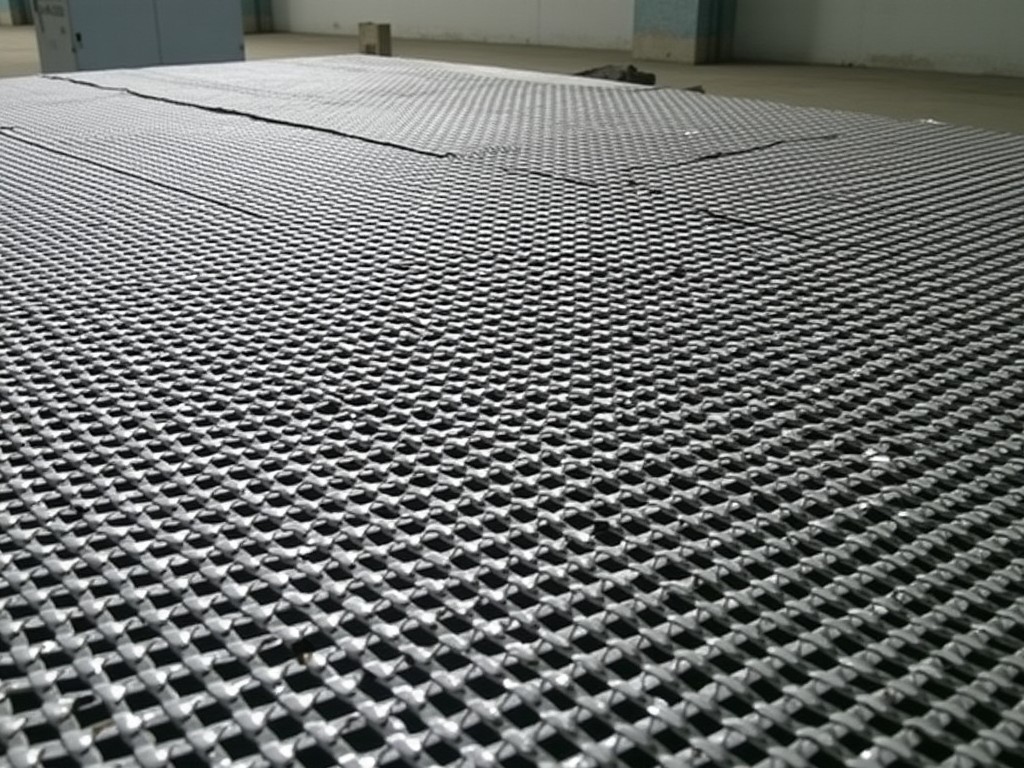
Stainless Steel Expanded Metal Mesh Sheet
Stainless steel expanded metal mesh sheet is produced by simultaneously slitting and stretching a solid metal plate to form a continuous network of diamond-shaped openings. This one-piece construction eliminates weld points and weak joints, resulting in a material with uniform structural integrity across its entire surface. The process preserves the base metal’s tensile strength while significantly reducing weight compared to solid sheet of equivalent dimensions.
Material Selection and Mechanical Properties
Commonly available grades include 304 and 316L stainless steel, selected based on environmental exposure and mechanical demands. Grade 304 offers adequate corrosion resistance for indoor and mildly aggressive outdoor environments, with a typical tensile strength of 515 MPa and yield strength of 205 MPa. Grade 316L, containing molybdenum, provides enhanced resistance to chlorides and acids, making it suitable for marine, chemical processing, and coastal applications, with comparable tensile strength but improved pitting resistance.
The expansion ratio—defined as the ratio of final expanded area to original blank area—typically ranges from 1.5 to 3.0, directly influencing open area percentage and structural stiffness. Thickness options generally span from 0.5 mm to 3.0 mm in the raw blank, with expanded thickness increasing proportionally based on the stretching process. Standard sheet sizes are often 1220 mm × 2440 mm, though dimensional tolerances follow industry norms for expanded metal, allowing for slight variations in strand width and opening size due to the inherent nature of the expansion process.
Design Parameters and Performance Characteristics
Key design variables include strand thickness, width of the expanded strand, and the size and orientation of the diamond-shaped openings. These parameters are interdependent: increasing strand width raises load-bearing capacity but reduces open area, while larger openings improve flow dynamics and reduce weight but decrease resistance to localized impact. The orientation of the diamond pattern—whether aligned with the long or short axis of the sheet—affects directional strength and is often specified based on the primary load direction in the application.
Open area percentage, a critical factor for filtration, ventilation, and light transmission, typically ranges from 30% to 70% depending on the expansion ratio and strand geometry. For example, a standard 3 mm × 10 mm opening with 1.5 mm strand width in 304 stainless steel yields approximately 50% open area. The raised surface of standard (non-flattened) expanded metal provides inherent slip resistance, while flattened variants—produced by cold rolling after expansion—offer a smooth, planar surface suitable for applications requiring minimal profile or tight mating with other components.
Typical Industrial Applications
In architectural contexts, stainless steel expanded metal is used for sun shading, facade cladding, and interior partitions where durability, aesthetic texture, and controlled light diffusion are required. Its resistance to UV degradation and ability to maintain appearance over decades make it preferable to coated or painted alternatives in exposed installations. The material’s non-combustible nature and compliance with fire safety codes further support its use in public buildings and transportation infrastructure.
Industrial sectors utilize the mesh for machine guarding, conveyor belts, and filtration supports where mechanical strength, corrosion resistance, and ease of cleaning are essential. Unlike woven wire mesh, expanded metal does not suffer from fraying or unraveling at cut edges, maintaining structural integrity even after fabrication. In food processing and pharmaceutical environments, the smooth, crevice-free surface of flattened expanded metal facilitates sanitation and reduces contamination risks, aligning with hygienic design principles.
Additional applications include battery electrodes in electrochemical systems, where the high surface area and electrical conductivity of stainless steel support efficient ion exchange, and as reinforcement in composite materials, where the mesh provides mechanical anchoring within polymer matrices. The material’s ability to be formed, bent, or fabricated using standard metalworking tools allows integration into complex assemblies without requiring specialized processes.
Customization and Fabrication Options
Custom specifications are routinely accommodated, including non-standard opening sizes, strand dimensions, and material grades such as 310S for high-temperature environments or duplex grades for enhanced strength-to-corrosion ratios. Sheets can be supplied flattened or raised, cut to specific lengths or shapes, and edge-treated for safety or functional requirements. Secondary operations such as bending, rolling, or welding are feasible, though care must be taken to preserve corrosion resistance in heat-affected zones, particularly with austenitic grades.
Surface treatments like passivation or electropolishing may be applied post-fabrication to enhance corrosion resistance and surface finish, especially in hygienic or aesthetic applications. Tolerances for cut pieces typically follow ISO 2768-m or similar standards unless otherwise specified, and flatness can be controlled through stress-relieving processes if dimensional stability is critical. All customizations are evaluated for manufacturability and potential impact on material properties before production.
Quality Control and Inspection
Quality assurance begins with material certification, verifying chemical composition and mechanical properties of the base stainless steel coil or sheet against ASTM or EN standards. During production, expansion consistency is monitored through in-line checks of strand width, opening size, and dimensional stability to ensure uniformity across the batch. Final inspection includes visual examination for defects such as tears, uneven expansion, or surface contamination, along with dimensional verification of overall sheet size and opening parameters.
For applications requiring documented performance, additional testing such as tensile strength verification, open area measurement, or corrosion resistance assessment (e.g., salt spray testing per ASTM B117) can be arranged upon request. Traceability is maintained through batch tracking, linking raw material inputs to finished goods. Packaging is designed to prevent deformation and surface damage during transit, typically involving flat stacking with protective interleaving and secure strapping on pallets or in crates.
| Parameter | Typical Range / Option | Notes |
|---|---|---|
| Stainless Steel Grade | 304, 316L, 310S, Duplex | Selected based on corrosion and temperature requirements |
| Raw Blank Thickness | 0.5 mm – 3.0 mm | Expanded thickness increases proportionally |
| Opening Size (Short Way × Long Way) | 6 mm × 12 mm to 20 mm × 40 mm | Diamond-shaped; custom sizes available |
| Strand Width | 1.0 mm – 3.0 mm | Affects open area and strength |
| Open Area Percentage | 30% – 70% | Dependent on geometry and expansion ratio |
| Standard Sheet Size | 1220 mm × 2440 mm | Custom sizes available upon request |
| Surface Condition | Raised or Flattened | Flattened via cold rolling post-expansion |
| Edge Treatment | Mill Edge, Safety Edge, Custom Trim | Selected based on handling and safety needs |

Product Categories


Send Inquiry
If you are interested in our products, leave your information here and we will be in touch shortly.