Stainless Steel Screen Mesh Flat Sheets
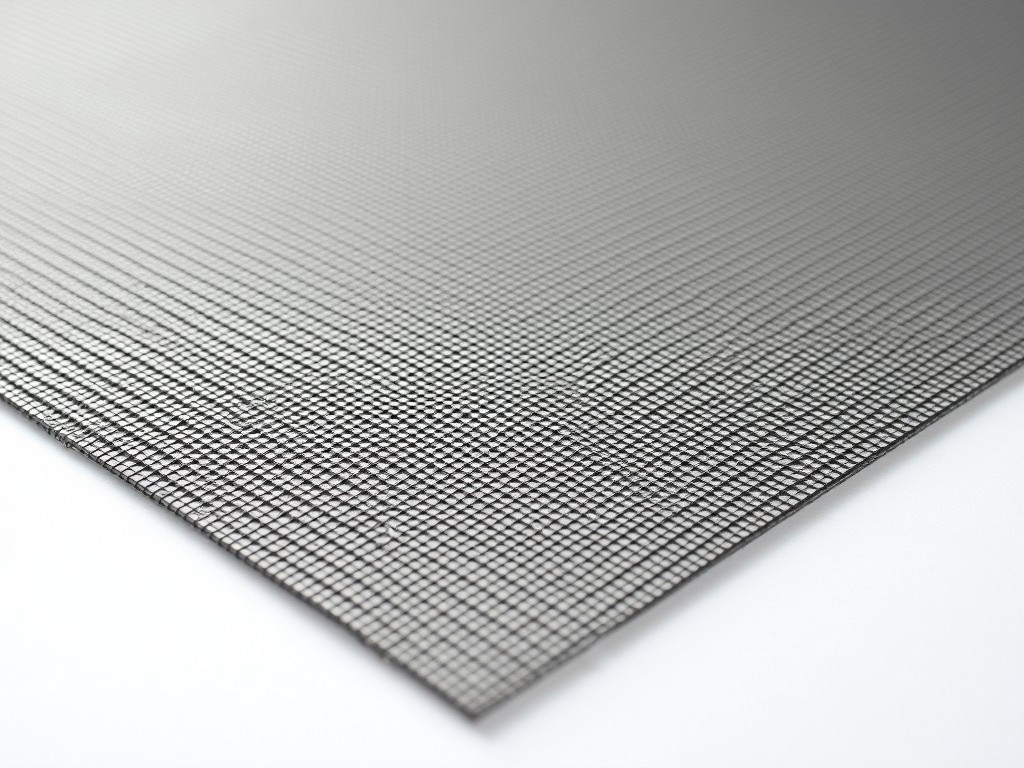
Stainless steel screen mesh flat sheets are precision-engineered filtration and separation media constructed from interwoven stainless steel wires forming uniform square or rectangular apertures.
Stainless Steel Screen Mesh Flat Sheets
Stainless steel screen mesh flat sheets are precision-engineered filtration and separation media constructed from interwoven stainless steel wires forming uniform square or rectangular apertures. These sheets serve as critical components in industrial processes requiring particle retention, fluid distribution, structural support, or surface protection under demanding conditions of temperature, corrosion, and mechanical stress.
Material Composition and Corrosion Resistance
The base material consists of austenitic stainless steel grades primarily AISI 304 (18-8) and AISI 316L (18-10-2), selected for their chromium-nickel microstructure that forms a passive oxide layer resistant to oxidation and chemical attack. Grade 304 provides adequate resistance to atmospheric corrosion, mild acids, and alkaline solutions in ambient to moderate temperature environments. Grade 316L incorporates molybdenum to significantly enhance resistance to chlorides, pitting, and crevice corrosion, making it suitable for marine exposure, chemical processing, and applications involving acidic or saline fluids up to 400°C.
Wire diameter and mesh count directly influence the effective open area and pressure drop characteristics. Typical wire diameters range from 0.1mm to 2.0mm, with mesh counts from 2 to 400 wires per inch, yielding open area percentages between 5% and 70%. These parameters are calculated based on the center-to-center wire spacing and are critical for predicting flow rates, filtration efficiency, and structural load-bearing capacity in design calculations.
Mechanical Properties and Structural Performance
The tensile strength of stainless steel wire used in mesh production typically ranges from 500 to 1000 MPa depending on grade and temper, with yield strength between 200 and 800 MPa. Elongation at break varies from 10% to 40%, providing ductility that allows the mesh to withstand impact and vibrational loads without brittle fracture. The interlocking weave pattern distributes mechanical stress across multiple wires, enhancing overall sheet rigidity compared to non-woven alternatives of equivalent wire thickness.
Flat sheets are manufactured to precise dimensional tolerances, with length and width variations held within ±1.5mm and squareness maintained to within 2mm diagonal deviation. Edge conditions include mill edge, slit edge, or welded and ground finishes, selected based on handling requirements and downstream processing. Thickness uniformity is controlled through consistent wire diameter and weaving tension, ensuring predictable performance in laminar flow applications and screen printing substrates.
Weave Patterns and Aperture Characteristics
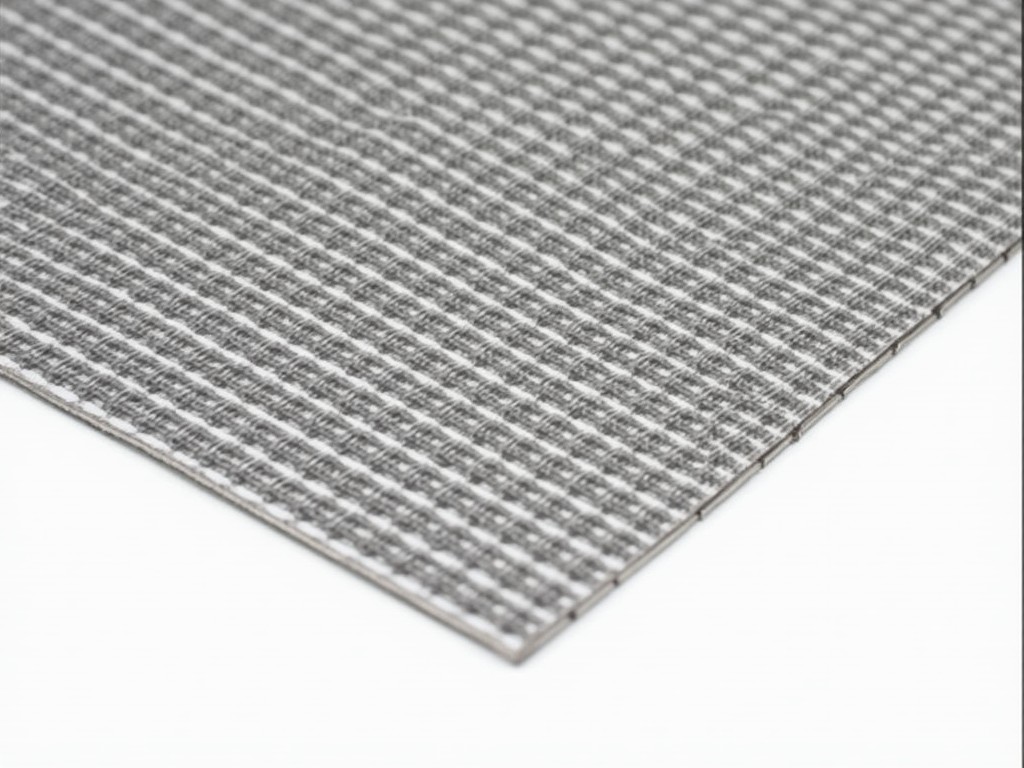
The most common weave pattern is plain square weave, where warp and weft wires pass alternately over and under each other at 90-degree angles, producing symmetrical apertures with consistent flow dynamics in all directions. This configuration offers balanced tensile strength in both axes and is widely used in general filtration, sieving, and shielding applications. Dutch weave variants feature a finer weft wire packed tightly with coarser warp wires, creating a tapered flow path that enhances fine particle retention while maintaining high flow rates—ideal for liquid filtration and gas dispersion.
Twill weave patterns, where wires pass over two and under two adjacent wires, provide greater flexibility and improved drape over contoured surfaces compared to plain weave, though with slightly reduced open area for the same wire diameter. Aperture size is defined as the clear opening between adjacent wires, calculated as pitch minus wire diameter. For example, a 100 mesh screen with 0.1mm wire diameter has an aperture of approximately 0.15mm. These dimensional relationships are essential for specifying retention ratings in micron-rated filtration systems.
Typical Industrial Applications
In chemical processing, stainless steel mesh flat sheets function as catalyst supports, filter media in reactors, and flame arrestors in vent lines, where thermal stability and chemical inertness prevent degradation and contamination. The open area consistency ensures uniform reactant distribution and predictable pressure gradients across fixed-bed systems. In food and pharmaceutical manufacturing, 316L mesh is used for fluid straining, powder sieving, and conveyor belts due to its ease of cleaning, resistance to sanitation chemicals, and compliance with FDA and 3-A sanitary standards for direct product contact.
Automotive manufacturers employ mesh sheets in fuel filters, oil filters, and exhaust gas recirculation (EGR) systems to capture particulates while withstanding thermal cycling and vibration. Aerospace applications include bleed air filters, hydraulic fluid strainers, and electromagnetic interference (EMI) shielding enclosures, where lightweight construction and reliability under extreme temperatures are critical. In architectural and industrial design, perforated mesh sheets serve as glare-reducing sun shields, ventilation facades, and machine guards, combining functional performance with aesthetic durability.
Quality Control and Inspection Protocols
Dimensional verification begins with aperture measurement using calibrated optical comparators or laser micrometers at multiple points across the sheet to assess uniformity. Wire diameter is confirmed via micrometer or optical methods, and mesh count is validated by counting wires over a known length using a magnifying loupe or digital imaging system. Tensile testing of wire samples follows ASTM A370 to confirm mechanical properties align with material certifications. Visual inspection under bright light identifies defects such as broken wires, skips, double picks, or staining that could compromise performance.
For critical applications, bubble point testing determines the largest pore size by measuring the pressure required to expel liquid from the mesh structure, correlating to the maximum expected particle passage. Air permeability testing per ASTM D737 quantifies volumetric flow rate under defined pressure differential, providing data for pressure drop calculations in system design. Chemical passivation treatments are verified via copper sulfate test or ferricyloxy test to ensure surface iron contamination is removed, particularly important for 316L in sanitary environments.
Customization Options and Fabrication
Flat sheets can be supplied in standard roll widths of 1000mm, 1250mm, and 1500mm, with cut-to-length capabilities to meet specific part dimensions without requiring secondary processing by the customer. Edge treatments include deburring, rounding, or welding to form sealed perimeters for pressure-containing applications. Custom shapes are achievable through laser cutting, CNC punching, or chemical etching, enabling precise geometries for gaskets, seals, or microfluidic plates while maintaining edge integrity and minimizing thermal distortion.
Surface finishes range from as-woven mill finish to electropolished, buffed, or coated variants. Electropolishing removes surface impurities and enhances corrosion resistance by smoothing microscopic peaks, beneficial in ultra-clean environments. Coatings such as PTFE or silicone may be applied for non-stick properties or thermal insulation, though these are evaluated case-by-case due to potential effects on open area and thermal conductivity. All customizations are subject to manufacturability reviews to ensure dimensional stability and performance consistency.
Packaging and Handling Considerations
Sheets are packaged flat in crush-resistant cartons or on wooden pallets with interleaving layers of polyethylene or kraft paper to prevent abrasion and moisture ingress during transit. For larger formats, sheets are rolled on rigid cores with protective outer wrapping to avoid creasing or wire deformation. Edge protectors are applied to vulnerable corners, and humidity indicators may be included for long-term storage or export shipments to monitor environmental exposure. Each package includes a label specifying grade, mesh count, wire diameter, dimensions, and heat number for traceability.
Handling recommendations advise against bending beyond the material’s elastic limit to prevent permanent deformation or wire fracture. Sheets should be lifted using vacuum lifters or evenly distributed support to avoid localized stress. Storage in dry, temperature-stable environments away from direct sunlight and contaminants preserves surface integrity. Upon receipt, visual inspection is recommended before integration into assembly lines or filtration housings to detect any transit-related damage.
| Parameter | Typical Range / Options |
|---|---|
| Stainless Steel Grade | AISI 304, 316L (304L, 321 available upon request) |
| Mesh Count | 2 to 400 wires per inch |
| Wire Diameter | 0.1mm to 2.0mm |
| Aperture Size | 0.02mm to 25mm (calculated from mesh and wire) |
| Open Area | 5% to 70% (dependent on mesh and wire) |
| Sheet Width | Up to 2000mm (standard rolls: 1000, 1250, 1500mm) |
| Length Tolerance | ±1.5mm (cut-to-length) |
| Surface Finish | Mill, electropolished, brushed, coated (PTFE, silicone) |
Selecting the appropriate stainless steel screen mesh flat sheet requires alignment of material grade, weave pattern, aperture dimensions, and mechanical properties with the specific process conditions, including fluid chemistry, temperature, pressure, particle size distribution, and cleaning protocols. Engineers should evaluate pressure drop expectations, structural load requirements, and compatibility with cleaning-in-place (CIP) or sterilization-in-place (SIP) systems during specification. Dimensional accuracy and surface consistency directly impact performance in precision applications such as screen printing, microfluidics, and uniform flow distribution.
For technical consultation, custom specifications, or sample requests, contact our engineering team to discuss your application requirements. Provide details on operating environment, required retention rating, flow dynamics, and dimensional constraints to receive a tailored recommendation. We support prototyping, batch production, and OEM integration with full traceability and quality documentation.
Product Categories


Send Inquiry
If you are interested in our products, leave your information here and we will be in touch shortly.