Stainless Steel Wire Mesh Screen Sizes Chart
This page provides a reference for standard and customizable stainless steel wire mesh screen dimensions used in industrial filtration, separation, and screening applications. Understanding mesh
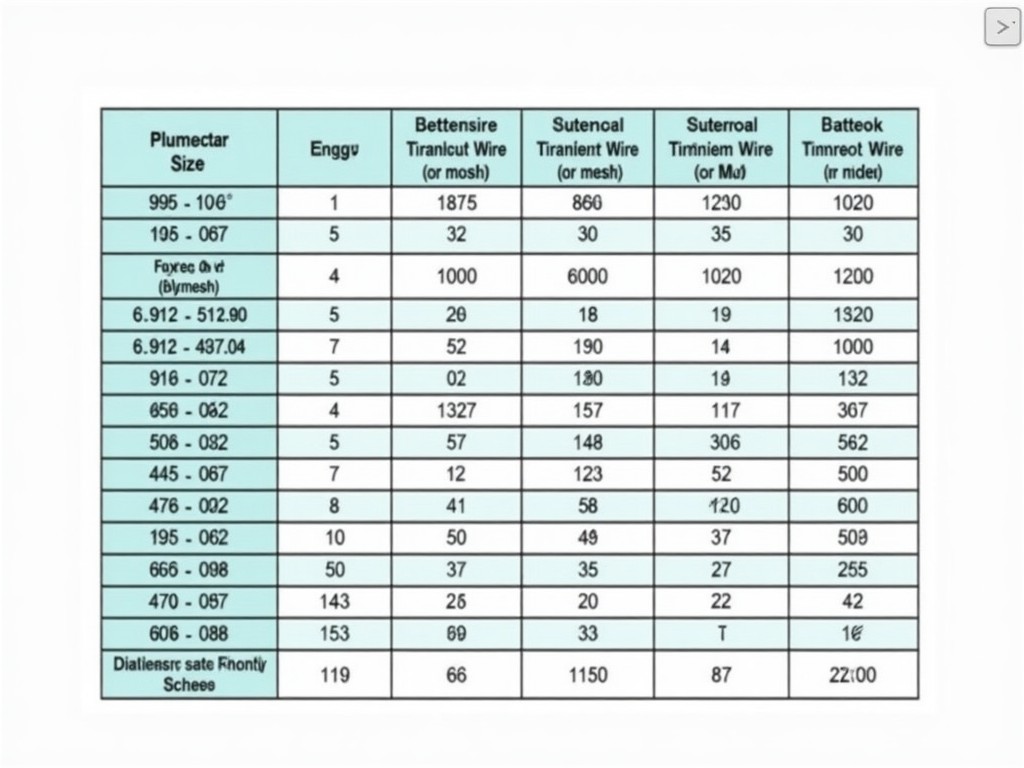
Stainless Steel Wire Mesh Screen Sizes Chart
This page provides a reference for standard and customizable stainless steel wire mesh screen dimensions used in industrial filtration, separation, and screening applications. Understanding mesh size, wire diameter, and open area is essential for selecting the correct screen for process requirements such as particle retention, flow rate, and pressure drop.
Understanding Mesh Size and Open Area
Mesh size refers to the number of openings per linear inch, measured from center to center of adjacent wires. For example, a 10-mesh screen has 10 openings per inch. As mesh number increases, opening size decreases, affecting both particle retention and flow capacity. Open area percentage—the ratio of open space to total surface area—determines how easily fluids or solids pass through the screen.
Wire diameter influences mechanical strength and clogging resistance. Thicker wires increase durability but reduce open area at a given mesh count. Engineers must balance filtration precision with hydraulic efficiency when selecting screen specifications.
Standard Stainless Steel Wire Mesh Screen Sizes
| Mesh Size | Opening Size (mm) | Typical Wire Diameter (mm) | Open Area (%) |
|---|---|---|---|
| 2 | 10.16 | 1.60 | 63 |
| 4 | 4.76 | 1.20 | 51 |
| 6 | 2.82 | 1.00 | 41 |
| 8 | 1.96 | 0.80 | 36 |
| 10 | 1.40 | 0.65 | 30 |
| 12 | 1.07 | 0.55 | 25 |
| 16 | 0.73 | 0.45 | 22 |
| 20 | 0.52 | 0.40 | 18 |
| 30 | 0.30 | 0.30 | 13 |
| 40 | 0.21 | 0.25 | 10 |
| 50 | 0.15 | 0.20 | 8 |
| 60 | 0.11 | 0.18 | 6 |
| 80 | 0.08 | 0.15 | 4 |
| 100 | 0.06 | 0.12 | 3 |
Values in the table represent typical specifications for plain weave stainless steel wire mesh. Actual dimensions may vary slightly due to manufacturing tolerances. For precise requirements, consult technical datasheets or request samples for validation.
Material and Weave Options
Stainless steel grades commonly used include 304, 316L, and 316Ti. Grade 304 offers good corrosion resistance for general industrial use. 316L provides enhanced resistance to chlorides and acidic environments, suitable for chemical processing and marine applications. 316Ti adds titanium stabilization for improved resistance to intergranular corrosion at elevated temperatures.
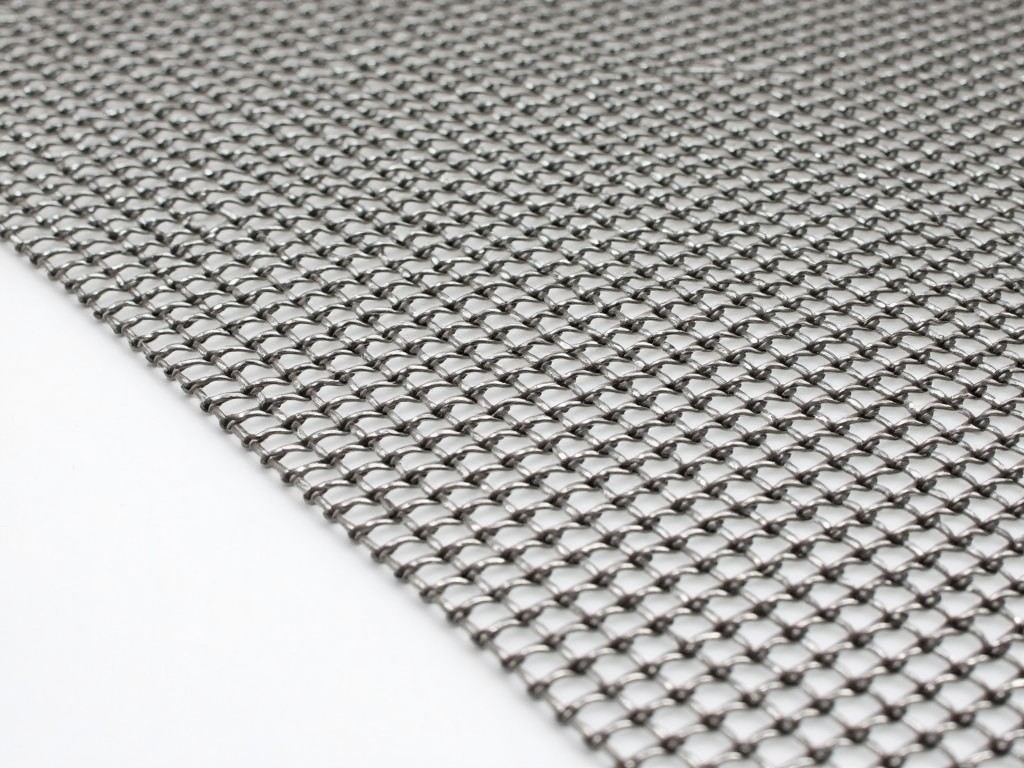
Weave patterns affect screen performance. Plain weave is standard, offering balanced strength and flow. Twill weave allows heavier wire diameters for increased durability while maintaining fine filtration. Dutch weave uses varying warp and shute wires to achieve high mechanical strength with precise micron-rated openings, often used in high-pressure filtration.
Customization and Application Considerations
Custom mesh sizes, wire diameters, and panel dimensions are available upon request. Manufacturers can produce screens to exact specifications for OEM integration, including framed panels, roll goods, or die-cut shapes. Edge treatments such as folding, welding, or binding with compatible alloys prevent fraying and ensure structural integrity in high-vibration environments.
Application-specific factors influence selection. In wastewater treatment, screens must resist abrasion and biofilm buildup. In food processing, surfaces must meet hygiene standards and allow for clean-in-place (CIP) procedures. In oil and gas, screens may require explosion-proof framing and resistance to sour service (H₂S) environments.
Pressure drop across the screen increases with finer mesh and lower open area. System designers should calculate expected flow resistance to avoid overloading pumps or reducing throughput. Open area charts and flow coefficients are available for hydraulic modeling.
Quality Control and Testing
Manufacturers verify mesh count using optical microscopy or laser scanning to ensure opening consistency. Wire diameter is measured with micrometers at multiple points. Tensile strength and elongation are tested per ASTM A370 for the base wire material. Visual inspection checks for defects such as broken wires, skipped picks, or uneven tension.
For critical applications, additional testing may include bubble point analysis to determine largest pore size, or air permeability tests to confirm flow characteristics. Traceability documentation, including material test reports (MTRs) and inspection records, is provided upon request.
Requesting Technical Support
Industrial buyers seeking to specify stainless steel wire mesh screens should provide details on operating conditions: temperature, pressure, chemical exposure, particle size distribution, and required flow rate. This information enables accurate recommendation of mesh size, wire diameter, material grade, and weave pattern.
To discuss custom requirements, request samples, or obtain formal quotations, contact the technical sales team. Provide application specifics to ensure the recommended screen meets performance, durability, and regulatory requirements.
Get a Quote or Technical Consultation
For assistance with screen selection, custom specifications, or application engineering support, contact our technical team. Include your process parameters to receive a tailored recommendation.

Product Categories


Send Inquiry
If you are interested in our products, leave your information here and we will be in touch shortly.