Wedge Wire Screen Top Manufacturers
Selecting a wedge wire screen manufacturer requires evaluating manufacturers requires more than reviewing catalog specifications. Industrial buyers must assess engineering capabilities, material
Wedge Wire Screen Top Manufacturers: Engineering Guide for Industrial Selection
Selecting a wedge wire screen manufacturer requires evaluating manufacturers requires more than reviewing catalog specifications. Industrial buyers must assess engineering capabilities, material traceability, fabrication precision, and quality validation processes that directly impact screen performance in filtration, separation, and dewatering applications. This guide explains the technical differentiators that separate capable suppliers from commodity providers, focusing on measurable characteristics that reduce project risk and ensure long-term operational value.
Core Engineering Characteristics of Wedge Wire Screens
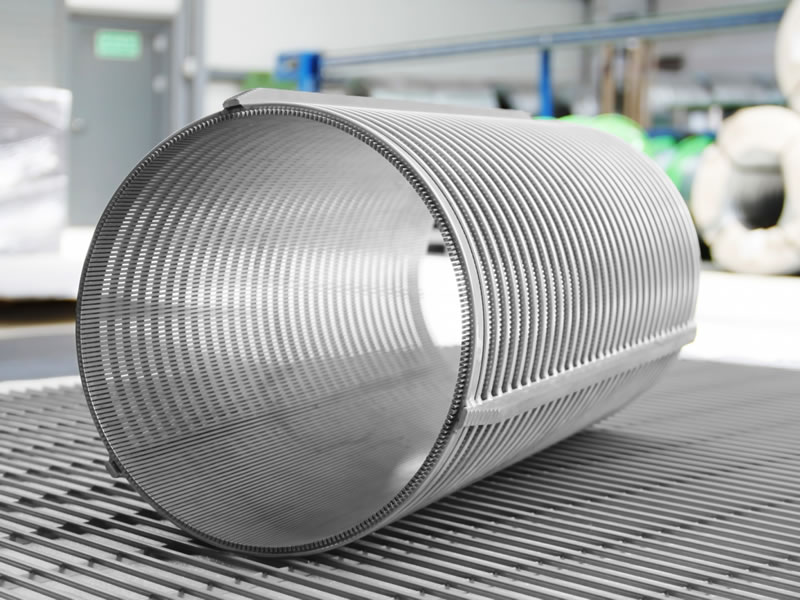
Wedge wire screens are defined by their V-profile wire wrapped around longitudinal support rods, creating continuous slot openings that resist blinding and provide high open area. Unlike perforated or mesh alternatives, the wedge wire geometry maintains structural integrity under high differential pressure while allowing precise control over particle retention. The slot size, wire profile, support rod spacing, and alloy composition collectively determine hydraulic efficiency, mechanical strength, and corrosion resistance in process environments.
Key performance indicators include open area percentage (typically 30–50% for standard configurations), collapse pressure rating (measured in kPa or psi), and tensile strength of the assembled panel. Manufacturers capable of tight tolerance control on wire profile angle (usually 30–45 degrees) and consistent rod welding deliver screens with predictable flow characteristics and extended service life in abrasive or corrosive duties.
Material Selection and Fabrication Precision
Material choice directly affects compatibility with process fluids, temperature limits, and resistance to pitting or stress corrosion cracking. Common alloys include 304L/316L stainless steel for general water and wastewater treatment, duplex 2205 for chloride-rich environments, and nickel alloys like Hastelloy C-276 for aggressive chemical processing. Top manufacturers provide mill test reports (MTRs) for all raw materials and maintain traceability from coil to finished screen.
Fabrication precision involves resistance welding of each wrap to the support rods without overheating the V-wire, which could alter the profile angle or create weak points. Automated welding systems with closed-loop feedback ensure consistent penetration and minimal heat-affected zones. Post-fabrication stress relieving may be applied to large panels to prevent distortion during installation or operation.
Customization Capabilities That Impact Performance
Off-the-shelf screens rarely match exact process requirements. Leading manufacturers offer full customization of slot size (down to 0.05 mm), panel dimensions, curvature, and edge treatments. Applications such as centrifuge baskets, static bends, or intake screens often require radial or compound curves where maintaining uniform slot opening across the bent section is critical to prevent localized blinding or structural weakness.
Edge reinforcement options—such as welded frames, flanged borders, or stainless steel edge binding—affect installation ease and long-term durability. Manufacturers with in-house bending and forming equipment can produce complex geometries without relying on third-party fabricators, reducing lead times and ensuring dimensional accountability. Custom header designs for pressure retention or bypass flow control are also indicators of deep application understanding.
Quality Control and Validation Processes
Reliable manufacturers implement multi-stage inspection beyond basic dimensional checks. This includes visual inspection of weld integrity under 10x magnification, slot width verification using optical comparators or laser gauges, and hydrostatic testing to validate collapse resistance. For critical applications, non-destructive testing such as dye penetrant or ultrasonic inspection of welds may be performed upon request.
Traceability systems link each screen to its raw material batch, welding parameters, and inspection results. Manufacturers adhering to ISO 9001 or ASME U-stamp standards (where applicable) document these processes in quality manuals available for review. The ability to provide a complete test package with shipment—including MTRs, dimensional reports, and pressure test certificates—reduces commissioning risk and supports regulatory compliance.
Typical Industrial Applications and Performance Expectations
In municipal water treatment, wedge wire screens serve as inlet protection for pumps and pretreatment for membrane systems, where consistent slot size prevents fouling of downstream equipment. Open area above 40% minimizes head loss, while 316L construction withstands chlorine exposure. In mining, screens used in slurry dewatering must resist abrasion from fine solids; here, harder alloys or overlay coatings on high-wear zones extend life beyond standard stainless steel.
Food and beverage processors require screens with electropolished or passivated surfaces to meet sanitary standards, often using 316L with Ra < 0.8 μm. Chemical plants rely on corrosion-resistant alloys for acid recovery or solvent filtration, where even minor pitting can lead to catastrophic failure. Matching the screen’s material grade and fabrication quality to the specific process condition—not just the industry—is what prevents premature failure and unplanned downtime.
Manufacturer Evaluation Checklist
- Material traceability: Can the supplier provide MTRs for all alloys used?
- Welding process: Is resistance welding automated with closed-loop control?
- Tolerance capabilities: What is the achievable slot size variance (± mm)?
- Custom geometry: Can they produce curved, tapered, or non-rectangular panels in-house?
- Testing protocols: Are hydrostatic, dimensional, and weld inspections standard?
- Documentation: Do they supply full test packages with shipment?
Comparison of Leading Manufacturer Capabilities
| Capability | Tier 1 Manufacturers | Tier 2/3 Suppliers |
|---|---|---|
| Material Traceability (MTRs) | Full traceability to coil, digital records | Batch-level or upon request |
| Slot Size Tolerance | ±0.02 mm for precision applications | ±0.05 mm or larger |
| Custom Curvature | In-house 3D bending, compound curves | Limited to simple radii, outsourced |
| Weld Inspection Standard | 100% visual + spot ultrasonic/dye penetrant | Visual only, sampling-based |
| Documentation Package | MTRs, test reports, weld maps, material certs | Basic dimensional report only |
The technical rigor demonstrated in material handling, fabrication precision, and validation processes separates manufacturers capable of delivering consistent performance in demanding industrial environments. Buyers should prioritize suppliers who treat each screen as an engineered component rather than a commoditized part, particularly when failure risks include process contamination, equipment damage, or unplanned shutdowns.
Product Categories


Send Inquiry
If you are interested in our products, leave your information here and we will be in touch shortly.