400 Ft 16 5 Gauge Rebar Tie Wire
Rebar tie wire is a critical fastening component used to secure reinforcing steel bars in concrete formwork prior to pouring. The 16.5 gauge specification refers to the wire diameter, which balances
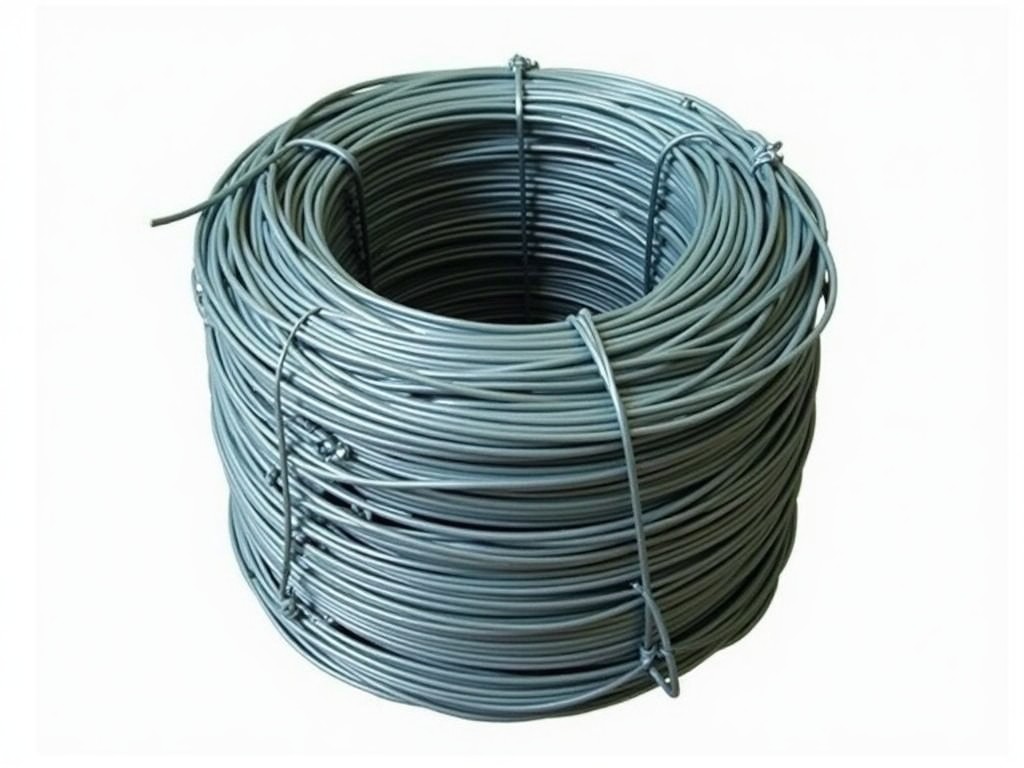
400 ft 16.5 Gauge Rebar Tie Wire
Rebar tie wire is a critical fastening component used to secure reinforcing steel bars in concrete formwork prior to pouring. The 16.5 gauge specification refers to the wire diameter, which balances tensile strength with manual tying efficiency. At 400 feet per coil, this length is standardized for high-volume construction applications where minimizing splice frequency improves labor productivity.
The wire is typically manufactured from low-carbon steel, annealed to achieve the necessary ductility for repeated twisting without fracturing. Annealing reduces hardness while maintaining sufficient tensile strength to resist loosening under vibration and concrete pressure. This thermal process ensures consistent performance across varying environmental conditions on-site.
Galvanization is commonly applied to improve corrosion resistance, particularly in humid or chloride-exposed environments. The zinc coating acts as a sacrificial barrier, delaying rust formation that could compromise tie integrity over the structure's service life. Coating weight is controlled to avoid excessive buildup that might interfere with twisting tools or reduce flexibility.
Technical Specifications
| Property | Value |
|---|---|
| Nominal Diameter | 0.014 inch (0.36 mm) |
| Tensile Strength (Typical) | 80,000–95,000 psi |
| Elongation at Break | 10–18% |
| Coating Type | Hot-dip galvanized (G60 equivalent) |
| Coil Length | 400 ft (121.9 m) |
| Wire Temper | Soft annealed |
Material and Manufacturing Considerations
The selection of low-carbon steel (typically C1008 or equivalent) ensures the wire can undergo sufficient cold drawing to achieve 16.5 gauge without cracking. Subsequent annealing in a controlled atmosphere furnace relieves internal stresses, yielding a uniform soft temper ideal for hand tying or use with automated tying tools. This process also improves fatigue resistance during repeated bending.
Galvanization is performed via hot-dip process after drawing and annealing, ensuring full coverage including the wire surface. The zinc-iron alloy layers formed provide metallurgical bonding, reducing the risk of delamination during handling. Coating thickness is monitored to meet ASTM A641 standards for soft temper tie wire, balancing corrosion protection with flexibility.
Spool design prevents tangling during deployment. The wire is wound under consistent tension to maintain uniform coil density, allowing smooth payout from the center or outside pull. Core materials are selected to resist deformation under typical job site handling, minimizing wire damage during transport and storage.
Applications in Concrete Construction
In reinforced concrete assemblies, rebar tie wire maintains the positional accuracy of longitudinal and transverse bars during concrete placement. Properly tied intersections prevent bar displacement that could lead to insufficient cover, cracking, or reduced load capacity. The wire’s flexibility allows conformance to complex bar layouts, including splices, stirrups, and column ties.
For slab-on-grade and wall formwork, the 400 ft coil length reduces the need for frequent reloading, particularly in large-area pours where workers move systematically across the grid. This minimizes downtime and supports consistent tying rhythm. In vertical applications like columns and walls, the wire’s soft temper allows tight, secure knots without tool slippage or wire fracture.
In seismic zones or high-vibration environments, the ductility of annealed wire helps absorb energy without brittle failure. Unlike stiffer alternatives, it maintains clamping force under cyclic loading, reducing the risk of gradual loosening over time. This behavior contributes to long-term structural integrity, especially in critical infrastructure.
Comparison with Alternative Gauges
| Gauge | Diameter (in) | Tensile Strength (psi) | Best Use Case |
|---|---|---|---|
| 16.5 | 0.014 | 80,000–95,000 | General purpose, balanced strength and flexibility |
| 16 | 0.015 | 90,000–105,000 | High-vibration areas, heavier mats |
| 18 | 0.012 | 70,000–85,000 | Light residential, epoxy-coated rebar |
The 16.5 gauge represents a pragmatic midpoint where wire is strong enough to resist premature failure during tying yet pliable enough for rapid, consistent knotting. Thicker gauges (e.g., 16) increase pulling force required and may fatigue workers faster in high-volume scenarios. Thinner options (e.g., 18) reduce material cost but are more prone to breakage under tension or when twisted tightly around deformed bar intersections.
For projects using epoxy-coated or stainless steel rebar, 16.5 gauge remains compatible as the zinc coating does not adversely interact with common rebar finishes. However, in highly corrosive environments (e.g., marine splash zones), stainless steel tie wire may be specified despite higher cost, though this is uncommon for standard structural applications.
Quality Control and Testing
Dimensional consistency is verified through regular sampling during drawing and annealing processes. Diameter tolerances are held to ±0.0005 inch to ensure predictable performance in automated tying equipment. Tensile and elongation tests are conducted per ASTM A370 on samples from each batch to confirm ductility and strength requirements are met before coating.
Coating adhesion and weight are assessed using magnetic pull-off and gravimetric methods. Samples undergo humidity chamber exposure to evaluate corrosion resistance acceleration, though real-world performance is inferred from established zinc coating behavior in concrete pore environments. Spools are inspected for uniform winding, absence of nicking, and secure fastening to prevent unraveling.
Final packaging includes protective wrapping to shield against moisture and abrasion during transit. Each coil is labeled with gauge, length, material type, and batch traceability information. This enables users to correlate field performance with production records if needed, supporting quality investigations and process improvement.
For technical inquiries, custom packaging requests, or project-specific consultations regarding rebar tie wire specifications, please contact our engineering team.
Contact Us
More Products

Send Inquiry
If you are interested in our products, leave your information here and we will be in touch shortly.