Stainless Steel Baling Wire Factory
Industrial baling operations require wire that maintains tensile integrity under cyclic loading, resists corrosion in humid or chemically active environments, and feeds consistently through
Stainless Steel Baling Wire Factory
Industrial baling operations require wire that maintains tensile integrity under cyclic loading, resists corrosion in humid or chemically active environments, and feeds consistently through high-speed balers. Stainless steel baling wire addresses these demands through alloy selection and controlled cold-working processes. This page outlines the technical considerations, manufacturing parameters, and application-specific characteristics relevant to procurement and engineering evaluation.
Material Composition and Mechanical Properties
The base material for stainless steel baling wire is typically austenitic grade AISI 304 or 316, selected for their combination of corrosion resistance and formability. Grade 304 contains approximately 18% chromium and 8% nickel, providing adequate resistance to atmospheric oxidation and mild chemical exposure. Grade 316 adds 2-3% molybdenum, enhancing resistance to chlorides and acidic environments commonly found in waste processing or agricultural settings. Wire is produced via cold drawing from annealed rod, which increases tensile strength while reducing ductility. Typical tensile strength ranges from 800 to 1200 MPa depending on diameter and degree of cold work, with elongation at break between 10% and 20%. Yield strength typically reaches 60-80% of tensile strength, ensuring elastic recovery under intermittent load.
Diameter Tolerance and Surface Finish
Dimensional consistency is critical for reliable feeding in automated baling systems. Wire diameter is controlled through precision dies during drawing, with standard tolerances of ±0.02 mm for sizes ranging from 1.5 mm to 3.0 mm. Tighter tolerances (±0.01 mm) are available upon request for high-speed applications. Surface finish is influenced by lubricants used during drawing and subsequent cleaning processes. A matte, uniform finish reduces friction in guides and minimizes particulate shedding. Surface roughness (Ra) typically falls between 0.4 and 0.8 μm after standard processing; electropolished or passivated finishes can achieve Ra < 0.2 μm for applications requiring minimal contamination risk.
Coiling and Packaging Configuration
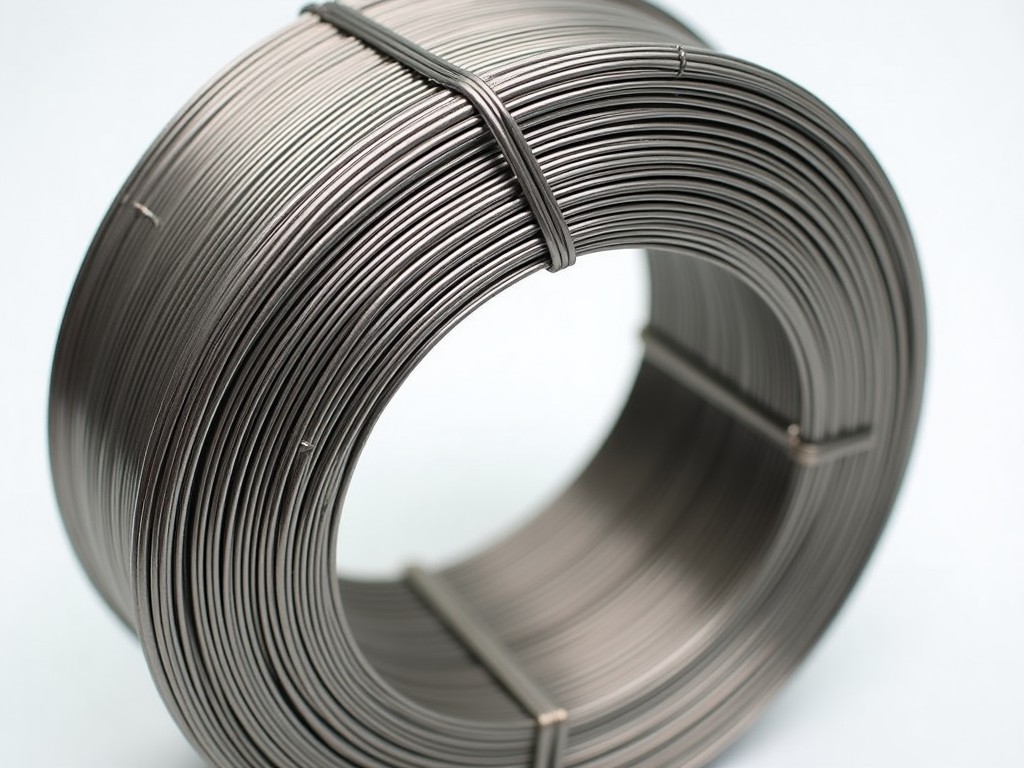
Wire is supplied in either coil or spool format, designed to minimize tangling and ensure smooth payoff. Coil inner diameter (ID) ranges from 300 mm to 500 mm, with outer diameter (OD) dependent on wire gauge and length. Standard coil weights vary between 25 kg and 50 kg to balance handling safety with material efficiency. Spools feature a central arbor hole of 50 mm or 75 mm, with flange diameters up to 400 mm. Packaging includes water-resistant wrapping and corner protection to prevent deformation during transit. For export shipments, additional moisture-barrier layers and shock-absorbent edge guards are applied. Custom labeling, including barcodes and material traceability codes, can be integrated upon request.
Quality Control and Testing Protocol
Each production lot undergoes dimensional verification, tensile testing, and visual inspection. Diameter is measured at multiple points along the length using laser or contact gauges, with statistical process control applied to detect drift. Tensile strength is validated via destructive testing on samples cut from the coil, following ISO 6935-1 or equivalent standards. Elongation and bend ductility are assessed to ensure suitability for knot formation and shock loading. Surface integrity is examined under 10x magnification for defects such as scratches, pits, or drawing marks. Coil integrity is verified by checking for layer slipping or deformation. Mill test reports (MTRs) documenting chemical composition, mechanical properties, and inspection results are available for each lot.
Application-Specific Considerations
In waste recycling facilities, baling wire must withstand exposure to moisture, organic acids, and cleaning agents without significant degradation. Grade 316 is often preferred in these environments due to its molybdenum-enhanced pitting resistance. In agricultural applications, such as baling hay or straw, wire is subjected to UV radiation and fluctuating humidity; while stainless steel resists corrosion, prolonged UV exposure may affect surface oxides over time, though mechanical properties remain stable. For high-throughput balers operating above 60 cycles per minute, wire must exhibit low torsional rigidity and consistent cast to prevent snags or feed interruptions. Wire with a controlled helical cast (typically 50-150 mm diameter) is engineered to match baler feed tube geometry.
Customization Options
Beyond standard grades and dimensions, manufacturers can adjust processing parameters to meet specific operational requirements. Tensile strength can be tailored through controlled cold work levels, allowing optimization for either high-strength, low-elongation applications or more ductile configurations where knot security is paramount. Surface treatments such as passivation (using nitric or citric acid) enhance corrosion resistance by removing free iron and stabilizing the oxide layer. Lubricant coatings can be modified to reduce friction in specific baler models or to comply with food-grade processing guidelines. Coil winding patterns (e.g., ripple wind vs. close wind) influence payoff stability and can be adjusted based on baler tension control systems.
Comparison of Common Grades
| Property | AISI 304 | AISI 316 |
|---|---|---|
| Chromium (Cr) | 18-20% | 16-18% |
| Nickel (Ni) | 8-10.5% | 10-14% |
| Molybdenum (Mo) | None | 2-3% |
| Typical Tensile Strength | 800-1100 MPa | 850-1200 MPa |
| Corrosion Resistance (Chloride) | Moderate | High |
| Cost Relative to 304 | Baseline | +15-25% |
The table above illustrates typical compositional and performance differences between the two most commonly used stainless steel grades for baling wire. Actual values depend on drawing reduction, heat treatment history, and supplier-specific process controls. Selection between grades should be based on environmental exposure analysis rather than assumptions about general superiority.
Environmental and Safety Considerations
Stainless steel baling wire is inert under normal operating conditions and does not emit volatile compounds. During disposal or recycling, it can be processed alongside other ferrous scrap without special handling. The primary safety concern during use relates to wire under tension; sudden release can cause recoil hazards. Operators should use balers equipped with proper tension monitoring and guards. Sharp ends resulting from cutting should be deburred or handled with gloves to prevent lacerations. No special storage conditions are required beyond protection from prolonged immersion in chlorinated solutions or strong reducing agents.
More Products

Send Inquiry
If you are interested in our products, leave your information here and we will be in touch shortly.