Stainless Steel Flux Core Welding Wire
Stainless steel flux core welding wire is designed for applications requiring corrosion resistance, weld integrity, and compatibility with austenitic, ferritic, or duplex stainless steel base metals.
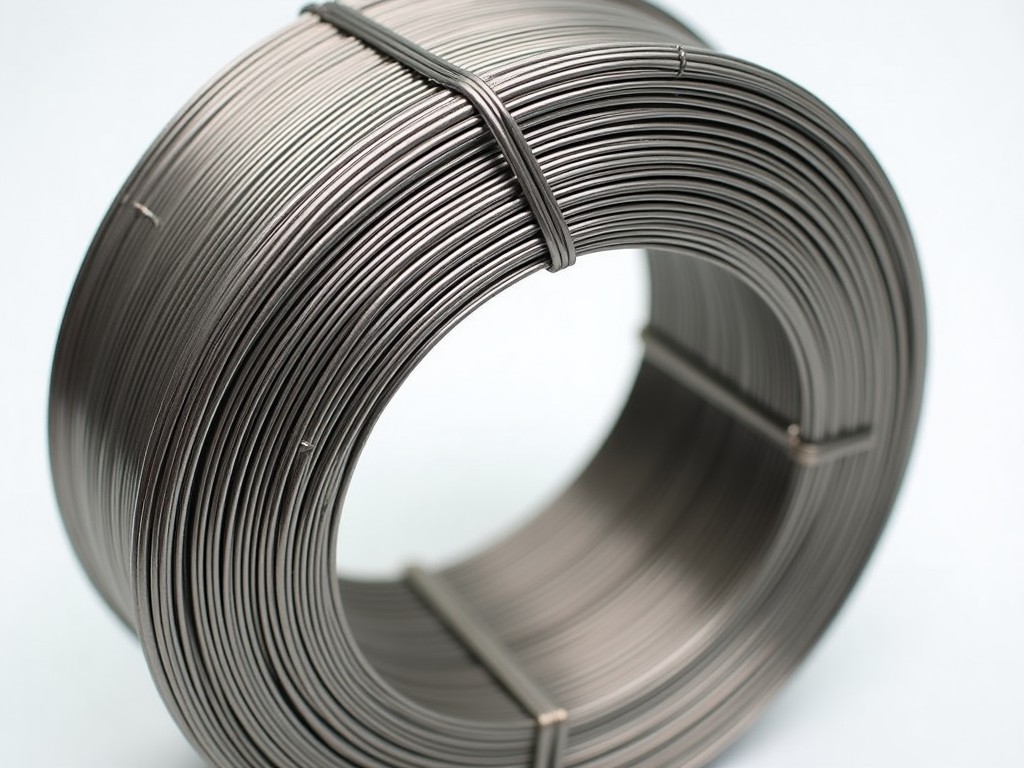
Stainless Steel Flux Core Welding Wire
Stainless steel flux core welding wire is designed for applications requiring corrosion resistance, weld integrity, and compatibility with austenitic, ferritic, or duplex stainless steel base metals. Unlike solid wire, flux core variants incorporate a tubular sheath filled with flux compounds that stabilize the arc, shield the weld pool, and influence slag formation and bead geometry. This construction enables efficient deposition rates in out-of-position welding and reduces sensitivity to surface contaminants compared to bare wire processes.
Core Composition and Flux System Design
The wire consists of a stainless steel sheath, typically alloyed to match or exceed the chemical composition of the target base metal (e.g., 308L, 309L, 316L), surrounding a core of mineral compounds, deoxidizers, arc stabilizers, and slag formers. The flux formulation controls oxygen pickup, minimizes porosity, and ensures slag detachability. For instance, rutile-based fluxes produce a convex bead with easy slag removal, while basic fluxes yield lower hydrogen content and improved toughness in cryogenic service. The sheath thickness and core fill ratio are calibrated to maintain consistent electrical stick-out and deposition efficiency.
Typical Mechanical and Chemical Properties
Deposited weld metal from stainless steel flux core wire generally achieves tensile strengths between 520–750 MPa, depending on alloy type and shielding gas. Elongation typically ranges from 25–40%, indicating adequate ductility for cyclic loading. Ferrite content in austenitic welds (e.g., 308L) is maintained between 3–10 FN to prevent solidification cracking, measured via magnetic induction or metallographic analysis. Carbon content is kept below 0.04% for L-grades to minimize sensitization risk in the heat-affected zone during prolonged exposure to 425–850°C.
| Property | Typical Range (308LFC) | Test Standard |
|---|---|---|
| Tensile Strength | 550–690 MPa | AWS A5.22 |
| Yield Strength | 380–480 MPa | AWS A5.22 |
| Elongation | 30–40% | AWS A5.22 |
| Ferrite Number (FN) | 3–10 | AWS A4.2 |
| Carbon Content | ≤0.04% | AWS A5.22 |
Shielding Gas Influence on Weld Characteristics
While flux core wire provides inherent shielding, external gas is often added to optimize bead shape, reduce spatter, and control mechanical properties. Common shielding gases include 100% CO₂ for deep penetration and cost efficiency, or argon-rich mixtures (e.g., Ar/20–25% CO₂) for smoother bead appearance and lower spatter. The choice affects slag viscosity, arc stability, and hydrogen pickup. For duplex stainless steel wires, nitrogen-containing gases may be added to maintain austenite-ferrite balance in the weld metal. Gas flow rates typically range from 15–25 L/min, depending on wire diameter and joint configuration.
Diameter Selection and Deposition Efficiency
Standard diameters range from 0.9 mm to 1.6 mm, with 1.2 mm being the most versatile for general fabrication. Smaller diameters (0.9–1.0 mm) are preferred for thin-gauge materials and precision work, allowing lower heat input and better control. Larger diameters (1.4–1.6 mm) increase deposition rates—up to 4.5 kg/hour at 280A—making them suitable for thick-section welding in shipbuilding or tank fabrication. Deposition efficiency typically exceeds 85%, higher than solid wire due to the conductive sheath and core contribution to current carrying capacity.
Industrial Applications and Joint Suitability
This wire is commonly used in the construction of food processing equipment, chemical storage tanks, pharmaceutical reactors, and marine hardware where post-weld corrosion resistance is critical. Its ability to weld in vertical and overhead positions without porosity makes it ideal for circumferential tank seams, piping systems, and structural brackets. Unlike solid wire, flux core variants tolerate light mill scale or oily surfaces, reducing pre-weld cleaning requirements in maintenance or field repair scenarios. However, for sanitary finishes requiring minimal post-weld grinding, solid wire with GTAW may still be preferred for root passes.
Storage, Handling, and Shelf Life Considerations
Flux core wire is hygroscopic; moisture absorption can lead to porosity and hydrogen-induced cracking. Recommended storage conditions are below 60% relative humidity and temperatures above 10°C to prevent condensation. Once opened, spools should be used within 30 days or stored in sealed containers with desiccant. Some manufacturers offer hermetically sealed packaging with humidity indicators. Re-drying at 200–250°C for 1–2 hours is possible for certain formulations, though repeated heating may degrade flux constituents and alter slag properties.
Quality Control and Traceability
Each production lot undergoes chemical analysis of the sheath and core, mechanical testing of deposited weld metal, and radiographic inspection for porosity and inclusions. Spools are labeled with alloy type, diameter, lot number, and date of manufacture. Certificates of Conformance (CoC) typically include chemical composition, mechanical properties, and compliance with AWS A5.22 or EN ISO 17633-A. Traceability extends to raw material sourcing, enabling root-cause analysis in case of field failures. Users should verify that the wire’s classification matches the base metal’s P-number and welding procedure specification (WPS).

More Products

Send Inquiry
If you are interested in our products, leave your information here and we will be in touch shortly.