Stainless Steel Razor Wire Fence
Stainless steel razor wire fence is a high-security perimeter barrier system engineered for applications requiring deterrence, delay, and detection of unauthorized intrusion. Constructed from
Stainless Steel Razor Wire Fence
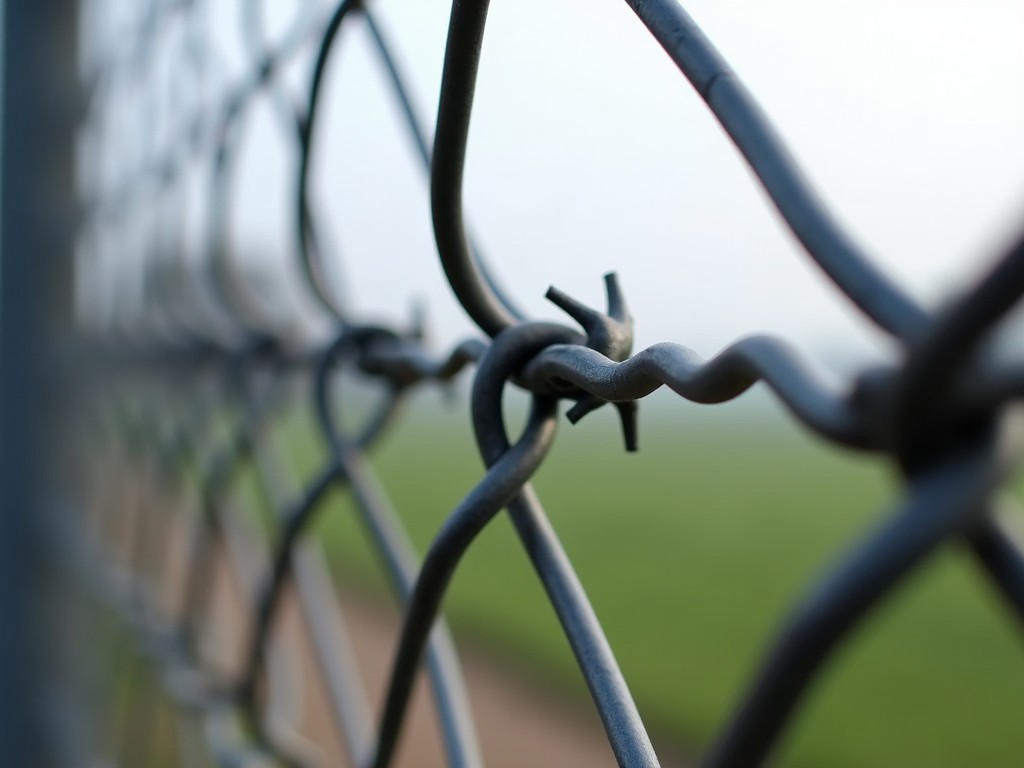
Stainless steel razor wire fence is a high-security perimeter barrier system engineered for applications requiring deterrence, delay, and detection of unauthorized intrusion. Constructed from cold-rolled stainless steel strip formed into sharp-edged barbs helically wound around a high-tensile core wire, it provides a formidable physical and psychological obstacle. The system is designed to withstand prolonged outdoor exposure while maintaining structural integrity and cutting effectiveness under environmental stress.
Material Composition and Corrosion Resistance
The performance of razor wire in aggressive environments depends critically on the alloy composition of the stainless steel used. Common grades include AISI 304 and 316, selected based on chloride exposure, humidity, and industrial pollutants. Grade 304 offers adequate resistance in urban and rural settings, while 316, with added molybdenum, provides superior protection against pitting and crevice corrosion in coastal or chemical processing zones. The base wire core is typically manufactured from the same grade to ensure galvanic compatibility and uniform degradation rates.
Mechanical Properties and Barb Geometry
The tensile strength of the core wire directly influences the fence’s resistance to cutting and stretching under load. Typical core wire diameters range from 2.5 mm to 3.0 mm, with tensile strengths exceeding 1750 MPa for cold-drawn stainless steel. The barbs are precision-stamped from 0.5 mm thick strip, featuring a blade length of 15–22 mm and a throat width of 8–10 mm, optimized to snag and resist penetration by clothing or tools. The helical pitch is maintained at 26–30 mm to ensure consistent overlap and prevent gap formation during installation.
System Configuration and Installation Methods
Razor wire is deployed in multiple configurations to match threat levels and site constraints. Common arrangements include single coil along wall tops, double coil in concertina formation for increased depth, and flat-wrap on fencing mesh for low-profile security. Installation requires stainless steel fixing clips or galvanized steel ties with UV-stabilized polymer coating to prevent bi-metallic corrosion. Proper tensioning is critical—insufficient slack reduces effectiveness, while excessive tension increases fatigue risk at anchor points.
Environmental and Operational Longevity
Unlike galvanized alternatives, stainless steel razor wire does not rely on sacrificial coatings that degrade over time. Its corrosion resistance is inherent to the alloy matrix, enabling service life exceeding 25 years in moderate climates and 15+ years in marine environments without maintenance. Surface passivation occurs naturally in oxygen-rich atmospheres, reforming the chromium oxide layer if scratched. Periodic visual inspection is recommended to confirm barb integrity and anchor stability, particularly after extreme weather events.
Comparison with Alternative Perimeter Materials
| Property | Stainless Steel Razor Wire | Galvanized Razor Wire | PVC-Coated Steel Tape |
|---|---|---|---|
| Core Material | AISI 304/316 | Low-carbon steel + Zn | Low-carbon steel + PVC |
| Corrosion Resistance (Marine) | High (316 grade) | Moderate (5–8 yrs) | Low (coating degradation) |
| Tensile Strength (Core) | >1750 MPa | 1400–1600 MPa | 1200–1400 MPa |
| UV Stability | Inherent | Inherent | Moderate (embrittlement risk) |
| Expected Service Life | 15–25+ years | 8–12 years | 5–10 years |
Typical Industrial and Infrastructure Applications
Stainless steel razor wire is selected in environments where long-term reliability and minimal lifecycle cost outweigh initial investment. In petrochemical facilities, it secures perimeter zones around storage tanks and processing units where salt spray and hydrocarbon vapors accelerate corrosion of lesser materials. Power substations use it to deter climbing and tool-assisted breaches, benefiting from its non-conductive passive layer and resistance to arc-induced degradation. Correctional facilities prioritize its durability to reduce replacement frequency and maintain consistent security posture over decades.
Customization Options and Project-Specific Adaptation
Manufacturers offer customization to align with site-specific threat assessments and installation constraints. Barb length and spacing can be adjusted to balance deterrence with handling safety during deployment. Core wire diameter may be increased for high-tension applications or reduced for lightweight portable systems. Coil diameter (typically 450–750 mm) affects deployment speed and storage volume—larger coils reduce springback but require more space. End treatments include looped or straight terminations to facilitate secure anchoring to posts, walls, or mesh panels.
Quality Assurance and Conformance Verification
Quality control begins with material certification—mill test reports verify alloy composition and mechanical properties of incoming strip and wire. During production, barb geometry is monitored via optical comparators to ensure dimensional consistency within ±0.2 mm. Tensile testing of core wire samples confirms conformance to specified strength levels. Final inspection includes visual examination for sharpness, uniformity, and absence of burrs or micro-cracks that could initiate corrosion. Packaging uses UV-stabilized polyethylene film and desiccant to prevent moisture ingress during transit and storage.
More Products

Send Inquiry
If you are interested in our products, leave your information here and we will be in touch shortly.