Stainless Steel Soft Wire Suppliers
Stainless steel soft wire is a cold-drawn product engineered for applications requiring high formability, consistent tensile properties, and corrosion resistance in demanding environments. Unlike
Stainless Steel Soft Wire: Technical Specifications and Supplier Considerations
Stainless steel soft wire is a cold-drawn product engineered for applications requiring high formability, consistent tensile properties, and corrosion resistance in demanding environments. Unlike spring temper or hard temper grades, soft wire undergoes full annealing to achieve a Rockwell B hardness typically below 80, enabling severe bending, coiling, or weaving without cracking. This condition is critical for components such as filtration media, catheter mandrels, conveyor belts, and electronic shielding where dimensional stability after deformation is essential.
Common base alloys include AISI 304, 304L, 316, and 316L, selected based on exposure to chlorides, acidic compounds, or elevated temperatures. The wire is produced through precise drawing processes followed by controlled annealing in protective atmospheres to prevent surface oxidation and maintain dimensional tolerances. Suppliers must maintain tight control over drawing speed, annealing temperature, and cooling rates to ensure uniform microstructure and mechanical properties across each coil.
Key Mechanical and Physical Properties
The defining characteristic of soft wire is its low yield strength relative to tensile strength, resulting in high elongation—typically 40% or more in a 250 mm gauge length for 304L grade. This allows significant plastic deformation before necking occurs. Tensile strength for annealed 316L soft wire generally ranges from 480 to 620 MPa, depending on diameter and exact chemical composition, with yield strength typically between 170 and 250 MPa.
Diameter tolerance is a critical specification, especially for automated feeding systems. Standard tolerances follow ASTM A313 or EN 10218-1, with common grades holding ±0.005 mm for wires under 0.5 mm diameter and ±0.01 mm for 0.5–2.0 mm ranges. Surface finish is typically bright due to annealing in hydrogen-rich or vacuum furnaces, with roughness average (Ra) values below 0.4 μm, reducing friction in guiding mechanisms and minimizing particle generation in cleanroom applications.
Electrical conductivity varies by alloy: 304 soft wire measures approximately 1.25 μΩ·cm resistivity, while 316L is slightly higher at 1.30 μΩ·cm due to molybdenum content. Magnetic permeability remains low in the annealed state (typically <1.2) for austenitic grades, though slight increases may occur after severe cold work—important for sensor housings or MRI-compatible components where minimal magnetic interference is required.
Manufacturing Process and Quality Control
Production begins with precision-rolled rod or wire coil, cleaned via alkaline degreasing and acid pickling to remove oxides and lubricants. Drawing is performed using carbide or diamond dies in multiple passes, with intermediate annealing between stages if significant reduction is required. Final annealing occurs in continuous bell furnaces or strand annealers at temperatures between 1050–1150°C, depending on alloy, followed by controlled cooling to prevent sensitization in low-carbon grades.
In-line monitoring includes laser diameter gauges, eddy current surface flaw detectors, and tensile testers sampling every 100–200 meters. Coils are typically wound with zero-tension traversers to prevent embedment or telescoping. Each lot undergoes full mechanical testing per ASTM A370, including tensile strength, yield strength, and elongation, with results documented in mill test reports (MTRs). Surface cleanliness is verified via wipe tests or water break analysis for applications in medical or semiconductor industries.
Packaging protects against contamination and mechanical damage. Wire is commonly coiled on plastic or steel spools with inner diameters of 150–300 mm, wrapped in vapor-corrosion inhibitor (VCI) paper, and sealed in polyethylene bags with desiccant. For export, coils are placed in crush-resistant cardboard drums or wooden crates with shock-absorbing liners. Labeling includes heat number, diameter, alloy, length, tensile range, and ANSI/ASME compliance marks.
Applications Across Industries
In medical device manufacturing, soft stainless steel wire is used to produce guidewire cores, stent delivery systems, and orthodontic archwires. The combination of biocompatibility (per ISO 10993), flexibility, and resistance to bodily fluids allows long-term implantation or navigation through vascular pathways. Surface passivation is often applied post-drawing to enhance the chromium oxide layer and reduce nickel ion release.
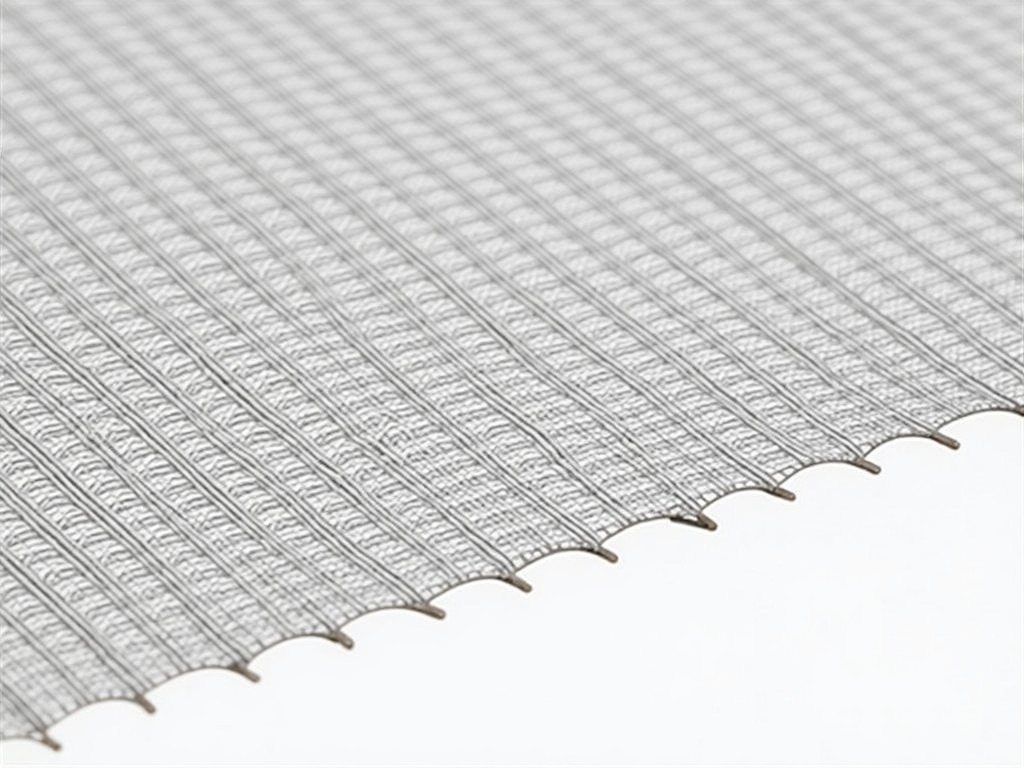
Filtration systems rely on soft wire for weaving fine mesh screens in chemical processing, food and beverage, and aerospace fuel systems. The wire’s ability to withstand repeated cyclic stress without fatigue failure, combined with pore size precision down to 5 μm, makes it suitable for high-pressure hydraulic filters or sterile air vents. Alloy 316L is preferred in chloride-rich environments to resist pitting and crevice corrosion.
Electronics manufacturers use soft wire for electromagnetic interference (EMI) shielding braids, connector springs, and battery tabs. Its high conductivity relative to other stainless grades, combined with solderability after proper fluxing, enables reliable grounding in PCB assemblies. In semiconductor tooling, the wire’s low outgassing and particle generation characteristics support use in wafer handling robots and vacuum chamber components where cleanliness is paramount.
Comparison: Soft Wire vs. Other Tempers
| Property | Soft (Annealed) Wire | Quarter-Hard Wire | Spring Temper Wire |
|---|---|---|---|
| Rockwell B Hardness | < 80 | 85–92 | > 95 |
| Tensile Strength (MPa) | 480–620 | 620–750 | 860–1100 |
| Elongation (% in 250mm) | ≥ 40 | 20–35 | < 10 |
| Typical Bend Radius (x diameter) | 0.5 | 1.0 | 2.0–3.0 |
| Primary Use Case | Coiling, weaving, deep drawing | Clips, fasteners, light springs | Suspension, valve springs, snap rings |
Supplier Evaluation Criteria
When assessing stainless steel soft wire suppliers, prioritize traceability and process control over general claims. Request documentation showing coil-to-coil consistency in tensile properties, including statistical process control (SPC) charts for diameter and elongation over production batches. Suppliers should provide certification to ASTM A240/A240M for plate/sheet origin and ASTM A313 for wire, with heat numbers traceable to ladle analysis.
Inquire about annealing atmosphere control—preferably pure hydrogen or cracked ammonia—to prevent surface decarburization or oxidation. Surface condition reports, including roughness (Ra) and cleanliness validation (e.g., Level 1000 per IEST-STD-CC1246D for cleanroom use), should be available upon request. For medical or food-grade applications, confirm compliance with FDA 21 CFR 177.2600 or ISO 10993-1 for biocompatibility testing.
Lead times and minimum order quantities (MOQs) vary by diameter and alloy. Ultra-fine wires (<0.1 mm) often require specialized drawing equipment and may carry higher MOQs due to setup time. Some suppliers offer spool-to-spool welding or continuous length options to reduce changeover losses in high-volume automation. Always verify whether the supplier performs final inspection in-house or relies on third-party labs, and ask for sample MTRs before quotation.
For technical datasheets, sample requests, or to discuss specific diameter, alloy, or temper requirements, contact our engineering team.
Request Technical Consultation
More Products

Send Inquiry
If you are interested in our products, leave your information here and we will be in touch shortly.