Stainless Steel Soldering Wire
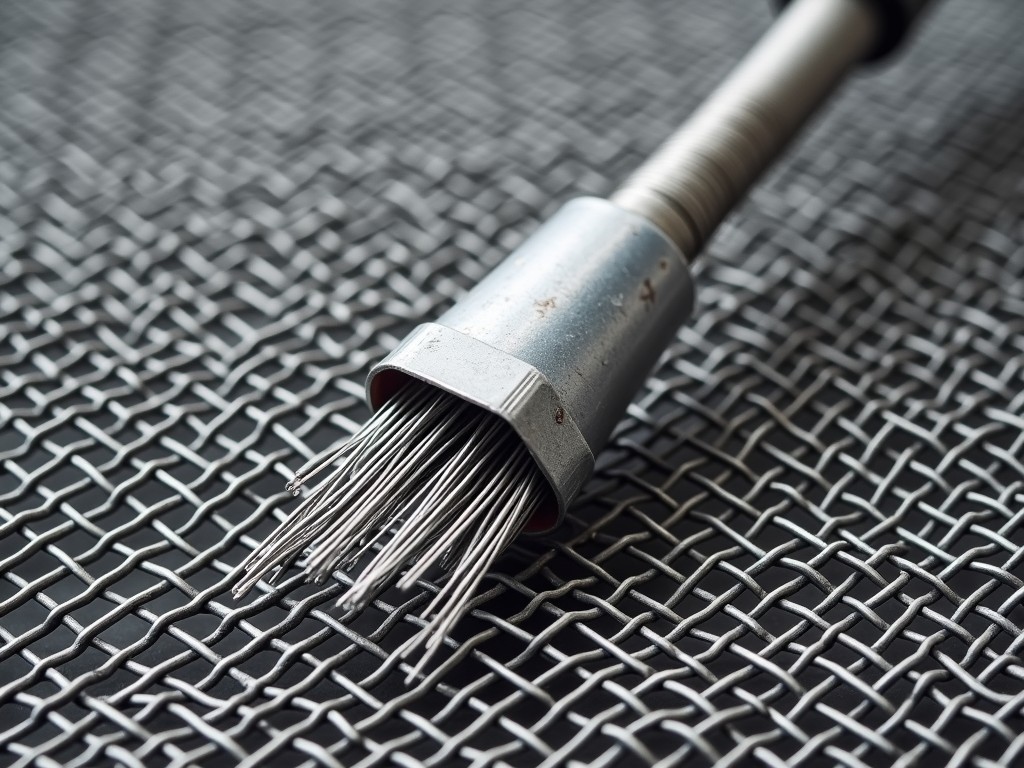
Soldering wire made from stainless steel alloys is engineered for joining applications where corrosion resistance, high-temperature stability, and compatibility with dissimilar metals are required.
Stainless Steel Soldering Wire
Soldering wire made from stainless steel alloys is engineered for joining applications where corrosion resistance, high-temperature stability, and compatibility with dissimilar metals are required. Unlike conventional tin-lead or silver-bearing solders, stainless steel soldering wire maintains structural integrity in aggressive environments, making it suitable for food processing equipment, chemical reactors, and marine hardware.
The primary alloy systems used are austenitic grades such as 304L, 316L, and 309L, selected for their low carbon content to minimize sensitization during heating. These compositions provide a melting range typically between 1400°F and 1450°F (760°C–790°C), which is higher than soft solders but compatible with induction, torch, and furnace heating methods commonly used in industrial fabrication.
Stainless steel soldering wire does not rely on eutectic bonding like tin-based solders; instead, it forms a metallurgical bond through solid-state diffusion and limited liquid-phase interaction at the interface. This results in joints with tensile strength often exceeding 50 ksi (345 MPa) and excellent resistance to thermal cycling, vibration, and stress corrosion cracking when properly applied.
Key Material Characteristics
The performance of stainless steel soldering wire is governed by its chemical composition, wire diameter, and flux compatibility. Controlled levels of chromium (16–18%), nickel (10–14%), and molybdenum (2–3% in 316L) provide the passive oxide layer that prevents oxidation during storage and service. Low carbon content (<0.03%) reduces the risk of carbide precipitation at grain boundaries, preserving ductility and corrosion resistance after heating.
Wire diameters typically range from 0.020 inch (0.5 mm) to 0.062 inch (1.6 mm), allowing precise deposition in tight joints or higher feed rates for larger assemblies. The wire is manufactured to tight tolerances (±0.002 inch) to ensure consistent feeding in automated soldering equipment and manual applicators. Surface finish is bright and clean, free of lubricants or coatings that could contaminate the joint.
Flux selection is critical; active fluxes containing chlorides or fluorides are often required to break down the stable chromium oxide layer on stainless steel surfaces. Post-solder cleaning is necessary to remove flux residues that could cause corrosion if left in place. Some formulations use self-fluxing alloys with additions of boron or silicon, though these are less common due to potential embrittlement risks.
Industrial Applications
Stainless steel soldering wire is selected when the joint must endure the same environmental conditions as the base material. In food and beverage processing, it is used to assemble heat exchangers, filling valves, and storage tanks where hygiene and resistance to acidic or alkaline cleaning agents are essential. The solder joint does not leach contaminants and maintains integrity under repeated steam sterilization cycles.
In chemical processing equipment, such as condensers, piping systems, and reactor vessels, the wire resists attack from sulfides, chlorides, and organic acids that would degrade softer solders. Its use in marine applications—including seawater piping, desalination units, and offshore platforms—is driven by resistance to pitting and crevice corrosion in chloride-rich environments.
The wire is also employed in electrical and electronic applications where solder joints must withstand elevated operating temperatures, such as in heating elements, sensor housings, and power resistor assemblies. Unlike soft solders that creep or degrade above 150°F (65°C), stainless steel solder joints remain stable at continuous temperatures exceeding 600°F (315°C).
Comparison with Alternative Joining Methods
Compared to TIG welding, stainless steel soldering wire requires lower heat input, reducing distortion and preserving the corrosion-resistant properties of thin-walled tubing or heat-sensitive components. While weld penetration offers higher strength, soldering provides sufficient mechanical integrity for non-structural joints and avoids the need for post-weld passivation or stress relief.
When contrasted with brazing using copper- or nickel-based alloys, stainless steel soldering wire operates at lower temperatures, minimizing the risk of base metal annealing or intermetallic formation. It also eliminates the need for precise joint clearances required in brazing, as the solder can bridge slightly larger gaps due to its fluidity within the melting range.
Unlike adhesive bonding, which may degrade under thermal cycling or chemical exposure, stainless steel solder joints maintain long-term stability without creep or outgassing. This makes them preferable in vacuum systems, cryogenic equipment, and applications requiring hermetic sealing over extended service life.
Manufacturing and Quality Considerations
The wire is produced through precision drawing of annealed stainless steel rod, followed by cleaning and spooling under controlled tension to prevent deformation. Diameter consistency is monitored via laser gauging, and surface cleanliness is verified using wipe testing for particulate and organic residues. Spools are typically sealed in vapor-barrier packaging with desiccant to prevent oxidation during storage.
Quality control includes chemical verification via spark spectroscopy, tensile testing of drawn wire to confirm ductility, and bend testing to ensure freedom from surface cracks. Each batch is traceable to the raw material lot, and certificates of conformance are available upon request. For critical applications, third-party inspection and test reports can be arranged.
Shelf life is limited by the potential for surface oxidation, particularly in humid environments. Stainless steel soldering wire should be stored below 80°F (27°C) and 60% relative humidity, and used within 12 months of manufacture for optimal flux compatibility and wettability. Reconditioning via light abrasion or flux reapplication is not recommended due to risks of embedding contaminants.
Selection Guidelines
Choosing the appropriate stainless steel soldering wire begins with matching the alloy to the base material. For 304 or 304L components, 308L or 309L wire is often selected to provide a balanced composition that avoids hot cracking. For 316L or 316Ti substrates, 316L wire ensures matching corrosion resistance, particularly in reducing environments or where molybdenum is required for pitting resistance.
Wire diameter should be selected based on joint geometry and heating method. Thinner wires (0.020–0.030 inch) are preferred for precision work on thin sheets or small-diameter tubing, while larger diameters (0.040–0.062 inch) suit manual soldering of flanges, nozzles, or larger assemblies where higher deposition rates are needed. The melting range must be compatible with the available heating equipment to avoid underheating or overheating.
Flux type and application method must be evaluated for post-process cleaning constraints. Water-soluble fluxes simplify rinsing but may require immediate cleaning to prevent staining. No-clean fluxes reduce post-process steps but must be validated for long-term reliability in the intended environment. Consultation with flux manufacturers is recommended to ensure compatibility with both the wire and cleaning equipment.
| Property | Typical Value (304L Wire) | Typical Value (316L Wire) |
|---|---|---|
| Chromium (Cr) | 18–20% | 16–18% |
| Nickel (Ni) | 8–10.5% | 10–14% |
| Molybdenum (Mo) | ≤0.5% | 2–3% |
| Carbon (C) | ≤0.03% | ≤0.03% |
| Melting Range | 1400–1450°F (760–790°C) | 1400–1450°F (760–790°C) |
| Tensile Strength (As-Drawn) | 80–100 ksi (550–690 MPa) | 80–100 ksi (550–690 MPa) |
| Standard Diameters | 0.020–0.062 in (0.5–1.6 mm) | 0.020–0.062 in (0.5–1.6 mm) |
For applications requiring joint performance data under specific conditions—such as vibration fatigue, thermal shock, or exposure to particular chemicals—custom testing can be arranged. Technical support is available to assist with alloy selection, flux compatibility, and procedure development based on your base materials, joint design, and service environment.
To discuss your requirements for stainless steel soldering wire, request a quotation, or obtain samples for evaluation, please contact our technical team. Provide details including base material grades, joint configuration, operating temperature, and any applicable industry standards (e.g., ASME, ASTM, FDA) to ensure accurate recommendations.
Request Technical Consultation or Quote
More Products

Send Inquiry
If you are interested in our products, leave your information here and we will be in touch shortly.