Stainless Steel Spring Wire Suppliers
Selecting the right stainless steel spring wire requires understanding material properties, manufacturing tolerances, and application-specific performance demands. This page explains the technical
Stainless Steel Spring Wire Suppliers
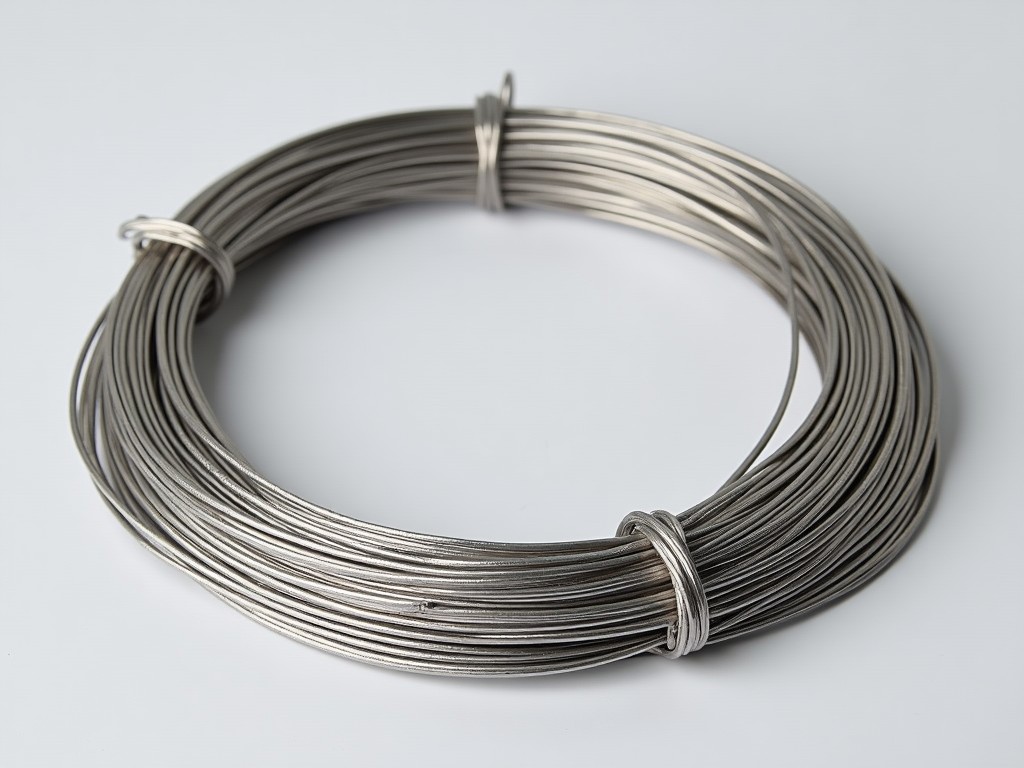
Selecting the right stainless steel spring wire requires understanding material properties, manufacturing tolerances, and application-specific performance demands. This page explains the technical considerations that influence wire selection for industrial spring applications, helping procurement engineers evaluate suppliers based on measurable engineering criteria rather than marketing claims.
Material Composition and Mechanical Properties
Stainless steel spring wire derives its elastic behavior from controlled cold working and precise alloy composition. Common grades include AISI 302, 304, and 316, each offering distinct corrosion resistance and tensile strength ranges. For example, 302 stainless steel spring wire typically achieves tensile strengths between 1800–2300 MPa after drawing, while 316 grade provides enhanced resistance to chlorides at slightly lower strength levels (~1700–2100 MPa). These values depend on wire diameter, reduction ratio, and heat treatment history—factors that directly impact spring rate, fatigue life, and stress relaxation performance.
Suppliers should provide mill test reports confirming chemical composition (e.g., Cr 17–19%, Ni 8–10% for 304) and mechanical properties traceable to national standards such as ASTM A313 or EN 10270-3. Variations in carbon content or residual elements can affect ductility and hydrogen embrittlement susceptibility, particularly in small-diameter wires (<0.5 mm) used in precision mechanisms.
Diameter Tolerances and Surface Finish
Dimensional consistency is critical for spring rate predictability and coiling efficiency. Industrial spring wire is typically manufactured to tolerances tighter than general-purpose wire, often ±0.01 mm for diameters under 1.0 mm and ±0.02 mm for 1.0–3.0 mm ranges. These tolerances are achieved through precision drawing dies and in-process laser gauging, not post-process sorting.
Surface finish influences both fatigue resistance and coiling friction. A bright, defect-free surface reduces stress concentration points that initiate cracks under cyclic loading. Suppliers may offer finishes ranging from standard bright to specialized passive or electropolished surfaces, particularly for medical or food-processing applications where cleanliness and biocompatibility are required. Surface roughness (Ra) values below 0.2 μm are common for high-fatigue-life springs.
Common Industrial Applications
Stainless steel spring wire is selected not merely for corrosion resistance but for its ability to maintain elastic properties in environments where carbon steel would degrade. In automotive under-hood applications, exposure to road salts, temperature cycling, and fluid contaminants necessitates alloys like 302 or 304 to prevent strength loss over time. Similarly, in chemical processing equipment, springs exposed to acidic vapors or washdown cycles benefit from 316 molybdenum content to resist pitting.
Beyond corrosion resistance, non-magnetic properties of austenitic stainless steels (after proper processing) make them suitable for proximity sensors, MRI-compatible devices, and electromagnetic shielding assemblies. In food and pharmaceutical manufacturing, the absence of coatings or platings eliminates contamination risks, while smooth surfaces facilitate cleaning-in-place (CIP) procedures. Each application imposes unique combinations of load, cycle frequency, temperature, and environmental exposure—factors that must be matched to wire grade and mechanical condition.
Supplier Evaluation Criteria
When assessing stainless steel spring wire suppliers, focus on traceability, process control, and technical support rather than price alone. Request documentation showing lot-to-lot consistency in tensile strength and elongation, as well as evidence of in-line monitoring during drawing and stranding. Suppliers who maintain SPC charts for diameter and tensile properties demonstrate greater process maturity than those relying solely on final inspection.
Technical support capability matters—suppliers should be able to recommend appropriate temper levels (e.g., 1/4 hard, 1/2 hard, full hard) based on spring index and deflection requirements. Some offer value-added services such as custom spooling, length-specific packaging, or pre-cut lengths to reduce scrap in high-mix production. Lead times, minimum order quantities, and flexibility for small-volume prototyping are practical considerations that affect production continuity.
| Evaluation Factor | What to Verify | Why It Matters |
|---|---|---|
| Mill Certification | ASTM A313, EN 10204 3.1 or 3.2 | Ensures chemical and mechanical properties are traceable and verified |
| Diameter Tolerance | ±0.01 mm (≤1.0 mm), ±0.02 mm (1.0–3.0 mm) | Directly impacts spring rate consistency and coiling defects |
| Surface Finish | Ra ≤ 0.2 μm, no pits, seams, or drawing marks | Reduces fatigue crack initiation points under cyclic load |
| Tensile Strength Range | Documented per lot, e.g., 1800–2300 MPa for 302 | Predicts load capacity and stress relaxation behavior |
| Technical Support | Ability to recommend temper, grade, and packaging | Reduces design-risk and accelerates prototyping cycles |
Ultimately, the value of a stainless steel spring wire supplier lies in their ability to deliver consistent, predictable material that performs as engineered over the spring’s service life. By focusing on measurable properties—composition, dimensional control, surface integrity, and mechanical traceability—procurement teams can minimize field failures, reduce warranty exposure, and ensure long-term reliability in demanding applications.
More Products

Send Inquiry
If you are interested in our products, leave your information here and we will be in touch shortly.