Stainless Steel Stitching Wire
Stainless steel stitching wire is a precision-engineered fastening material used to join layers of fabric, insulation, or composite materials in industrial applications where corrosion resistance,
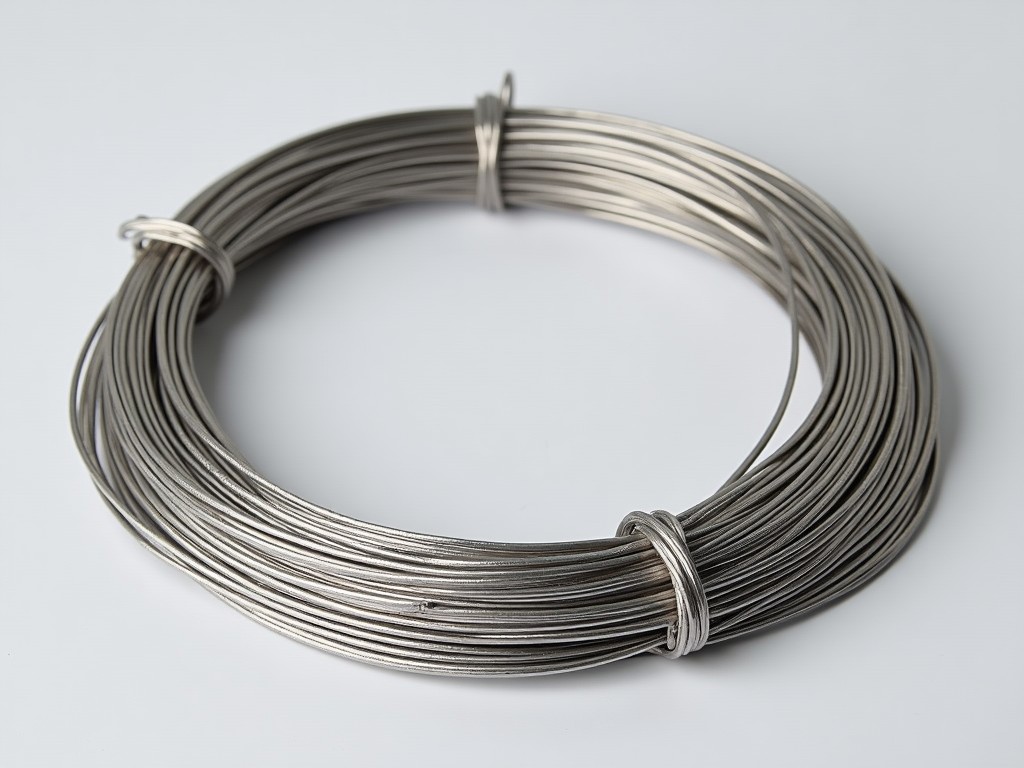
Stainless Steel Stitching Wire
Stainless steel stitching wire is a precision-engineered fastening material used to join layers of fabric, insulation, or composite materials in industrial applications where corrosion resistance, tensile strength, and consistent performance are critical. Unlike standard steel wire, it maintains structural integrity in humid, chemical, or high-temperature environments without degradation. This makes it suitable for applications where long-term reliability reduces maintenance frequency and lifecycle costs.
Material Composition and Mechanical Properties
The wire is typically manufactured from austenitic stainless steel grades such as 304 or 316, selected based on environmental exposure requirements. Grade 304 offers adequate resistance to atmospheric corrosion and mild chemicals, while 316 includes molybdenum for enhanced protection against chlorides and industrial solvents. Tensile strength ranges from 800 to 1200 MPa depending on diameter and cold-work level, with elongation between 10% and 25% to allow for controlled deformation during stitching without fracture.
Surface finish is controlled to a specific roughness (Ra 0.4–0.8 μm) to ensure smooth passage through sewing or stitching machinery, minimizing snagging and thread breakage. Diameter tolerances are held to ±0.02 mm for consistent feed in automated systems. The wire is supplied in a fully annealed or spring-temper condition, depending on whether flexibility or shape retention is prioritized in the end use.
Industrial Applications and Functional Advantages
In filtration systems, stainless steel stitching wire secures filter media pleats to frames or support grids, maintaining pleat geometry under differential pressure without creeping or corrosion-induced failure. In automotive manufacturing, it joins multi-layer acoustic insulation in door panels and headliners, where exposure to condensation and road salts demands non-corroding fasteners. In aerospace composites, it stitches prepreg layers during layup, providing temporary fixation that withstands autoclave temperatures and vacuum pressure without outgassing or contamination.
Compared to galvanized or coated alternatives, stainless steel wire eliminates risks of zinc whisker formation or coating delamination that could contaminate sensitive environments such as semiconductor cleanrooms or food processing lines. Its non-magnetic variant (available in 316L) is essential in MRI-compatible equipment or precision instrumentation where ferromagnetic interference must be avoided. The material’s inert nature also prevents galvanic coupling when in contact with aluminum or carbon fiber substrates.
Customization Options and Manufacturing Considerations
Diameter ranges from 0.15 mm to 1.20 mm, with finer gauges used in delicate textile or medical device assembly and heavier gauges for structural reinforcement in industrial belts or conveyor splices. Length is supplied on spools or coils, with standard put-ups of 1 kg, 5 kg, or 25 kg, though custom weights are available to match feeder machine capacity. Surface lubrication can be applied (e.g., wax-based or polymer coating) to reduce friction during high-speed stitching, with formulation tailored to avoid residue buildup on needles or guides.
Heat treatment is adjustable to achieve specific spring rates or flexural stiffness. For applications requiring repeated bending—such as in flexible ducts or vibrating screens—the wire can be optimized for fatigue resistance through controlled cold drawing and stress-relief annealing. Packaging includes anti-tangle spools with internal barriers or vacuum-sealed bags with desiccant for moisture-sensitive grades, ensuring dimensional stability and surface integrity during storage and transit.
Quality Control and Traceability
Each batch undergoes chemical verification via optical emission spectroscopy (OES) to confirm alloy composition within ASTM A240 or EN 10088 tolerances. Mechanical properties are validated through tensile testing on sampled lengths, with results documented in mill test reports (MTRs) available upon request. Surface inspection uses 10x magnification to detect scratches, pits, or drawing defects that could compromise performance in high-speed equipment.
Traceability is maintained through laser-etched spool markings or barcoded labels linking to production logs, heat numbers, and test data. This supports compliance with ISO 9001, IATF 16949, or AS9100 quality systems where material genealogy is required. For regulated industries, certification to RoHS, REACH, or FDA 21 CFR §177.2600 (for food contact) can be provided based on material grade and processing aids used.
Selection Guidance for Engineers
Begin by assessing the environmental conditions: chloride exposure, temperature cycling, and contact with cleaning agents dictate whether 304 or 316L is appropriate. Evaluate mechanical demands—tensile load, flex cycles, and abrasion—to determine optimal diameter and temper. Consider machine compatibility: stitching needle size, tensioner capacity, and spool diameter must align with wire specifications to prevent feeding issues or premature wear.
Request samples for real-world testing on your production line, focusing on stitch consistency, wire breakage rate, and resistance to deformation after 1000+ cycles. Validate that the wire does not shed particulates or release volatile compounds under operating conditions. For high-volume applications, inquire about spool changeover time and tension stability to minimize downtime. Technical support should include guidance on lubrication compatibility and recommended stitch patterns for load distribution.
| Parameter | Typical Range / Options |
|---|---|
| Stainless Steel Grade | 304, 316, 316L (low carbon for welding compatibility) |
| Diameter | 0.15 mm – 1.20 mm (±0.02 mm tolerance) |
| Tensile Strength | 800 – 1200 MPa (dependent on temper and diameter) |
| Elongation at Break | 10% – 25% |
| Surface Finish (Ra) | 0.4 – 0.8 μm (machined to reduce friction) |
| Put-Up Weight | 1 kg, 5 kg, 25 kg spools (custom available) |
| Lubrication | Wax-based, polymer, or dry film (custom formulation) |
| Certifications Available | RoHS, REACH, FDA 21 CFR §177.2600, ISO 9001, IATF 16949, AS9100 |
More Products

Send Inquiry
If you are interested in our products, leave your information here and we will be in touch shortly.