Stainless Steel Wire Loop Ties Suppliers
Stainless steel wire loop ties are precision-formed fastening components used in industrial applications requiring secure, repeatable bundling under mechanical stress, thermal cycling, or corrosive
Stainless Steel Wire Loop Ties Suppliers
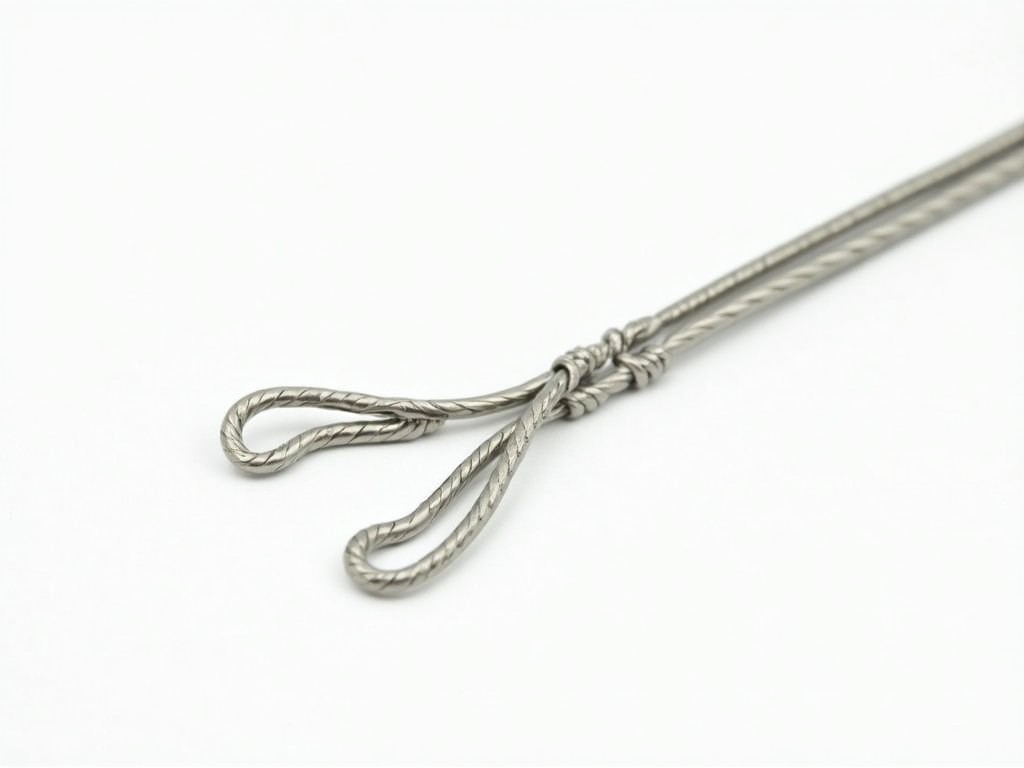
Stainless steel wire loop ties are precision-formed fastening components used in industrial applications requiring secure, repeatable bundling under mechanical stress, thermal cycling, or corrosive exposure. Unlike standard zip ties or plastic fasteners, these metal ties offer inherent tensile strength, dimensional stability, and resistance to ultraviolet degradation, making them suitable for environments where long-term reliability is critical. Their looped design allows for quick installation and consistent clamping force without specialized tools, reducing labor variability in high-volume assembly lines. Suppliers of these components must maintain tight tolerances on wire diameter, loop geometry, and tensile strength to ensure performance consistency across batches. Understanding the material science and manufacturing constraints behind these ties enables buyers to specify parts that meet functional demands without over-engineering or unnecessary cost.
Material Selection and Mechanical Properties
The most commonly used grades for stainless steel wire loop ties are AISI 304 and 316, selected based on environmental exposure and required corrosion resistance. Grade 304 provides adequate protection against atmospheric oxidation and mild chemical exposure, with a typical tensile strength ranging from 500 to 700 MPa depending on cold work level. Grade 316, containing molybdenum, offers superior resistance to chlorides and acidic environments, making it preferable for marine, chemical processing, or food sanitation applications where pitting corrosion is a concern. Wire diameter typically ranges from 0.8 mm to 2.0 mm, directly influencing loop strength and flexibility — smaller diameters allow tighter bends but reduce ultimate load capacity, while larger diameters increase rigidity and resistance to deformation under sustained load. Suppliers should provide material test reports (MTRs) upon request to verify alloy composition and mechanical properties, ensuring traceability to mill sources.
Dimensional Tolerances and Loop Geometry
Dimensional consistency is critical for loop ties to function reliably in automated or semi-automated fastening systems. Key parameters include inner loop diameter, wire diameter, leg length, and closure gap — all of which affect installation speed, holding strength, and resistance to vibration-induced loosening. Typical tolerances for wire diameter are ±0.05 mm, while loop inner diameter is maintained within ±0.3 mm to ensure compatibility with standard bundle sizes (e.g., 6 mm, 10 mm, 16 mm leg loops). The leg length, measured from the loop apex to the wire end, determines the maximum bundle diameter the tie can accommodate; for example, a 12 mm leg length typically secures bundles up to 20 mm in diameter. Closure gap — the space between wire ends when looped — must be minimized (usually <0.5 mm) to prevent snagging and ensure full contact pressure during tightening. Suppliers using CNC wire forming equipment with in-line gauging can maintain these tolerances across production runs, reducing field failure risks.
Surface Finish and Post-Processing Considerations
Surface finish influences both corrosion resistance and frictional behavior during installation. Common finishes include annealed (soft, ductile), spring-tempered (high strength, low elongation), and passivated surfaces to enhance the chromium oxide layer. Annealed wire is easier to form but offers lower tensile strength; spring-tempered wire provides higher recovery force after deformation, beneficial in applications requiring constant tension. Passivation, typically performed using nitric or citric acid baths, removes free iron from the surface and improves long-term corrosion resistance — especially important in hygienic or wet environments. Some suppliers offer electropolishing for ultra-smooth finishes in pharmaceutical or semiconductor applications where particulate generation must be minimized. The choice of finish should align with the installation method (manual vs. tool-assisted) and the expected service life under load.
Applications Across Industrial Sectors
Stainless steel wire loop ties are selected over plastic alternatives when failure due to UV embrittlement, thermal degradation, or chemical attack could compromise safety or process integrity. In aerospace wire harnessing, they secure bundles in engine bays and landing gear wells where temperatures exceed 150°C and exposure to hydraulic fluids is common. In food and beverage processing, 316-grade ties are used to secure hoses, sensors, and equipment guards in washdown zones subjected to daily caustic cleaning — plastic ties would degrade within weeks under these conditions. In renewable energy installations, such as solar panel array wiring, loop ties withstand decades of thermal cycling and salt spray without losing clamping force. Their use in railway signaling systems ensures vibration-resistant fastening of conduit and cable trays where maintenance access is limited. Each application demands specific combinations of material grade, wire size, and loop geometry — generic specifications often lead to over-specification or premature failure.
Quality Control and Traceability
Reliable suppliers implement statistical process control (SPC) on wire diameter, tensile strength, and loop dimensions to detect drift before it affects product consistency. Incoming wire is verified via spectrometer analysis and mechanical testing; in-process checks monitor forming force and loop closure symmetry. Final inspection includes visual examination for burrs, sharp edges, or deformation, followed by functional testing — such as pull-off force on a standardized mandrel — to confirm holding strength. Batch traceability is maintained through laser marking or tagged packaging, linking each lot to raw material certificates and inspection records. For regulated industries (e.g., medical devices, nuclear), suppliers may provide PPAP documentation, FAI reports, or conformance to standards such as ASTM F138 or ISO 10993, depending on the end-use. Buyers should request quality manuals and audit reports to assess a supplier’s process maturity rather than relying solely on certifications.
Customization and Ordering Considerations
While standard loop tie sizes cover many common applications, customization is frequently required for non-standard bundle diameters, space-constrained installations, or specific load requirements. Adjustable parameters include wire diameter (0.5–3.0 mm), leg length (5–50 mm), loop inner diameter (3–30 mm), and material grade (including 304L, 316L, or duplex variants for enhanced strength). Some suppliers offer pre-cut lengths with deburred ends to eliminate sharp edges during handling, or apply temporary lubricants to reduce friction during installation in high-volume assembly. Packaging options range from bulk bags for automated feeders to reeled or blister-packed units for manual kitting. Lead times typically vary from 2–4 weeks for stock items to 6–8 weeks for custom tooling, depending on complexity and material availability. Providing detailed application sketches, bundle dimensions, and environmental exposure data enables suppliers to propose optimal solutions without over-engineering.
| Parameter | Typical Range | Notes |
|---|---|---|
| Wire Diameter | 0.8 mm – 2.0 mm | Affects tensile strength and flexibility; ±0.05 mm tolerance common |
| Loop Inner Diameter | 6 mm – 25 mm | Determines compatible bundle size; ±0.3 mm tolerance |
| Leg Length | 8 mm – 40 mm | Defines max bundle diameter; longer legs allow larger bundles |
| Material Grade | AISI 304, 316, 316L | 316 preferred for chloride-rich or sanitary environments |
| Tensile Strength (Typical) | 500 – 900 MPa | Dependent on grade and temper; spring-tempered yields higher values |
When evaluating stainless steel wire loop ties suppliers, prioritize those who can demonstrate process control, material traceability, and application-specific engineering support over those emphasizing generic claims of quality or reliability. The ability to provide dimensional inspection reports, material certifications, and samples for functional validation reduces procurement risk and ensures the fasteners perform as intended in the field. Suppliers who engage early in the design phase to review bundle geometry, load expectations, and environmental factors are more likely to deliver components that avoid over-specification while meeting performance demands. Long-term value emerges not from the lowest unit price, but from consistent performance, reduced maintenance, and avoidance of field failures caused by underspecified or poorly controlled parts.
More Products

Send Inquiry
If you are interested in our products, leave your information here and we will be in touch shortly.