Stainless Steel Wire Manufacturer Oh
Ohio-based stainless steel wire manufacturers serve industrial sectors requiring corrosion resistance, tensile strength, and dimensional stability. Production capabilities range from fine gauge wire
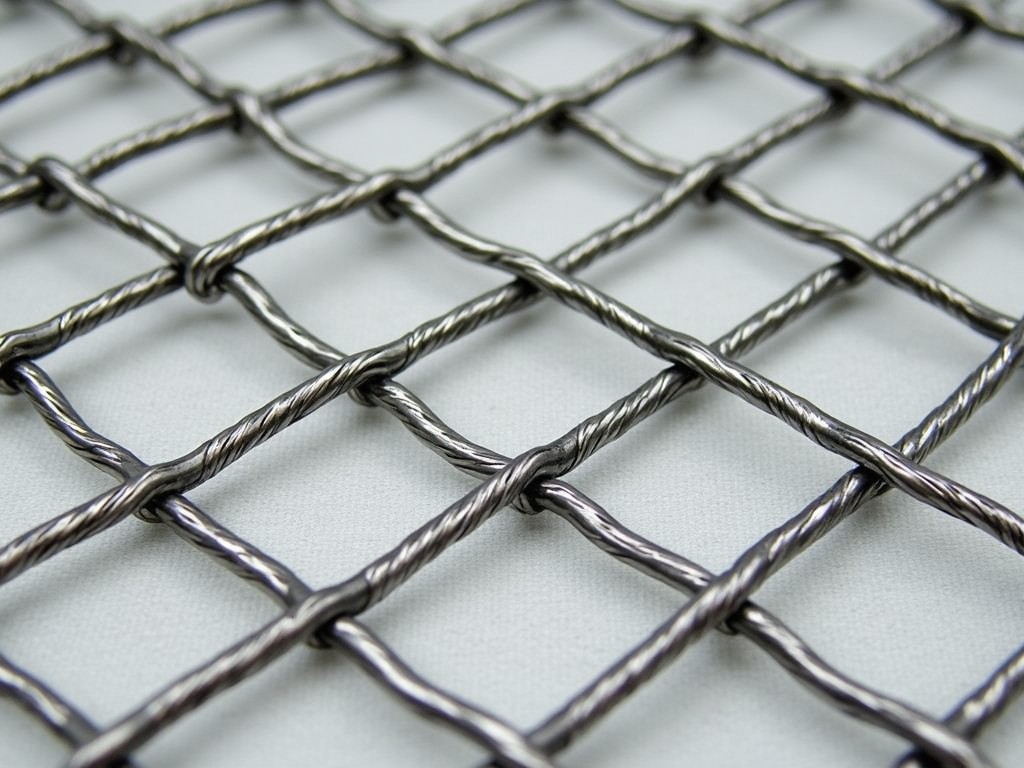
Stainless Steel Wire Manufacturing in Ohio: Technical Specifications and Industrial Applications
Ohio-based stainless steel wire manufacturers serve industrial sectors requiring corrosion resistance, tensile strength, and dimensional stability. Production capabilities range from fine gauge wire for precision components to heavy-duty bar stock for structural applications. Material selection follows ASTM A240 and AISI standards, with grades 304, 316L, and 17-7PH commonly stocked for immediate availability.
Manufacturing processes include cold drawing, annealing, and precision leveling to achieve target mechanical properties. Surface finishes range from bright annealed to No. 4 brushed, depending on end-use requirements. Tolerance control is maintained to ±0.001 inch for diameter and ±0.005 inch for length on cut-to-length products.
Material Composition and Performance Characteristics
Stainless steel wire derives its corrosion resistance from chromium content (minimum 10.5%) and nickel stabilization. Grade 304 contains 18% chromium and 8% nickel, providing general-purpose resistance to atmospheric oxidation and mild chemical exposure. Grade 316L adds 2-3% molybdenum for enhanced resistance to chlorides and acidic environments, making it suitable for marine and chemical processing applications.
Mechanical properties vary by temper condition. Full hard 304 wire exhibits tensile strength of 185-220 ksi with elongation of 8-12%, while annealed 316L offers 75-90 ksi tensile strength and 40-60% elongation. Precipitation-hardening grades like 17-7PH achieve tensile strengths up to 280 ksi after heat treatment, enabling use in high-stress springs and fasteners.
Manufacturing Capabilities and Process Controls
Wire drawing operations utilize tungsten carbide dies with lubrication systems to prevent galling and ensure consistent diameter reduction. In-line laser micrometers monitor diameter every 2 feet, triggering automatic die adjustments when deviations exceed 0.0005 inch. Tension control maintains draw forces within 5% of target to prevent work hardening variations.
Annealing furnaces operate at 1900-2100°F with controlled hydrogen atmospheres to prevent surface oxidation. Cooling rates are regulated to achieve target grain structure, verified through metallographic sampling every 4 hours. Straightening rolls use adjustable pressure settings to eliminate camber while preserving tensile properties.
Industrial Applications and Functional Requirements
In food processing equipment, stainless steel wire forms conveyor belts, screening elements, and cleaning brushes where resistance to frequent washdowns and food acid exposure is critical. The non-reactive nature prevents contamination, while smooth finishes reduce bacterial harborage points. Wire diameters typically range from 0.020 to 0.125 inch for these applications.
Automotive manufacturers use stainless steel wire in exhaust system components, sensor wiring harnesses, and under-hood fasteners exposed to thermal cycling and road salt. Grade 316L is specified for components near wheel wells where chloride exposure is highest. Wire forms must maintain dimensional stability after 1000+ hours of salt spray testing per ASTM B117.
Medical device producers require wire for guidewires, catheter reinforcements, and implantable components where biocompatibility and fatigue resistance are paramount. Electropolished finishes achieve surface roughness below 0.4 μm Ra to minimize thrombogenic response. Lot traceability and mill test reports accompany all medical-grade shipments.
Quality Assurance and Testing Protocols
Incoming raw material undergoes spectrometer verification for chemical composition, with certification traceable to mill heat numbers. Mechanical testing includes tensile strength, yield strength, and elongation per ASTM A370, conducted on samples from each lot. Surface finish is measured using profilometers with 0.8 mm cutoff to ensure consistency across batches.
Corrosion resistance is validated through salt spray testing (ASTM B117) and humidity exposure per ASTM D2247 for applicable grades. Visual inspection under 10x magnification detects surface defects such as scratches, pits, or drawing marks. All test results are documented in lot-specific quality reports available upon request.
| Property | Grade 304 | Grade 316L | Grade 17-7PH |
|---|---|---|---|
| Chromium (%) | 18.0 | 16.0-18.0 | 16.0-18.0 |
| Nickel (%) | 8.0-10.5 | 10.0-14.0 | 3.5-5.5 |
| Molybdenum (%) | 0 | 2.0-3.0 | 0 |
| Tensile Strength (ksi, annealed) | 75-90 | 75-85 | 180-200 |
| Elongation (% in 2") | 40-60 | 40-55 | 1-2 |
| Max Operating Temp (°F) | 1600 | 1600 | 800 |
Customization Options and Value-Added Services
Diameter range spans 0.008 inch to 0.500 inch, with incremental steps available based on die inventory. Custom tempers are achievable through controlled drawing reductions and annealing cycles, enabling hardness specifications from 1/4 hard to spring temper. Length tolerances can be tightened to ±0.001 inch for precision cutting applications using CNC saws.
Surface treatments include electropolishing for medical components, passivation for enhanced corrosion resistance, and PVC coating for electrical insulation. Spools, coils, and straight cut lengths are standard packaging options, with weight limits of 50 lbs for manual handling and 500 lbs for palletized containers. Identification tags include material grade, lot number, and tensile test data.
Ordering Information and Technical Support
Quotations require specification of material grade, diameter, temper condition, length, quantity, and surface finish. Applications involving regulatory compliance (FDA, ASME, ASTM) should be disclosed early to ensure proper documentation. Lead times typically range from 2-4 weeks for stock grades and 6-8 weeks for custom alloys or specialized tempers.
Technical support includes material selection guidance based on environmental exposure, load requirements, and forming processes. Engineers provide bend radius calculations, fatigue life estimates, and corrosion rate projections for critical applications. Sample lengths are available for evaluation, with full mill test reports accompanying all production shipments.

More Products

Send Inquiry
If you are interested in our products, leave your information here and we will be in touch shortly.