Buy Metal Dishwasher Cutlery Basket
A metal dishwasher cutlery basket is a specialized component designed to hold utensils during the wash cycle in commercial and industrial dishwashing systems. Unlike standard household baskets, these
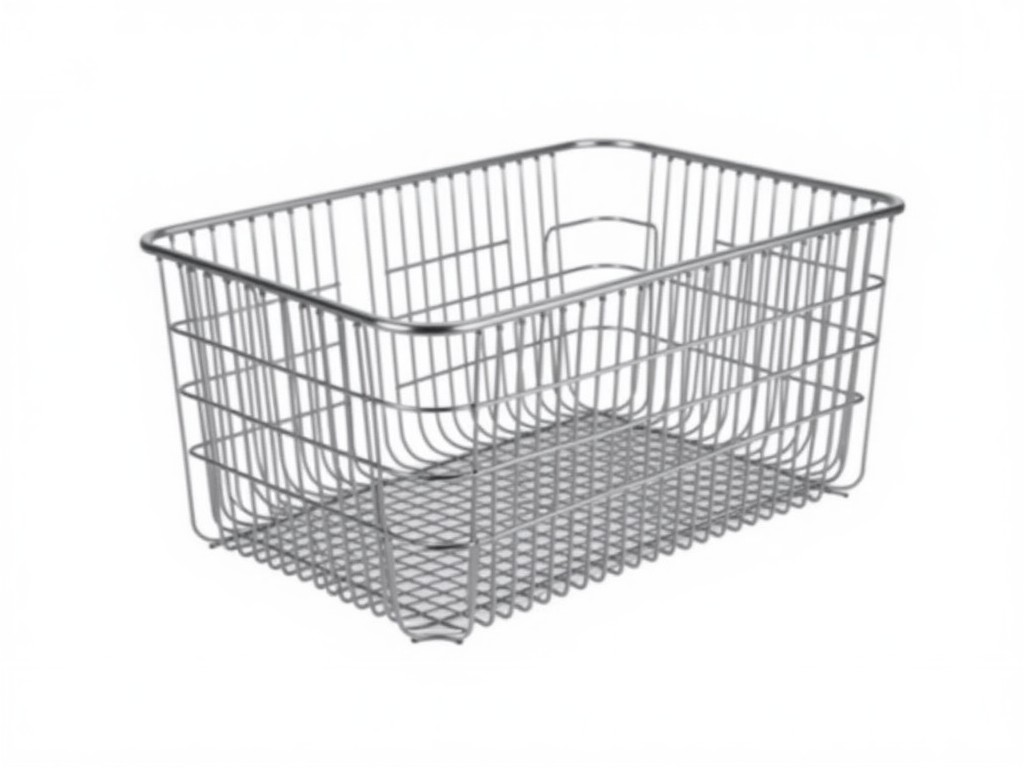
Metal Dishwasher Cutlery Basket
A metal dishwasher cutlery basket is a specialized component designed to hold utensils during the wash cycle in commercial and industrial dishwashing systems. Unlike standard household baskets, these are engineered for high-volume environments where durability, hygiene, and consistent performance under repeated thermal and chemical exposure are critical. The basket’s primary function is to secure knives, forks, spoons, and other cutlery in a fixed orientation to ensure thorough water and detergent contact while preventing nesting, tangling, or damage to both utensils and the dishwasher mechanism.
Industrial cutlery baskets are typically constructed from austenitic stainless steel grades such as 304 or 316, selected for their resistance to corrosion from detergents, high-temperature water (up to 85°C/185°F), and prolonged exposure to chlorides. The wire diameter usually ranges from 2.0 mm to 3.5 mm, providing sufficient rigidity to maintain structural integrity under load while allowing adequate water flow through the mesh. Mesh openings are precision-formed, commonly between 6 mm × 6 mm and 10 mm × 10 mm, to balance utensil retention with effective cleaning action—smaller openings prevent small items from falling through, while larger openings reduce flow resistance and improve wash efficiency.
The basket’s frame design incorporates reinforced sidewalls and a rigid base to resist deformation when fully loaded with heavy utensil trays. Load capacity typically ranges from 5 kg to 12 kg per basket, depending on wire gauge and frame geometry, ensuring safe handling during automated loading/unloading cycles. Corners are often rounded or flared to minimize stress concentration points and reduce the risk of wire fatigue over thousands of cycles. Some designs include integrated handles or lifting lugs fabricated from the same material, enabling safe manual transfer without sharp edges that could pose safety hazards or damage dishwasher racks.
Surface finish plays a critical role in long-term performance. Baskets undergo passivation or electropolishing to enhance the chromium oxide layer, improving resistance to pitting and crevice corrosion in harsh wash environments. Electropolished surfaces also reduce bacterial adhesion and simplify cleaning, supporting compliance with food safety standards such as ISO 22000 or NSF/ANSI 3. Unlike coated or plated alternatives, bare stainless steel avoids risks of delamination, chipping, or chemical leaching that could contaminate wash water or utensils.
Customization is common in industrial applications to match specific dishwasher models, utensil types, or workflow requirements. Basket dimensions—length, width, and depth—are frequently tailored to fit specific rack systems, with tolerances held to ±1.5 mm to ensure smooth insertion and removal. Partition configurations can be adjusted to accommodate specialized utensils such as ladles, whisks, or serving tongs, using vertical dividers or angled compartments. Some designs include removable inserts or adjustable grids to allow reconfiguration for different load profiles without requiring multiple basket types.
| Parameter | Typical Range | Notes |
|---|---|---|
| Stainless Steel Grade | 304, 316 | 316 preferred for high-chloride or saline environments |
| Wire Diameter | 2.0 mm – 3.5 mm | Thicker wire increases rigidity but reduces open area |
| Mesh Opening | 6 mm × 6 mm – 10 mm × 10 mm | Optimized for utensil retention and water permeability |
| Load Capacity | 5 kg – 12 kg | Dependent on frame design and material thickness |
| Operating Temperature | Up to 85°C (185°F) | Continuous exposure; short-term spikes to 95°C possible |
In food processing plants, institutional kitchens, and high-throughput catering facilities, the reliability of cutlery baskets directly impacts operational uptime and sanitation compliance. A basket that deforms, corrodes, or sheds particles can lead to utensil damage, clogged drain systems, or cross-contamination risks—each contributing to costly downtime, rework, or regulatory non-conformance. By contrast, a well-engineered stainless steel basket maintains dimensional stability over tens of thousands of cycles, supports consistent wash results, and reduces the total cost of ownership through extended service life and minimal maintenance.
Procurement decisions should prioritize material traceability, weld integrity, and dimensional consistency over cosmetic appearance. Baskets are typically supplied in bulk packaging—nestable stacks separated by corrugated dividers or placed in reusable metal totes—to prevent deformation during transit. For export shipments, additional corner protection and moisture-barrier liners are recommended to preserve surface finish in humid climates. Lead times vary based on complexity and material availability but generally range from 2 to 6 weeks for standard configurations, with custom designs requiring additional time for tooling and validation.
To request a quotation or discuss specific requirements for your dishwasher system, please provide the following details: internal rack dimensions, utensil types and quantities per cycle, dishwasher make and model, operating temperature and cycle duration, and any special hygiene or safety standards applicable to your facility. Our technical team will review your inputs and propose a basket design that ensures compatibility, durability, and compliance with industrial hygiene standards.
Request Technical Consultation
More Products

Send Inquiry
If you are interested in our products, leave your information here and we will be in touch shortly.