Buy 120Mm 3D Print Custom Pc Fan Grill
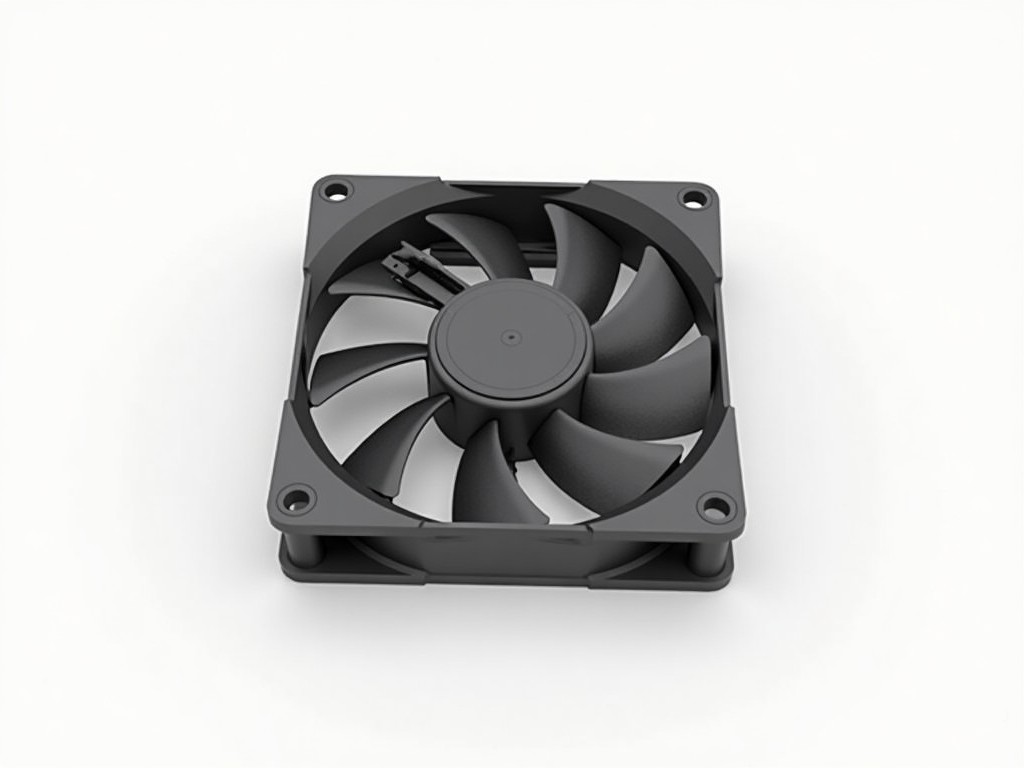
A 120mm 3D printed custom PC fan grill is a precision-engineered component designed to mount securely onto standard 120mm cooling fans while providing tailored airflow protection and aesthetic
Buy 120mm 3D Print Custom PC Fan Grill
A 120mm 3D printed custom PC fan grill is a precision-engineered component designed to mount securely onto standard 120mm cooling fans while providing tailored airflow protection and aesthetic integration. Unlike off-the-shelf grills, these are manufactured using additive processes that allow for complex internal geometries, variable thickness walls, and application-specific mounting features without the need for tooling. This approach reduces lead time for prototyping and low-volume production while maintaining dimensional accuracy critical for fan clearance and vibration stability.
The primary function of the grill is to prevent foreign object intrusion—such as cables, debris, or tools—from contacting the fan blades while minimizing pressure drop across the inlet or outlet. Custom designs can optimize the open area ratio (typically 60–80%) to balance protection with airflow efficiency, reducing turbulence and noise generation. Material selection directly impacts thermal resistance, UV stability, and mechanical durability under continuous fan vibration and ambient temperature cycling.
Industrial buyers specify these components for applications where standard grills fail to meet enclosure constraints, airflow direction requirements, or integration with liquid cooling shrouds, VRM heatsinks, or custom chassis designs. The ability to iterate design rapidly via 3D printing supports validation testing before committing to injection molding for higher volumes.
Key Technical Characteristics
Dimensional tolerance is maintained within ±0.2mm for critical interfaces such as fan mounting holes and outer diameter, ensuring no binding or wobble at operational speeds up to 3000 RPM. Wall thickness is typically designed between 1.2mm and 2.5mm depending on load requirements, with internal ribs or gussets added in high-vibration zones to increase modal frequency above fan excitation frequencies.
Open area ratio is calculated based on the geometry of the perforations or lattice structure, directly influencing static pressure drop. For example, a hexagonal pattern with 2.5mm hole diameter and 4mm pitch yields approximately 70% open area, resulting in less than 5% additional pressure drop compared to an unobstructed fan at 50% duty cycle. Surface roughness averages Ra 8–12μm post-print, which can be reduced via vapor smoothing or light bead blasting if required for airflow laminarity.
Thermal properties depend on material: ABS maintains structural integrity up to 80°C, PETG to 85°C, and polycarbonate to 110°C—important when mounted near VRMs or power supply exhaust. Creep resistance under sustained load is evaluated via tensile testing at elevated temperatures, with long-term deflection typically under 0.5mm after 1000 hours at 60°C for reinforced grades.
Material Options and Performance
| Material | Heat Deflection Temp (°C) | Tensile Strength (MPa) | UV Stability | Typical Use Case |
|---|---|---|---|---|
| ABS | 80 | 30–40 | Low (requires coating) | Internal enclosures, low-cost prototyping |
| PETG | 85 | 45–55 | Medium | Exhaust vents, humid environments |
| Polycarbonate | 110 | 55–65 | High (with additive) | High-temp zones, outdoor exposure |
| Nylon PA12 | 90 | 40–50 | Very High | Moving parts, vibration-prone mounts |
| ASA | 95 | 35–45 | Excellent | Sun-exposed chassis, marine adapters |
Material selection is guided by thermal exposure, mechanical load, and environmental factors. For example, polycarbonate is chosen when the grill is mounted within 20mm of a VRM heatsink exceeding 90°C surface temperature, while nylon PA12 is preferred for applications involving frequent thermal cycling or contact with lubricants. UV-stabilized grades like ASA prevent embrittlement in window-mounted or outdoor industrial control enclosures.
Customization Logic and Design Considerations
Customization begins with the fan’s mounting hole pattern—most 120mm fans use four holes at Ø4.3mm spaced at 105mm pitch, but variations exist for PWM-controlled, high-static-pressure, or server-grade fans. The grill’s inner diameter is sized to clear the fan hub and blade tips, typically 2–3mm larger than the fan’s rotor diameter to account for manufacturing tolerances and blade flex at peak RPM.
Mounting features include snap-fit legs, screw bosses with M3 clearance holes, or adhesive flanges, depending on enclosure material and disassembly requirements. Snap-fit designs use cantilever beams with 0.5mm deflection tolerance to retain assembly force without tools, while screw bosses are reinforced with vertical ribs to prevent pull-out under torque. Flow guidance vanes or directional baffles can be integrated to reduce swirl and improve laminar flow downstream—particularly valuable in ducted cooling systems.
Surface finish options include matte (as-printed), smoothed (via chemical vapor or tumbling), or textured (bead blasted) to reduce glare or improve grip. Color is achievable through filament selection or post-process dyeing, though pigments may slightly affect UV resistance. All designs are validated for clearance using CAD assembly checks against fan specifications and enclosure walls before printing.
Quality Control and Validation
Dimensional inspection uses calibrated CMM or optical scanning to verify critical dimensions: mounting hole position (±0.15mm), outer diameter (±0.2mm), and wall thickness minimum (±0.1mm). First-article inspection includes a full geometry scan compared to the nominal CAD model, with deviation reports available upon request. Layer adhesion is assessed via cross-sectional microscopy to detect delamination risks, particularly in high-stress zones like screw bosses.
Functional validation includes airflow testing using a calibrated anemometer in a wind tunnel setup to measure pressure drop across the grill at various flow rates (0–50 CFM). Vibration resonance is checked via accelerometer sweep from 10–500Hz to ensure no amplification near fan blade pass frequency (typically 80–120Hz for 120mm fans at 2000 RPM). Thermal cycling tests (–20°C to 80°C, 10 cycles) verify no cracking or warping under repeated temperature swings.
Traceability is maintained through batch-linked production logs recording printer settings, filament lot number, and post-process details. Each unit receives a unique identifier for warranty and failure analysis tracking. While not certified to ISO 13485 or AS9100, internal QA follows ISO 9001-inspired procedures for documentation, calibration, and corrective action.
Applications in Industrial and Enclosure Design
These grills are commonly specified in industrial control panels where standard fan guards interfere with terminal blocks or DIN rail mounting, requiring a low-profile or offset design to maintain clearance. In 3D printer enclosures, custom grills prevent filament snags while directing airflow to cool the hotend and electronics compartment without creating negative pressure that could draw in particulates.
Telecom and edge computing housings use them to protect fans in dust-prone environments while maintaining NEMA-rated ingress protection when combined with gaskets. Medical device integrators select UV-stable, autoclavable-compatible materials (e.g., specific polycarbonate blends) for grille components in diagnostic equipment cooling paths where cleanability and long-term stability are critical.
Automotive aftermarket and motorsport applications benefit from vibration-resistant designs with integrated ducting to cool brake controllers or battery management systems. The ability to conform to complex curved surfaces or asymmetric layouts—impossible with stamped metal grills—makes additive manufacturing ideal for low-volume, high-variation projects.
Ordering and Production Information
Minimum order quantity is one unit, enabling prototyping and validation testing without tooling costs. Lead time for standard materials (ABS, PETG, polycarbonate) is typically 3–5 business days after design approval, extending to 7–10 days for engineered grades like nylon or ASA due to drying and printing precautions. Shipping is conducted in rigid corrugated packaging with internal foam inserts to prevent deformation during transit.
To initiate a quote, provide the fan model number or mounting hole pattern, required open area percentage, maximum operating temperature, and any enclosure constraints (e.g., panel thickness, clearance to nearby components). A STEP or STL file of the envelope is helpful but not required—our engineers can derive the interface from standard fan specifications. Design review includes DFM feedback on overhangs, support needs, and build orientation to minimize post-processing and ensure mechanical integrity.
Payment terms are net 30 for established accounts; proforma invoice for first-time buyers. All pricing includes first-article inspection report and digital design file retention for future reorders. Volume discounts apply at 10+ units, with further reductions at 50+ due to optimized build plate utilization and reduced setup time per part.
Ready to discuss your 120mm custom fan grill requirements? Provide your fan specifications and environmental constraints for a detailed quote and design review.
Request Quote & Design Review
More Products

Send Inquiry
If you are interested in our products, leave your information here and we will be in touch shortly.