China Oyster Baskets For Sale
Oyster baskets are essential aquaculture equipment used for the cultivation, harvesting, and post-harvest handling of edible oysters. These submerged containers provide a controlled environment that
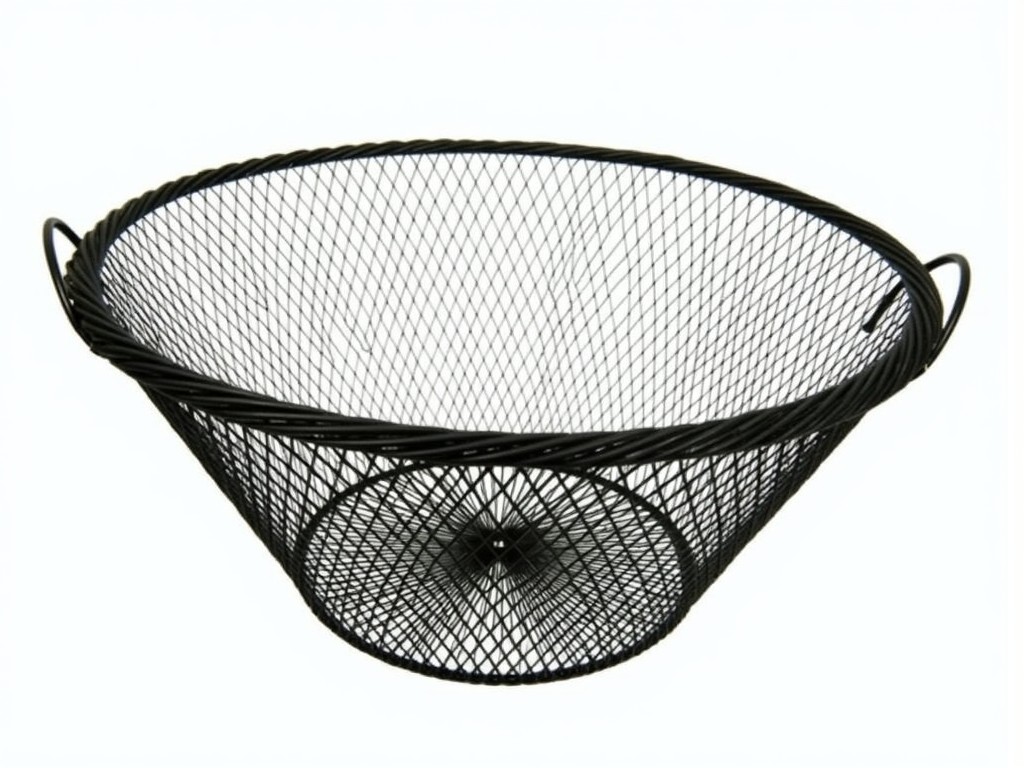
China Oyster Baskets for Sale
Oyster baskets are essential aquaculture equipment used for the cultivation, harvesting, and post-harvest handling of edible oysters. These submerged containers provide a controlled environment that protects oysters from predators, sedimentation, and biofouling while allowing optimal water flow for feeding and growth. Industrial-grade oyster baskets must withstand prolonged exposure to saltwater, UV radiation, and mechanical stress from tides and handling equipment. Material selection, mesh geometry, and structural design directly impact operational efficiency, oyster survival rates, and long-term cost of ownership. This page details the technical specifications, material options, and design considerations for oyster baskets manufactured in China for global aquaculture markets.
Material Composition and Corrosion Resistance
The primary materials used in industrial oyster baskets are high-density polyethylene (HDPE), polypropylene (PP), and marine-grade stainless steel (AISI 316). HDPE offers excellent UV stability, chemical resistance, and flexibility, with a typical density of 0.94–0.97 g/cm³ and tensile strength ranging from 20–30 MPa. PP provides higher rigidity and heat resistance but lower impact strength at low temperatures. Stainless steel frames, when used, provide structural reinforcement with a minimum yield strength of 205 MPa and superior resistance to pitting and crevice corrosion in chloride-rich environments. Material selection depends on site-specific conditions such as water temperature, salinity, tidal exposure, and expected service life.
Mesh Design and Hydrodynamic Performance
The mesh aperture size and open area percentage are critical design parameters influencing water exchange, food particle capture, and sediment retention. Standard mesh sizes range from 12 mm to 25 mm square or hexagonal openings, selected based on oyster seed size and growth stage. Open area typically falls between 40% and 60%, balancing flow dynamics with predator exclusion. Hydrodynamic testing shows that baskets with optimized mesh geometry reduce drag coefficients by up to 25% compared to non-aerodynamic designs, lowering mooring loads and energy expenditure during tidal cycling. Mesh thickness is engineered to resist abrasion from sand and shell fragments while maintaining structural integrity under cyclic loading.
Structural Configuration and Handling Features
Oyster baskets are commonly manufactured in stackable, nestable, or hinged configurations to optimize storage, transportation, and deployment efficiency. Stackable designs incorporate locating lugs and alignment ribs to ensure stable vertical stacking without lateral shift. Nestable baskets reduce return-trip volume by up to 70% when empty, lowering logistics costs. Reinforced corner posts and integrated lifting eyes, rated for minimum 150 kg safe working load, facilitate mechanized handling with cranes or forklifts. Some models include integrated feeding chambers or removable dividers to support size grading and multi-stage cultivation workflows.
Environmental and Operational Lifespan Factors
The expected service life of HDPE-based oyster baskets in temperate marine environments ranges from 5 to 8 years, while UV-stabilized grades can exceed 10 years under moderate solar exposure. PP baskets typically last 3–5 years due to higher susceptibility to oxidative degradation. Stainless steel components, when properly passivated, can exceed 15 years with minimal maintenance. Biofouling accumulation increases hydrodynamic drag and weight, necessitating periodic cleaning; anti-fouling coatings are generally avoided due to food safety regulations, making smooth, non-porous surfaces preferable for manual or mechanical cleaning. Design features such as rounded edges and minimal crevices reduce fouling adhesion points.
Comparison of Common Oyster Basket Types
| Feature | HDPE Mesh Basket | PP Frame + HDPE Mesh | Stainless Steel Frame Basket |
|---|---|---|---|
| Material (Main) | High-Density Polyethylene | Polypropylene frame, HDPE mesh | AISI 316 Stainless Steel |
| Typical Density | 0.95 g/cm³ | 0.91 g/cm³ (frame) | 8.0 g/cm³ |
| Tensile Strength | 20–30 MPa | 25–35 MPa (frame) | 500–700 MPa |
| UV Stability (Additive) | UV stabilizers (HALS) | UV stabilizers (HALS) | Inherent (no additives) |
| Expected Lifespan | 5–10 years | 3–6 years | 10–15+ years |
| Weight (Empty, 60L) | 1.8–2.2 kg | 2.5–3.0 kg | 4.5–5.5 kg |
| Handling Compatibility | Manual, semi-mechanized | Manual, semi-mechanized | Fully mechanized |
Customization Options for Project Integration
Manufacturers in China offer scalable customization to align oyster baskets with specific farm geometries, tidal regimes, and operational workflows. Adjustable parameters include overall dimensions (length, width, height), mesh aperture size, wall thickness, corner reinforcement design, and integration of handling features such as lift straps, stacking lugs, or RFID tag holders. Volume customization is common, with standard capacities ranging from 20 liters for seed oysters to 100+ liters for market-size stock. Color options (typically black, dark green, or white) are available for UV stabilization or visual monitoring purposes. All customizations are subject to minimum order quantities and tooling considerations, which are discussed during the quotation phase.
Quality Control and Manufacturing Consistency
Industrial production follows standardized process controls to ensure dimensional accuracy, material consistency, and mechanical performance. Raw material batches are tested for melt flow index (MFI), density, and UV stabilizer concentration prior to extrusion. Injection-molded components undergo dimensional inspection using coordinate measuring machines (CMM) or optical comparators to verify critical tolerances, typically within ±2 mm for linear dimensions and ±0.5 mm for mesh wire diameter. Mesh integrity is validated through tensile testing of welded or woven joints, with minimum peel strength requirements of 15 N/cm. Final assembly includes visual inspection for flash, burrs, or incomplete fusion, followed by functional testing of stacking and nesting behavior under simulated load.
Packaging and Export Logistics
Oyster baskets are packaged for export using methods that prevent deformation, UV exposure, and moisture ingress during transit. Standard packaging includes bundling in groups of 10–20 units with recyclable plastic straps, placed on fumigated wooden pallets or plastic skids. Each pallet is wrapped in UV-stabilized stretch film and fitted with corner protectors to absorb impact forces. For long-haul shipments, desiccant packs are included to control internal humidity, and temperature indicators may be added upon request. Pallet dimensions are optimized for containerization, typically 1.1m × 1.1m or 1.2m × 1.0m, allowing efficient use of 20ft and 40ft freight containers. Clear labeling includes part number, material code, quantity, and country of origin.

More Products
Send Inquiry
If you are interested in our products, leave your information here and we will be in touch shortly.