China Modular Kitchen Ss Basket Price
Industrial buyers evaluating stainless steel baskets for modular kitchen systems require precise technical data to assess suitability, lifecycle cost, and compliance with food-safe manufacturing
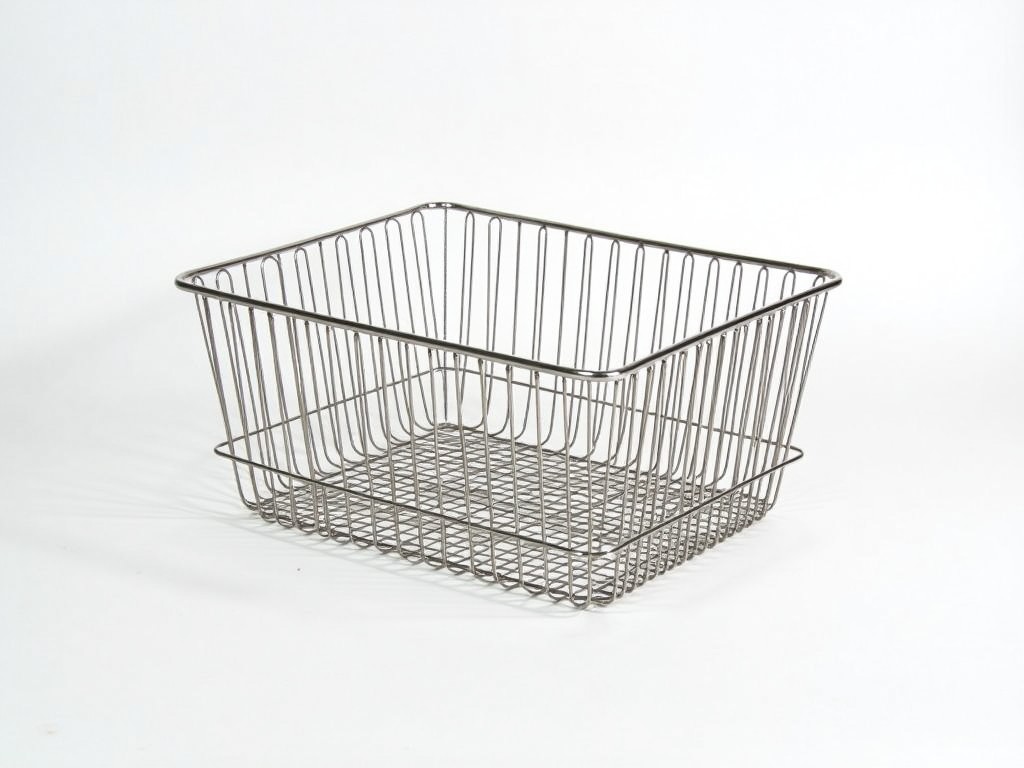
China Modular Kitchen SS Basket Price: Technical Specifications and Procurement Guide
Industrial buyers evaluating stainless steel baskets for modular kitchen systems require precise technical data to assess suitability, lifecycle cost, and compliance with food-safe manufacturing standards. This guide details the engineering characteristics, material specifications, dimensional tolerances, and surface finish options that directly influence pricing and long-term performance in commercial kitchen environments.
Pricing for China-manufactured modular kitchen SS baskets varies based on material grade, wire diameter, mesh configuration, load-bearing requirements, and surface treatment. Understanding these variables enables accurate cost comparison and risk mitigation during supplier evaluation.
The following sections explain the technical factors affecting price, supported by measurable engineering parameters rather than subjective claims.
Material Composition and Grade Selection
The primary determinant of corrosion resistance and mechanical strength in modular kitchen baskets is the stainless steel grade. AISI 304 (18-8) is the most common baseline for food-contact applications due to its chromium-nickel composition providing adequate resistance to mild acids, alkalis, and moisture in kitchen environments.
For higher chloride exposure—such as near dishwashers, steam vents, or coastal installations—AISI 316 grade with molybdenum addition offers superior pitting resistance. Wire diameter typically ranges from 2.0mm to 5.0mm, directly affecting tensile strength and deflection under load. A 3.0mm 304 SS wire exhibits approximately 620 MPa tensile strength, while 4.0mm increases load capacity by ~78% due to the cubic relationship between diameter and cross-sectional area.
Surface finish is specified by Ra (roughness average) values. Mill finish (Ra 1.6–3.2 μm) is standard for structural components, while electropolished finishes (Ra 0.2–0.4 μm) are specified for direct food contact zones to minimize bacterial retention and simplify cleaning validation per ISO 14159 and NSF/ANSI 2 standards.
Basket Geometry and Load Distribution Engineering
Modular kitchen SS baskets are engineered as three-dimensional wire frameworks designed to distribute dynamic and static loads uniformly across support points. Common configurations include rectangular bins with reinforced corners, vertical dividers for utensil segregation, and perforated bases for drainage.
The mesh aperture size—typically ranging from 10mm×10mm to 50mm×50mm—directly influences both structural rigidity and functionality. Smaller apertures increase wire count per unit area, raising material cost but improving small-item retention and reducing vibration-induced fatigue. A 20mm aperture basket uses ~40% more wire than a 40mm aperture equivalent of the same outer dimensions, impacting both price and weight.
Corner joints are critical failure points. Resistance welding at intersections provides shear strength exceeding 1.5 kN per joint in 3.0mm wire, while mechanical crimping offers lower consistency. Load testing typically applies 150N downward force at mid-span; acceptable deflection is limited to L/200 (where L is unsupported span) to prevent permanent deformation under repeated use.
Customization Variables Impacting Unit Cost
Pricing is highly dependent on project-specific parameters. Key variables include overall dimensions (length × width × height), wire gauge, mesh pattern, number of internal partitions, edge treatment (rolled, capped, or folded), and mounting interface design (brackets, slides, or hanging hooks).
For example, a standard 400mm × 300mm × 200mm basket with 3.0mm wire, 25mm mesh, and no dividers in AISI 304 mill finish may fall within a base price range. Adding two longitudinal dividers increases wire usage by ~18% and welding operations by 4 nodes per divider, raising cost proportionally. Electropolishing adds a surface treatment step that increases unit cost by approximately 22–28% due to chemical processing, rinsing, and passivation cycles.
Tolerance requirements also affect pricing. General commercial tolerances (±2.0mm on dimensions) are standard, while precision applications requiring ±0.5mm necessitate tighter fixturing, increased inspection, and potential scrap reduction, adding 15–25% to manufacturing overhead.
Typical Price Ranges and Volume Scaling
Unit pricing for China-produced modular kitchen SS baskets follows predictable scaling based on order volume and complexity. Tooling and setup costs are amortized over production runs, making prototyping or low-volume orders significantly higher per unit.
For baskets under 500mm in any dimension with standard 3.0mm 304 SS wire and mill finish:
- 1–50 units: Typically $18–$32 per unit
- 51–200 units: Typically $12–$22 per unit
- 201–1000 units: Typically $9–$16 per unit
- 1000+ units: Typically $7–$13 per unit (subject to material market fluctuations)
Upgrades adjust these baselines: AISI 316 grade adds ~25–35% to base cost; electropolishing adds ~22–28%; each internal divider adds ~8–12%; precision tolerances (±0.5mm) add ~15–25%. These are illustrative ranges—final pricing requires formal quotation based on complete technical drawings and material specifications.
Raw material volatility (nickel and chromium prices) can cause quarterly fluctuations of ±8–12% in base SS pricing, which manufacturers typically reflect in quarterly price updates or index-linked contracts for long-term supply agreements.
Quality Control and Certification Requirements
Industrial buyers must verify that manufacturing processes align with food safety and durability requirements. Key inspection points include wire diameter verification (±0.05mm tolerance using micrometers), mesh aperture uniformity, weld integrity via visual and dye-penetrant testing, and surface finish measurement using profilometers.
Load validation typically involves applying 1.5× rated capacity for 10 seconds with zero permanent deformation accepted. For baskets intended for heavy-duty use (e.g., pot storage), cyclic load testing (10,000 cycles at 75% max load) may be specified to assess fatigue resistance. Documentation should include material test certificates (MTRs) for each wire batch and inspection reports upon request.
While ISO 9001 certification indicates quality management system compliance, it does not guarantee product-specific performance. Buyers should request NSF/ANSI 2 or equivalent food zone certification for baskets in direct food contact, or confirm compliance with EU Regulation 1935/2004 for materials intended for food preparation areas in export markets.
Packaging for export must prevent mechanical damage and corrosion during transit. Standard practice includes VCI (volatile corrosion inhibitor) paper wrapping, corrugated cardboard separators, and moisture-barrier palletization. Desiccant packets are added for shipments exceeding 30 days transit time or tropical climate routes.
Application-Specific Design Considerations
The functional purpose of the basket dictates optimal design parameters. Utensil baskets benefit from smaller apertures (10–15mm) to prevent small items from falling through, while requiring smooth internal surfaces to avoid snagging. Vertical dividers are commonly added to separate spatulas, whisks, and ladles.
Pot and pan storage baskets prioritize load capacity over aperture size. Here, 4.0–5.0mm wire with 50mm×50mm mesh provides adequate support for 25kg+ loads while minimizing weight. Reinforced side rails and corner gussets prevent racking under uneven distribution.
Drawer-mounted baskets require precise height clearance (typically 50mm, 100mm, or 150mm modules) and low-friction slide compatibility. Mounting brackets must align with standard drawer systems (e.g., Blum, Hettich, Grass) and include adjustment tolerances for ±1.5mm vertical misalignment. Baskets intended for pull-out shelves often feature front lip extensions to prevent tilt when fully extended.
Sink-side baskets for draining vegetables or dishes require perforated bases with ≥60% open area and angled corners to direct water flow toward drain outlets. These are frequently electropolished to resist standing water and mineral buildup.
For technical inquiries, customization requests, or formal quotations, please provide detailed specifications including dimensions, material grade, wire diameter, mesh size, surface finish, and required certifications. Contact our engineering team to discuss application-specific requirements and receive a binding quotation based on current material costs and production capacity.
Request Technical Quotation Schedule Engineering Consultation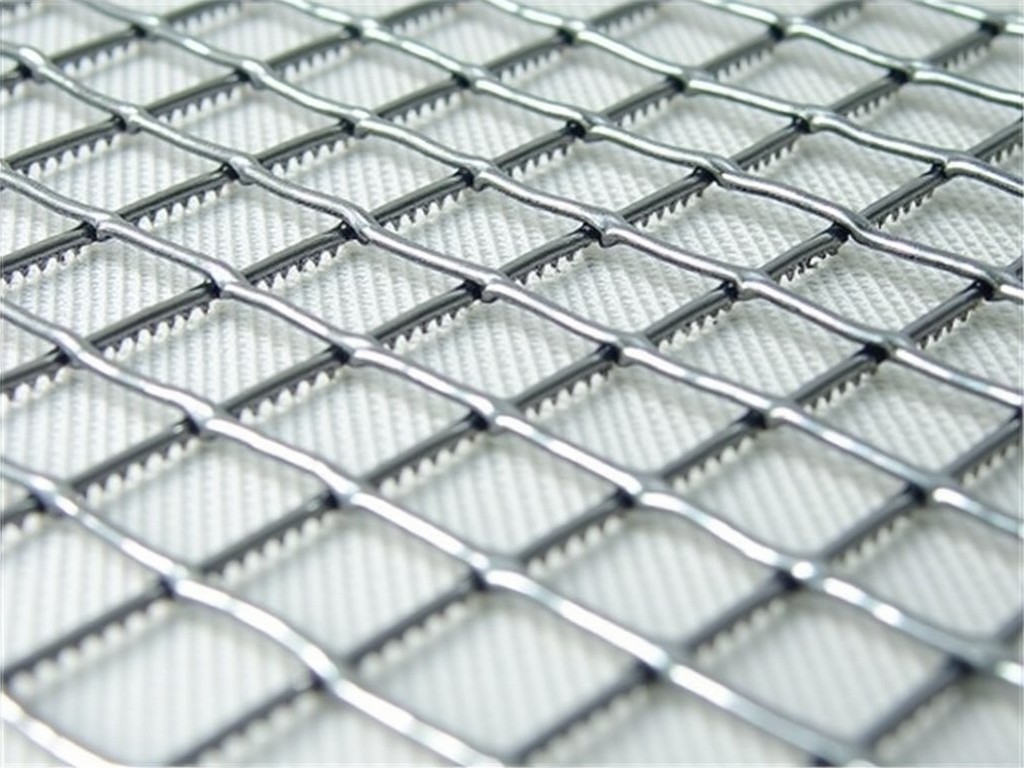
More Products

Send Inquiry
If you are interested in our products, leave your information here and we will be in touch shortly.