China Metal Sheet With Square Holes
Perforated metal sheets with square hole patterns are widely used in industrial applications requiring controlled airflow, light diffusion, or particulate filtration. The geometry of square openings
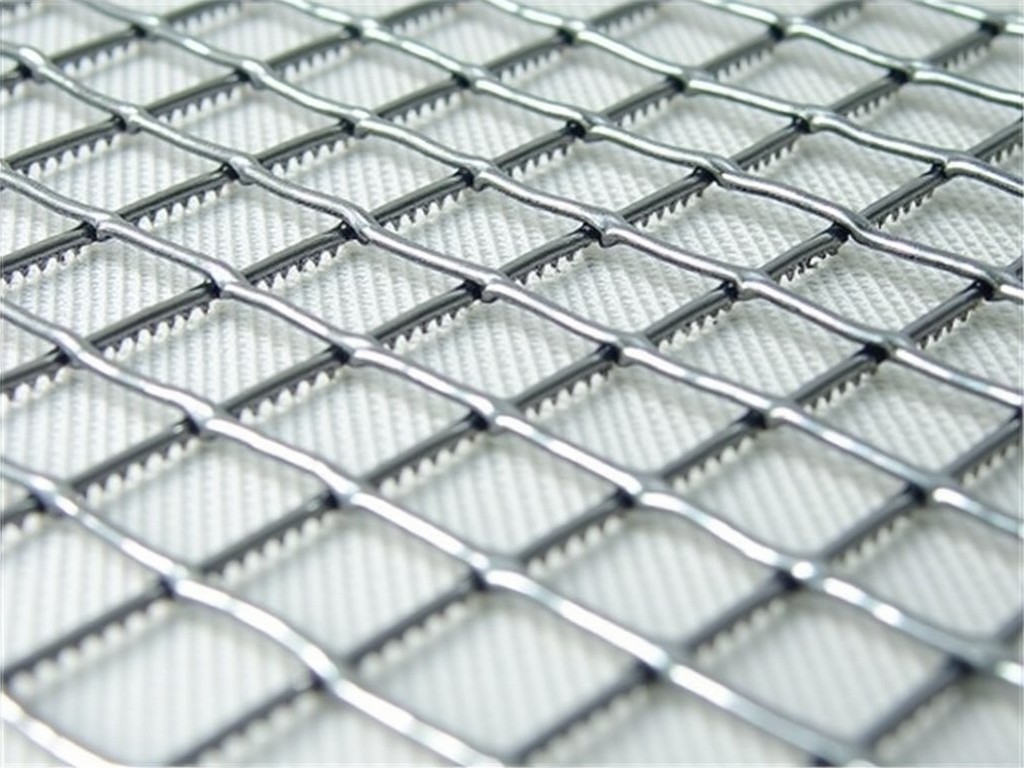
China Metal Sheet with Square Holes
Perforated metal sheets with square hole patterns are widely used in industrial applications requiring controlled airflow, light diffusion, or particulate filtration. The geometry of square openings provides a higher open area ratio compared to round holes of similar pitch, while maintaining structural integrity in the sheet material. This product is manufactured from various metals including carbon steel, stainless steel, aluminum, and galvanized steel, with thickness ranging from 0.5 mm to 6.0 mm depending on the application load requirements. Hole sizes typically range from 3 mm to 50 mm on center, with pitch (center-to-center distance) adjusted to achieve desired open area and mechanical strength.
Material Selection and Mechanical Properties
The choice of base material directly affects corrosion resistance, strength-to-weight ratio, and suitability for environmental exposure. Carbon steel offers high tensile strength (typically 300–550 MPa) and is cost-effective for indoor or painted applications. Stainless steel grades 304 and 316 provide excellent corrosion resistance in humid or chemically aggressive environments, with 316 offering superior resistance to chlorides. Aluminum alloys (e.g., 5052-H32) deliver lightweight performance with good formability and natural oxide layer protection, ideal for weight-sensitive installations. Galvanized steel combines the strength of carbon steel with a zinc coating for moderate outdoor durability.
Thickness selection balances deflection resistance under load with weight and cost. Thinner sheets (0.5–1.5 mm) are suitable for decorative screens or low-pressure filtration, while thicker gauges (2.0–6.0 mm) are used in machine guards, walkway gratings, or industrial flooring where impact resistance is critical. The square hole pattern inherently creates stress concentrations at the corners; therefore, material ductility and hole edge quality are critical to prevent cracking during forming or under cyclic loading.
Open Area Calculation and Flow Characteristics
Open area percentage is a key design parameter calculated as (hole area / total sheet area) × 100. For square holes, open area = (hole width² / pitch²) × 100. A 10 mm square hole with a 15 mm pitch yields approximately 44% open area, whereas the same pitch with round holes of 10 mm diameter gives about 39%. Higher open area improves airflow and light transmission but reduces the remaining ligament strength between holes. Designers must balance open area needs with structural requirements, especially in applications involving vibration, pressure differentials, or foot traffic.
Flow dynamics through perforated sheets depend on hole geometry, open area, and thickness. Square holes exhibit slightly different flow coefficients compared to round holes due to flow separation at the corners. For HVAC diffusers or acoustic panels, the perforation pattern influences sound absorption characteristics — higher open area generally increases high-frequency absorption but may reduce low-frequency effectiveness. In filtration applications, square holes can provide more consistent particle retention than round holes when aligned with flow direction, though blinding tendencies may vary based on particle shape.
Manufacturing Process and Tolerances
Square hole perforation is typically achieved using CNC turret punches or high-speed stamping presses with specialized tooling. The punch and die must maintain sharp corner radii to produce clean square openings without burring or deformation. Tool wear directly affects hole accuracy; therefore, regular inspection and replacement of punches are necessary to maintain dimensional consistency. Feed precision and sheet flatness control are critical to ensure uniform hole alignment across large panels, particularly when sheets exceed 1.5 m in width.
Standard tolerances for hole size are ±0.1 mm for precision applications and ±0.3 mm for general industrial use. Positional tolerance (hole-to-hole spacing) is typically maintained within ±0.2 mm over 300 mm. Edge-to-first-hole distance is usually controlled to ±0.5 mm to allow for framing or mating with adjacent components. Sheets can be supplied flat, coiled, or cut-to-size with deburred edges. Post-processing options include leveling to correct residual stress from punching, surface cleaning, or application of protective coatings such as powder paint or anodizing (for aluminum).
Typical Industrial Applications
In HVAC systems, these sheets serve as diffuser plates where controlled air distribution and noise reduction are required. The square pattern allows for predictable laminar flow characteristics when designed with appropriate open area and thickness. In architectural contexts, they are used as facade panels, sunshades, or interior partitions — providing visual transparency while offering shade, ventilation, and a modern aesthetic. The rigidity of the square ligament structure supports larger spans without additional framing compared to other perforation patterns.
Industrial filtration applications include solid-liquid separation in food processing, coolant filtration in machining centers, and pre-filters for dust collection systems. The square hole geometry can reduce clogging in certain slurry flows by promoting more uniform cake formation across the surface. For machine safety guarding, the sheets provide visibility and airflow while meeting OSHA or ISO 13857 requirements for gap sizes — preventing access to moving parts while allowing observation and heat dissipation. In acoustic engineering, perforated backing panels with absorbent material behind are used in wall and ceiling systems to manage reverberation time in factories or auditoriums.
Quality Inspection and Testing
Dimensional verification includes hole size, pitch, and open area measurement using calibrated gauges or optical comparators. Surface inspection checks for burrs, sharp edges, or coating defects that could affect safety or finish quality. Flatness is assessed using a straight edge and feeler gauge, with typical tolerances of 3–5 mm deviation over 2 meters for standard sheets. Mechanical properties such as tensile strength and yield strength are verified via mill test reports from the base material supplier, though forming during perforation may slightly alter local properties near the hole edges.
For critical applications, additional testing may include burst pressure testing (for fluid-facing panels), load-deflection testing (for walkway or platform use), or acoustic transmission loss measurement (for sound barriers). Corrosion resistance is evaluated through salt spray testing (ASTM B117) for coated or galvanized samples, with results indicating expected service life in specific environments. All inspection data is documented and available upon request, ensuring traceability for quality audits or project specifications.
Customization Options
Hole size, pitch, and open area are fully customizable based on flow, strength, or aesthetic requirements. Standard hole sizes range from 3 mm to 50 mm, with pitches adjustable from 1.2× to 2.5× the hole dimension to achieve open areas from 20% to 60%. Non-standard patterns such as staggered square grids, varying hole sizes across the sheet, or combination with other shapes (e.g., slots or rounds) are available for specialized engineering needs. Sheet dimensions can be cut to specific lengths and widths, with edge treatments including smooth, hemmed, or flanged ends for ease of installation.
Material thickness can be selected from 0.5 mm to 6.0 mm in standard increments, with intermediate gauges available upon request. Surface finishes include mill finish, brushed, powder-coated (in RAL colors), anodized (for aluminum), or galvanized (hot-dip or electrogalvanized). Additional value-added services include forming into cylinders, boxes, or tapered sections; welding of frames or brackets; and assembly with gaskets, seals, or fastening hardware. All customization is supported by engineering review to ensure structural feasibility and performance compliance.
| Parameter | Typical Range | Notes |
|---|---|---|
| Hole Size | 3 mm – 50 mm | Custom sizes available |
| Pitch (Center-to-Center) | 4 mm – 75 mm | Determines open area |
| Sheet Thickness | 0.5 mm – 6.0 mm | Depends on material |
| Open Area | 15% – 65% | Calculated from hole and pitch |
| Standard Width | 1000 mm, 1250 mm, 1500 mm | Custom widths available |
| Standard Length | 2000 mm, 2500 mm, 3000 mm | Cut-to-length available |
Technical support is available to assist with hole pattern selection, material recommendation, and structural validation. Engineers can provide open area calculations, deflection estimates, and corrosion resistance guidance based on environmental exposure. Sample panels are offered for evaluation of fit, finish, and performance before full production commitment. Lead times vary depending on material availability and complexity but typically range from 2 to 4 weeks for standard configurations, with expedited options available for urgent projects.
For inquiries, quotations, or technical consultation regarding china metal sheet with square holes, please contact our engineering team. Provide details on application environment, required dimensions, material preference, and any regulatory or performance standards to be met. We will respond with a detailed proposal including pricing, lead time, and technical documentation to support your procurement and design process.
More Products

Send Inquiry
If you are interested in our products, leave your information here and we will be in touch shortly.