Custom Pc Cooling Fan Guard Grill Factory
Fan guard grills are precision-engineered components designed to protect rotating fan blades while maintaining optimal airflow in PC cooling systems. These grills prevent physical contact with moving
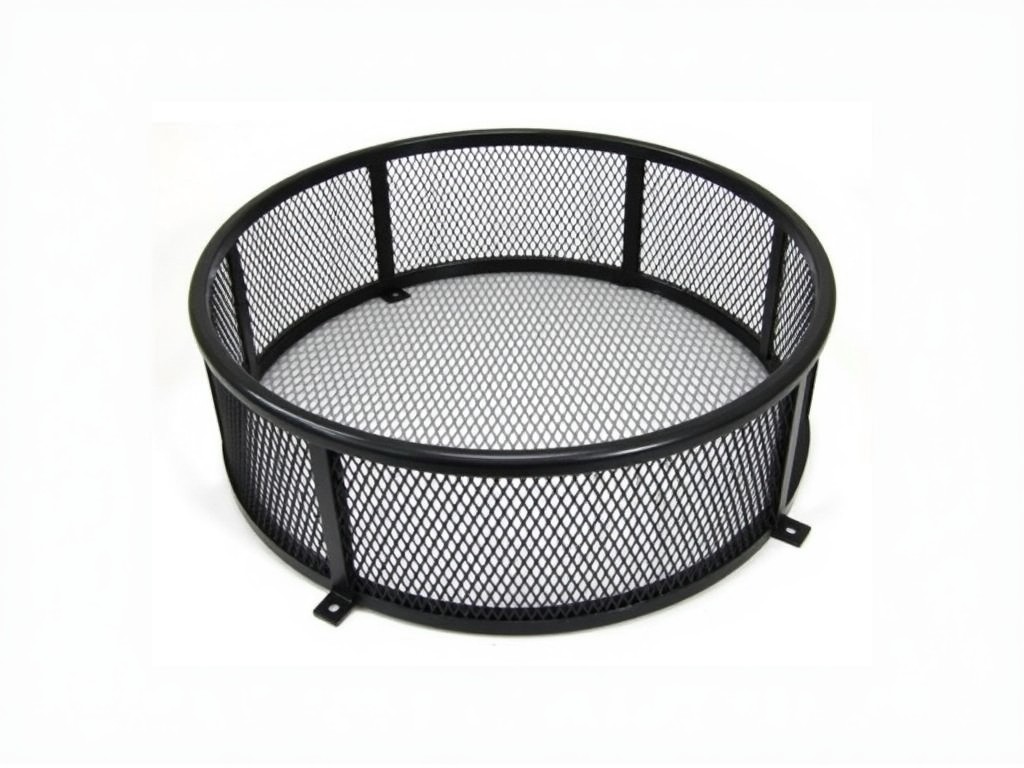
Custom PC Cooling Fan Guard Grill Factory
Fan guard grills are precision-engineered components designed to protect rotating fan blades while maintaining optimal airflow in PC cooling systems. These grills prevent physical contact with moving parts, reduce the risk of injury or component damage, and help contain debris that could impair fan performance. Industrial manufacturers producing custom fan guard grills focus on balancing protection efficiency with minimal aerodynamic resistance to ensure cooling effectiveness is not compromised.
The design of a fan guard grill directly influences both safety and thermal performance. Open area ratio—the percentage of unobstructed surface through which air can pass—is a critical metric; higher ratios generally correlate with lower airflow restriction. Engineers calculate this ratio based on hole size, shape, spacing, and overall geometry to match the fan’s static pressure and volume requirements. Material thickness and structural rigidity are also selected to resist vibration-induced fatigue and deformation under prolonged operation.
Custom manufacturing allows for exact integration with specific fan models, chassis designs, or mounting configurations. Rather than adapting off-the-shelf grills—which may leave gaps, create turbulence, or interfere with RGB lighting or sensor placement—custom solutions are fabricated to match mounting hole patterns, outer dimensions, and clearance needs precisely. This ensures secure attachment, eliminates rattling, and maintains aesthetic consistency in visible builds.
Material Selection and Engineering Properties
Material choice affects durability, weight, corrosion resistance, and manufacturability. Common options include cold-rolled steel, stainless steel (grades 304 and 316), aluminum alloys, and engineered plastics such as polycarbonate or ABS. Each material brings distinct trade-offs in terms of tensile strength, thermal conductivity, fatigue life, and surface finish compatibility.
Steel offers high strength-to-weight ratio and excellent formability for intricate stamping or laser-cut patterns, making it suitable for high-volume production. Stainless steel provides superior resistance to oxidation and humidity, ideal for environments with potential moisture exposure. Aluminum is lighter and naturally corrosion-resistant, often chosen for weight-sensitive applications, though it requires greater thickness to match steel’s rigidity. Plastics allow for complex 3D geometries via injection molding and can be dyed to match case aesthetics, but generally have lower heat resistance and UV stability.
Surface treatments such as powder coating, anodizing (for aluminum), or electroplating (zinc, nickel, chrome) are applied to enhance corrosion resistance, improve wear characteristics, or achieve specific visual finishes. These treatments are selected based on the expected operating environment—whether the system will be used in enclosed cases, open-air test benches, or industrial enclosures exposed to dust or chemicals.
Design Considerations for Airflow Optimization
Aerodynamic efficiency is evaluated using computational fluid dynamics (CFD) or empirical testing to measure pressure drop across the grill at various airflow rates. The goal is to minimize added resistance while maintaining sufficient blade protection. Hole geometry—whether circular, hexagonal, slotted, or custom shapes—impacts both flow dynamics and structural integrity. For example, hexagonal patterns often provide a high open area ratio with good load distribution, while circular holes are easier to manufacture uniformly at small diameters.
Edge treatment is critical: burrs or sharp protrusions can disrupt laminar flow, create noise, or pose handling hazards during assembly. Processes such as deburring, tumbling, or electrolytic polishing are used to ensure smooth edges. Additionally, the grill’s proximity to the fan blades affects performance; excessive clearance reduces protection, while insufficient clearance risks blade contact during vibration or thermal expansion. Manufacturers specify precise standoff distances based on fan diameter, blade tip clearance, and expected RPM.
Mounting method influences both installation repeatability and long-term stability. Options include snap-fit designs, screw mounts with standoffs, adhesive bonding, or magnetic retention. Each method is evaluated for ease of assembly, resistance to loosening under vibration, and compatibility with automated production lines. Custom features such as alignment tabs, captive nuts, or integrated fan brackets may be included to reduce installation time and prevent misalignment.
Customization Capabilities
Custom fan guard grills are produced based on detailed customer specifications, which typically include fan model compatibility, outer diameter, mounting hole pattern (number, size, spacing), required open area ratio, material grade, thickness, finish, and any aesthetic requirements such as color, logo engraving, or cutout patterns for lighting. Engineers review these inputs to validate manufacturability and suggest optimizations where necessary—for example, adjusting hole spacing to improve rigidity without significantly reducing airflow.
Prototyping methods vary depending on complexity and volume. For low-volume validation, CNC machining or laser cutting from sheet metal allows rapid iteration. For higher volumes, progressive die stamping or multi-cavity injection molding becomes cost-effective. Tooling costs are amortized over production runs, and manufacturers often offer NRE (non-recurring engineering) fee structures or volume-based tooling credits.
Tolerances are held to functional requirements rather than generic standards. Critical dimensions—such as mounting hole alignment relative to the fan hub—are typically controlled to ±0.2 mm to ensure proper fit. Outer dimensions may have looser tolerances (±0.5 mm) if they do not affect interlocking with adjacent components. Surface flatness and warpage are monitored, especially in thinner materials, to prevent gaps or uneven pressure when mounted.
Quality Control and Testing Protocols
Quality assurance begins with incoming material inspection, verifying thickness, temper, and surface condition against mill test reports. During production, in-process checks monitor dimensional accuracy using calipers, micrometers, or optical comparators. For stamped parts, stroke height and die wear are tracked to maintain consistency. Injection-molded parts are inspected for sink marks, warpage, and incomplete fill using visual and gauge-based methods.
Functional validation includes airflow resistance testing using calibrated anemometers and pressure differential sensors across a range of fan speeds. Results are compared to baseline measurements taken without the grill to quantify pressure drop. Impact resistance may be tested by simulating blade contact with a pendulum or weighted drop test to ensure the grill can withstand accidental contact without fracturing or deforming into the blade path.
Visual inspection ensures finish uniformity, absence of scratches, dents, or contamination. For coated parts, adhesion and thickness are verified via tape tests and magnetic or eddy current gauges. Laser-etched or printed logos are checked for legibility and depth. Final random sampling follows AQL (Acceptable Quality Level) standards, typically Level II for major defects and Level I for minor ones, based on ISO 2859-1.
Applications in PC and Industrial Cooling Systems
Custom fan guard grills are used in high-performance computing enclosures where users prioritize both safety and aesthetics—such as in custom-built gaming PCs, workstations, and server racks with transparent side panels. In these applications, the grill must not obstruct RGB lighting or tempered glass views while still preventing finger contact with blades spinning at 2000+ RPM. Designers often incorporate logo cutouts or branded patterns that align with the system’s visual theme.
In industrial computing environments—such as edge computing nodes, industrial PCs, or control cabinets—fan guards serve a protective role against accidental contact during maintenance and help meet safety standards like ISO 13857 for guarding openings. Here, durability and resistance to vibration are prioritized over visual appeal, and materials like galvanized steel or polycarbonate are common due to their resilience in harsh conditions.
OEMs and system integrators specify custom grills to streamline assembly line processes. By designing grills that snap into place or self-align with mounting posts, they reduce reliance on tools and minimize human error. Some designs include integrated dust filters or anti-vibration gaskets, combining multiple functions into a single component to reduce part count and improve reliability.
Typical Specifications and Customizable Parameters
| Parameter | Typical Range / Options | Customization Notes |
|---|---|---|
| Fan Compatibility | 40mm to 200mm diameter | Matches specific brand/model hole patterns |
| Material | Cold-rolled steel, SS 304/316, Aluminum 5052, PC/ABS | Grade and temper specified per requirement |
| Thickness | 0.5mm to 3.0mm (metal), 1.5mm to 4.0mm (plastic) | Balanced for rigidity vs. weight |
| Open Area Ratio | 40% to 75% | Optimized per airflow testing |
| Finish | Powder coat, anodize, electroplate, bare, textured | Color matched to RAL/Pantone if needed |
| Mounting Type | Snap-fit, screw, magnetic, adhesive | Includes alignment features as required |
| Lead Time (Samples) | 7–14 days | Depends on prototyping method |
| Lead Time (Production) | 2–4 weeks | After tooling approval |
Engineers and procurement teams seeking custom fan guard grills for PC cooling applications are invited to submit detailed specifications for review. Our manufacturing team evaluates each request for technical feasibility, material suitability, and production efficiency before providing a formal quotation and timeline.
To begin the customization process, please provide: fan model or dimensions, mounting hole layout, required material and finish, target open area ratio, annual volume expectation, and any cosmetic or branding requirements. Including a 2D sketch or 3D model significantly accelerates the engineering review.
Submit your custom fan guard grill inquiry to receive a detailed response from our application engineers within one business day.

More Products

Send Inquiry
If you are interested in our products, leave your information here and we will be in touch shortly.