Custom Perforated Metal Sheet Panels Suppliers
Perforated metal sheet panels are engineered components created by punching precise hole patterns into metal substrates to achieve specific functional and aesthetic outcomes. The process involves
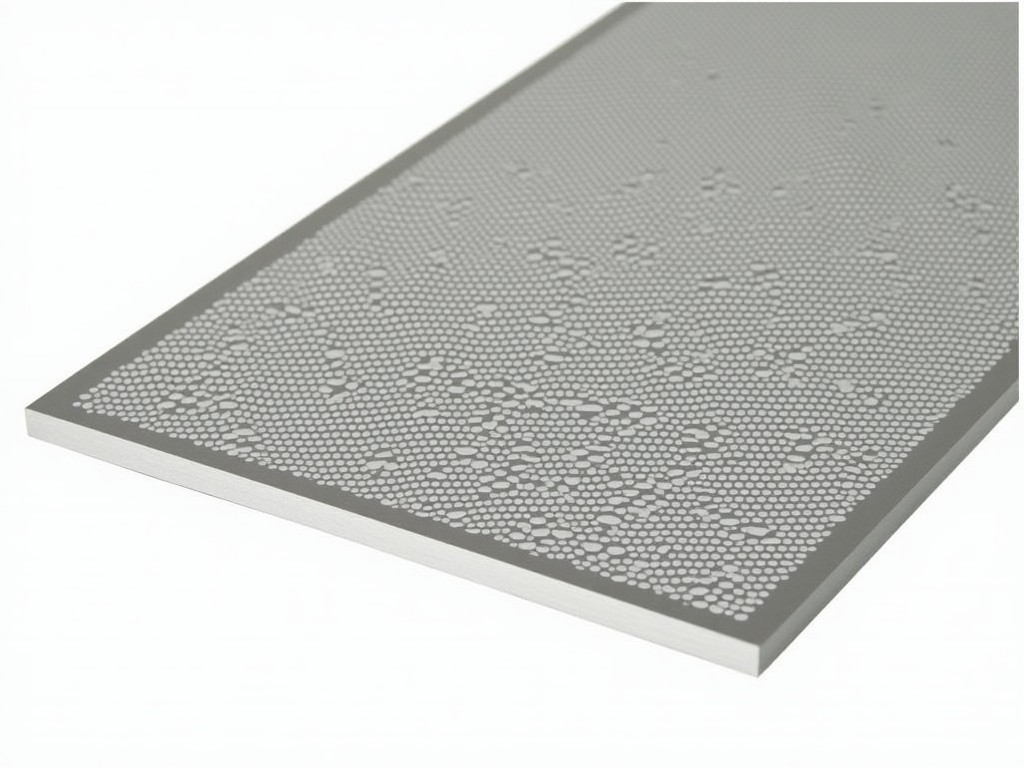
Custom Perforated Metal Sheet Panels Suppliers
Perforated metal sheet panels are engineered components created by punching precise hole patterns into metal substrates to achieve specific functional and aesthetic outcomes. The process involves selecting base materials, defining hole geometry, spacing, and open area percentage to meet requirements for airflow, light transmission, acoustic performance, or structural efficiency. Suppliers specializing in custom perforated panels work closely with clients to translate application needs into manufacturable designs, balancing performance targets with material constraints and production feasibility.
Material Selection and Substrate Properties
The choice of base metal directly influences corrosion resistance, strength-to-weight ratio, formability, and suitability for specific environments. Common substrates include carbon steel for structural applications where cost efficiency is prioritized, stainless steel grades (304, 316) for corrosive or hygienic settings, aluminum for lightweight applications requiring natural oxidation resistance, and galvanized steel for outdoor exposure with moderate corrosion demands. Material thickness typically ranges from 0.5 mm to 6.0 mm, though thinner or thicker gauges may be feasible depending on the hole pattern and material ductility. Suppliers evaluate material yield strength and elongation to ensure the selected gauge can withstand perforation without cracking or excessive deformation.
Hole Patterns and Open Area Engineering
Perforation design is defined by hole shape, arrangement, pitch (center-to-center distance), and diameter, which collectively determine open area percentage—a critical metric for airflow, filtration, or light diffusion. Standard hole shapes include round, square, slotted, hexagonal, and decorative custom profiles, each offering distinct flow characteristics and visual effects. Staggered (60-degree) patterns generally provide higher open area and uniform distribution compared to aligned (square) layouts for the same hole size and pitch. Open area typically ranges from 15% to 70%, with values outside this range requiring special tooling or material considerations to maintain structural integrity. Suppliers use computational modeling to predict pressure drop, sound absorption, or light transmission based on hole geometry and open area.
Customization Capabilities and Design Constraints
True customization extends beyond hole pattern to include panel dimensions, edge treatments, secondary operations, and surface finishes. Panels can be produced to specific lengths and widths, often limited by material coil size or press bed dimensions, with common maximum widths up to 1500 mm and lengths constrained by handling and transportation logistics. Edge options include mill edge, deburred, rounded, flanged, or framed for easier installation and safety. Secondary operations such as bending, rolling, welding, or cutting to shape are frequently integrated to create functional components like facades, machine guards, or filtration housings. Surface treatments—powder coating, anodizing (for aluminum), passivation, or painting—are applied post-perforation to enhance durability or meet aesthetic specifications, with suppliers coordinating timing to avoid coating damage during forming.
Quality Control and Inspection Protocols
Dimensional accuracy, hole consistency, and material integrity are verified through standardized inspection procedures. Critical dimensions—hole diameter, pitch, and positional tolerance—are typically checked using calibrated gauges, optical comparators, or coordinate measuring machines (CMMs), with tolerances commonly held to ±0.1 mm for hole size and ±0.2 mm for positional accuracy, depending on material and thickness. Visual inspection identifies burrs, deformation, or coating defects, while mechanical tests such as tensile or hardness checks may be performed on sample lots to confirm material properties remain within specification after perforation. Suppliers document inspection results per lot and provide material test certificates and conformity reports upon request, supporting traceability and compliance with industry standards.
Industrial Applications and Functional Rationale
Perforated metal panels serve distinct functional roles across industries based on engineered properties rather than generic use. In HVAC systems, they function as diffuser faces or return air grilles where open area and pattern directly influence air distribution uniformity and pressure loss—designers select staggered 3mm holes at 6mm pitch for ~23% open area to balance airflow and noise attenuation. In architectural facades, panels provide solar shading or visual screening; here, designers manipulate hole density and size to achieve desired shading coefficients while maintaining structural stability under wind load, often using aluminum 3003-H14 at 1.5mm thickness with 5mm round holes on 10mm staggered pitch (~19% open area). For acoustic panels, perforations act as resonant absorbers backed by absorbent material; hole diameter and depth are tuned to target specific frequency ranges, with perforated facing typically constituting 10–25% open area to allow sound penetration without excessive reflection. In industrial machinery, perforated guards enable visibility and coolant exchange while containing rotating parts—designs prioritize minimum hole size to prevent finger ingress (per ISO 13857) and sufficient open area for thermal dissipation, commonly using cold-rolled steel with 4mm square holes on 8mm pitch.
Comparison of Common Perforation Parameters
| Parameter | Typical Range | Notes |
|---|---|---|
| Material Thickness | 0.5 – 6.0 mm | Dependent on material ductility and hole size |
| Hole Diameter | 0.8 – 20.0 mm | Smaller holes require higher tonnage and may increase tooling wear |
| Pitch (Center-to-Center) | 1.5 – 50.0 mm | Must be > hole diameter to prevent material failure |
| Open Area Percentage | 15% – 70% | Values outside range may require process validation |
| Standard Width | Up to 1500 mm | Limited by coil width and press capacity |
| Maximum Length | Up to 3000 mm | Constrained by handling, transportation, and press bed |
Ordering Information and Technical Requirements
To initiate a quotation, suppliers require specific technical inputs to ensure accurate manufacturability assessment and pricing. Essential information includes: base material type and grade (e.g., SS304, 5052-H32 aluminum), exact thickness, desired hole shape and size, pitch or open area percentage, panel dimensions (length × width), edge condition, and any secondary operations (bending, cutting, coating). For patterned designs, a sketch or DXF file specifying hole layout and boundary conditions is highly beneficial. Environmental exposure (indoor/outdoor, chemical contact, temperature range) helps inform material and finish selection. Providing target performance criteria—such as required airflow rate, sound absorption coefficient, or load-bearing capacity—enables suppliers to recommend optimal configurations rather than merely replicating a drawing. Lead times typically range from 2–4 weeks for standard materials and patterns, extending to 6–8 weeks for exotic alloys, complex tooling, or large-format panels requiring specialized handling.
More Products

Send Inquiry
If you are interested in our products, leave your information here and we will be in touch shortly.