Custom Stainless Steel Wire Mesh Baskets
These baskets are fabricated from welded or woven stainless steel wire mesh to precise dimensional tolerances, engineered for durability in corrosive, high-temperature, or sanitary environments.
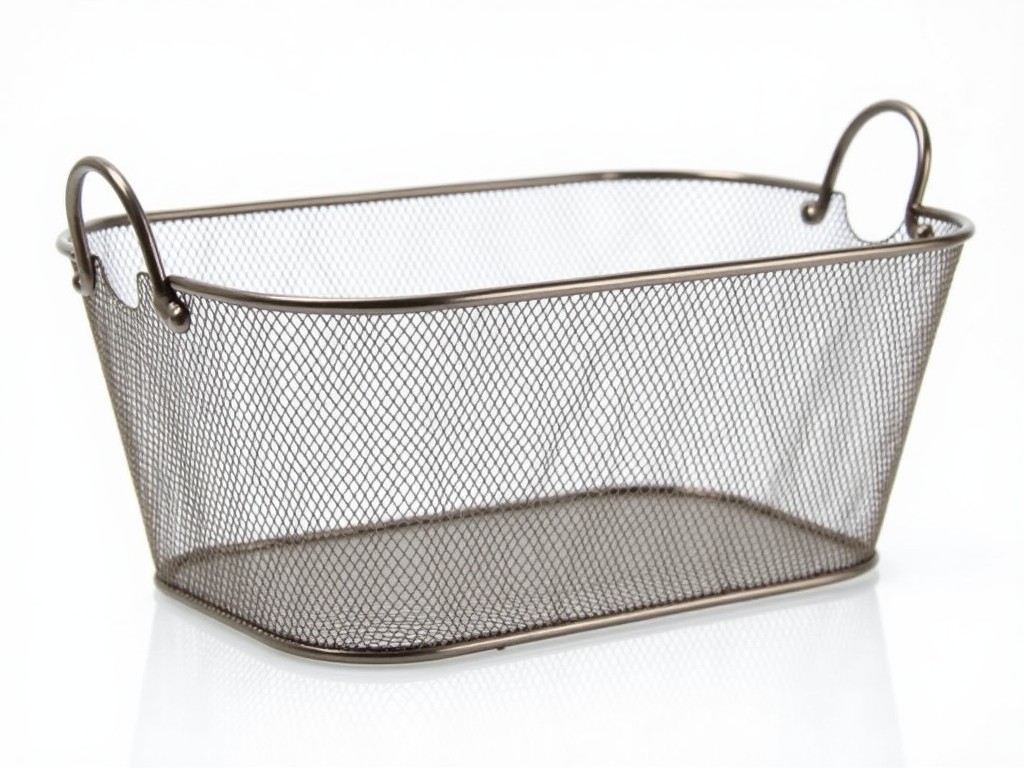
Custom Stainless Steel Wire Mesh Baskets
These baskets are fabricated from welded or woven stainless steel wire mesh to precise dimensional tolerances, engineered for durability in corrosive, high-temperature, or sanitary environments. Unlike standard off-the-shelf containers, each unit is designed to meet specific process requirements including load capacity, chemical exposure, cleaning protocols, and integration with automated handling systems.
Material Selection and Mechanical Properties
Grade 304 stainless steel is commonly selected for general industrial use due to its resistance to oxidation and mild chemical exposure, with a tensile strength of approximately 515 MPa and yield strength of 205 MPa. For environments involving chlorides, acidic solutions, or elevated temperatures above 400°C, Grade 316L offers superior pitting resistance due to its 2-3% molybdenum content, maintaining mechanical integrity up to 870°C. Wire diameter typically ranges from 0.8 mm to 6.0 mm, directly influencing open area percentage, structural rigidity, and flow dynamics—critical factors in filtration, drainage, or heat transfer applications.
Mesh count (openings per linear inch) and wire gauge are interdependent parameters; for example, a 4 mesh × 0.9 mm wire configuration yields approximately 63% open area, while a 20 mesh × 0.5 mm wire reduces open area to 36% but increases surface area for fine particle retention. These specifications are not arbitrary—they are derived from process engineering criteria such as Reynolds number in fluid flow, Stokes’ law for particle settling, or thermal conductivity requirements in heating/cooling cycles.
Design Considerations for Industrial Integration
Basket geometry is determined by the physical constraints of the host equipment—whether it’s a centrifugal washer, ultrasonic cleaner, autoclave, or conveyor-fed drying tunnel. Critical dimensions include overall height, diameter or length/width, base thickness, and handle placement, all of which must accommodate thermal expansion, mechanical stress during cycling, and clearance for robotic arms or PLC-guided transport. Handles are typically formed from the same wire stock, either as integral loops or welded reinforcements, designed to withstand repeated lifting forces without deformation—validated through finite element analysis in high-cycle applications.
Bottom configurations vary based on drainage needs: flat woven mesh for uniform support, raised legs for under-basket flow, or perforated solid bases with mesh sidewalls for hybrid applications requiring both containment and filtration. Edge treatments include rolled wires for safety, welded caps for hygiene, or folded flanges to prevent snagging on conveyor guides. In food processing or pharmaceutical settings, all surfaces are polished to Ra ≤ 0.8 μm to eliminate crevices where biofilm or particulate accumulation could occur.
Customization Parameters and Manufacturing Process
Customization begins with a technical specification sheet detailing: operating temperature range, chemical exposure (including concentration and duration), mechanical load (static and dynamic), cycle frequency, and required certifications (e.g., FDA 21 CFR 177.2600, 3-A Sanitary Standards, or ISO 13485 for medical use). Based on these inputs, engineers select wire grade, mesh pattern, diameter, and joint method—typically TIG welding for hermetic seals or resistance welding for high-speed production of non-critical joints.
Fabrication involves CNC wire bending for precise frame formation, followed by automated mesh cutting and tensioning to prevent distortion during welding. Post-weld passivation (typically 20-25% nitric acid at 20-40°C for 20-30 minutes) restores the chromium oxide layer depleted during heating. Final inspection includes dimensional verification via CMM or optical comparators, visual weld integrity checks under 10x magnification, and hydrostatic or air leak testing where containment integrity is critical.
Typical Applications Across Industries
In chemical processing, these baskets support catalyst loading/unloading in fixed-bed reactors, where resistance to sulfuric acid and thermal cycling above 500°C is essential—Grade 316L with 1.2 mm wire and 8 mesh construction is standard. In automotive parts washing, baskets hold transmission components during multi-stage alkaline cleaning and rinsing, requiring resistance to caustic sodas and impact from conveyor drops; here, 304 stainless with 1.5 mm wire and 6 mesh provides optimal balance of strength and drainage.
For semiconductor wafer handling, electropolished 316L baskets with 50 mesh × 0.25 mm wire prevent particulate shedding during solvent baths, meeting ISO Class 5 cleanliness standards. In poultry processing, baskets designed for scalding tanks use 304L with 1.0 mm wire and 4 mesh to withstand 60°C water immersion and frequent chlorine-based sanitization, with rounded edges to prevent bird injury during handling.
| Application | Key Requirement | Typical Material/Mesh |
|---|---|---|
| Chemical Reactor Catalyst Baskets | Thermal stability, acid resistance | 316L, 1.2 mm wire, 8 mesh |
| Automotive Parts Washing | Impact resistance, alkaline exposure | 304, 1.5 mm wire, 6 mesh |
| Semiconductor Wafer Handling | Ultra-clean, low particle emission | 316L electropolished, 0.25 mm wire, 50 mesh |
| Poultry Scalding Tanks | Hot water resistance, sanitation | 304L, 1.0 mm wire, 4 mesh |
Quality Assurance and Traceability
Each basket undergoes first-article inspection against approved CAD models, with critical dimensions recorded in a digital batch record. Material test reports (MTRs) are retained for all wire lots, confirming chemical composition and mechanical properties per ASTM A240. Welds are inspected per AWS D1.6 structural welding code for stainless steel, with non-destructive testing (liquid penetrant or magnetic particle) applied to load-bearing joints in high-risk applications. Final products are marked with laser-etched serial numbers linking to material certifications, inspection data, and manufacturing date—enabling full traceability for audits in regulated industries.
Packaging is designed to prevent damage during transit: baskets are nested with polyethylene foam separators, placed in crush-resistant corrugated cartons, and secured with polypropylene strapping. For export shipments, moisture-barrier bags and desiccant packs are included to mitigate corrosion risk during ocean freight. Lead times typically range from 3 to 6 weeks depending on complexity, material availability, and certification requirements—expedited options are available upon request for critical spare parts.
Ready to discuss your specific requirements?
Provide your application details, including operating environment, load specifications, and any regulatory standards, and our engineering team will respond with a feasibility assessment and preliminary design concept within 2 business days.
Submit Inquiry
More Products

Send Inquiry
If you are interested in our products, leave your information here and we will be in touch shortly.