Decorative Perforated Aluminum Metal Sheet
Decorative perforated aluminum sheets combine functional performance with visual design through precisely engineered hole patterns in aluminum alloy substrates. These sheets provide architects,
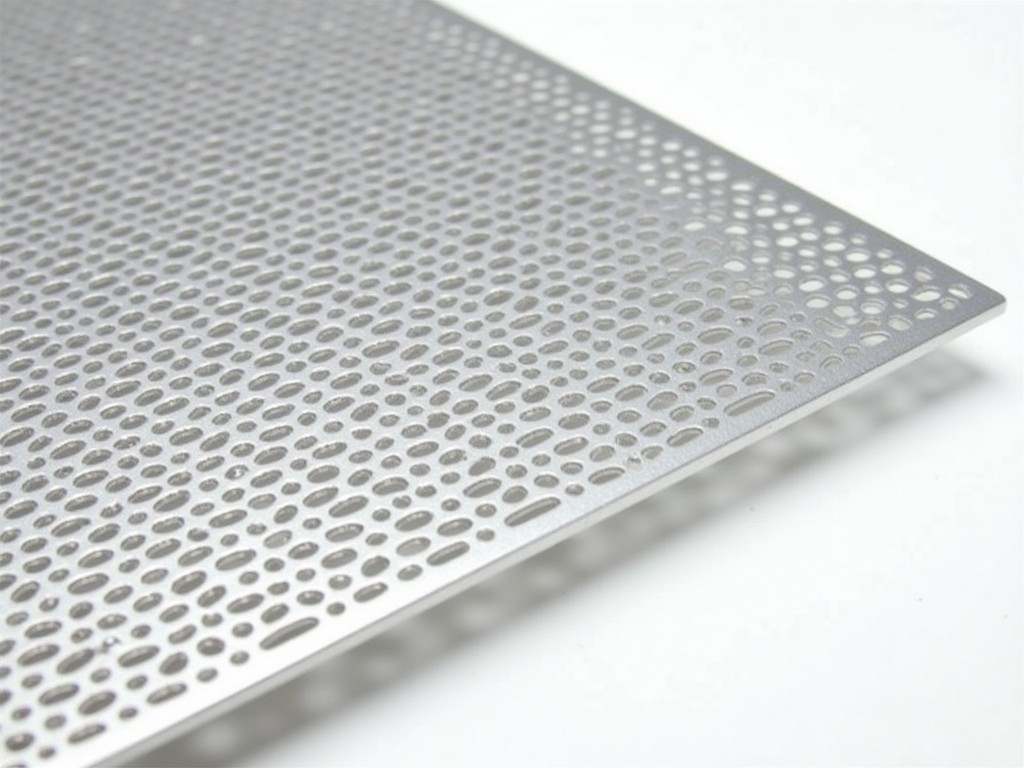
Decorative Perforated Aluminum Metal Sheet
Decorative perforated aluminum sheets combine functional performance with visual design through precisely engineered hole patterns in aluminum alloy substrates. These sheets provide architects, engineers, and designers with a lightweight, corrosion-resistant material that allows controlled light transmission, airflow, and acoustic modulation while meeting structural and aesthetic requirements. The perforation process—typically CNC punching or laser cutting—creates repeatable geometries ranging from simple circles and squares to complex custom motifs, all maintaining tight dimensional tolerances. Material selection focuses on alloys such as 3003-H14 or 5052-H32, chosen for their formability, surface finish consistency, and resistance to environmental degradation. Unlike solid panels, perforated sheets reduce weight by 30–70% depending on open area, lowering structural load and installation complexity. Surface treatments including anodizing, powder coating, or PVDF finishes enhance durability and color stability for both interior and exterior applications. The inherent recyclability of aluminum supports sustainable building practices, with post-consumer scrap readily reintegrated into production cycles. Designers specify these sheets not only for visual impact but also for their ability to solve functional challenges such as solar shading, noise reduction, and ventilation without compromising design intent.
Key Technical Characteristics
Perforation patterns are defined by three primary parameters: hole shape, size (diameter or width), and spacing (pitch or center-to-center distance). Open area—the percentage of sheet surface removed by holes—directly influences light transmission, airflow capacity, and acoustic performance, typically ranging from 15% to 60% for decorative applications. Hole edges may be left as-cut for a textured look or deburred for smoother tactile and visual finish, depending on end-use requirements. Sheet thickness commonly ranges from 0.5 mm to 3.0 mm, with thinner gauges favored for ceiling panels and thicker options used for cladding or screening where rigidity is critical. Tolerances on hole placement are typically maintained within ±0.1 mm for CNC processes, ensuring pattern consistency across large panels. Aluminum alloys used offer tensile strengths between 110–230 MPa and elongation values of 8–12%, allowing forming into curves or angles without cracking. The material’s natural oxide layer provides baseline corrosion resistance, which can be significantly extended through surface treatments rated for 20+ years in exterior environments per AAMA 2605 standards. Thermal conductivity of aluminum (~205 W/m·K) enables effective heat dissipation in applications such as lighting fixtures or electronic enclosures.
Manufacturing Process and Quality Control
Production begins with coil-fed or sheet-fed aluminum stock, which undergoes leveling to ensure flatness before perforation. CNC turret punches operate at speeds up to 600 strokes per minute, using hardened tooling to pierce the material while minimizing burr formation. For intricate patterns or materials sensitive to mechanical stress, laser cutting provides non-contact alternatives with kerf widths as low as 0.1 mm, though at higher energy consumption. Post-perforation, sheets may undergo leveling again to correct any induced stress from the perforation process. Surface treatments are applied in controlled environments: anodizing builds a porous oxide layer sealed with nickel acetate or hot water, while powder coating involves electrostatic application followed by curing at 180–200°C. Quality checks include visual inspection for pattern alignment, dimensional verification via optical comparators, adhesion testing (ASTM D3359) for coatings, and open area validation using digital imaging software. Material test reports (MTRs) and surface finish documentation are available upon request, supporting traceability for architectural projects requiring submittal packages.
Applications in Architectural and Industrial Design
In exterior cladding, decorative perforated aluminum sheets serve as solar screens that reduce cooling loads by blocking direct sunlight while preserving outward visibility—performance validated through computational fluid dynamics (CFD) and daylighting simulations. Interior applications include ceiling baffles, where the perforations absorb mid-to-high frequency sound waves, reducing reverberation times in open-plan offices or auditoriums when backed with absorbent material. Retail environments use these sheets for branded fascia panels, leveraging custom patterns to integrate logos or geometric motifs that reinforce corporate identity without obstructing lighting or signage visibility. Industrial settings employ them as machine guards or ventilation panels, where the open area ensures adequate airflow for cooling motors or drives while preventing contact with moving parts. Transportation infrastructure specifies perforated aluminum for station canopies and pedestrian bridges, balancing durability against weather exposure with lightweight properties that simplify lifting and fastening. The material’s non-combustible nature (ASTM E84 Class A) makes it suitable for smoke control barriers and elevator lobbies in commercial buildings requiring fire-rated assemblies.
Customization Options
Hole patterns are not limited to standard grids; designers can specify staggered, radial, or aperiodic layouts to achieve unique visual effects or functional gradients. Variable open area across a single sheet—such as increasing perforation density toward the top of a facade to enhance upward airflow—is achievable through programmed tool paths. Sheet dimensions are commonly supplied up to 1500 mm × 3000 mm, with larger formats possible through panel joining techniques that maintain pattern continuity. Edge treatments include hemmed, flanged, or folded returns to improve stiffness and eliminate sharp edges, particularly important in public-access areas. Color matching to RAL, NCS, or custom samples is supported via powder coating or anodizing, with color consistency verified using spectrophotometric delta-E measurements (<2.0 acceptable for architectural applications). Perforations can be combined with secondary operations such as embossing, bending, or welding to create three-dimensional forms like column covers or curved soffits. For projects requiring repeated patterns across multiple elevations, master templates and digital nesting files ensure consistency and minimize material waste.
Material Selection Guide
Alloy 3003-H14 offers excellent formability and moderate strength, making it ideal for complex bends and deep draws in decorative screens or ceiling tiles where aesthetics precede structural demand. Its manganese content improves corrosion resistance over pure aluminum while maintaining weldability and a smooth surface finish. Alloy 5052-H32 provides higher strength (tensile strength ~230 MPa) and superior resistance to salt spray, making it the preferred choice for coastal facades, marine environments, or industrial zones with chemical exposure. Its magnesium content enhances strain hardening capability without sacrificing workability. For applications requiring anodized finishes, 5005 alloy is often selected due to its consistent oxide layer growth and uniform color appearance, avoiding the streaking sometimes seen in higher-manganese alloys. Surface finish options range from mill finish (as-produced) for indoor dry environments to clear anodic coatings (5–25 µm thickness) for exterior durability, and organic coatings rated for UV stability per QUALICOAT standards. Thickness selection balances deflection limits, wind load requirements, and handling practicality—thicker sheets resist oil-canning but increase weight and cost, while thinner gauges may require additional framing support.
Installation and Handling Considerations
Perforated aluminum sheets are typically installed using mechanical fasteners such as aluminum rivets, stainless steel screws, or specialized clip systems that allow for thermal expansion movement. Direct welding is possible but requires skill to avoid warping or discoloration around the heat-affected zone, particularly in thinner gauges. Expansion gaps of 3–6 mm per linear meter are recommended to accommodate seasonal temperature changes, preventing buckling or fastener fatigue. Handling during transport and installation requires care to avoid surface scratching; protective films or interleaving paper are commonly applied between sheets. Lifting large panels should use vacuum suction cups or padded slings to avoid point loading that could deform the perforation pattern. Cutting or drilling on-site is feasible with carbide-tipped tools, but deburring may be necessary to maintain edge quality. For ceiling suspensions, threaded rods or aircraft cables attach to perimeter channels or intermediate supports designed to carry both dead load and live loads such as maintenance access. Sealants used at joints must be compatible with aluminum and the chosen finish to avoid galvanic corrosion or staining.
Comparison with Alternative Materials
Compared to perforated steel, aluminum offers one-third the density, significantly reducing dead load on supporting structures and simplifying handling—critical in retrofits where load capacity is limited. Steel requires galvanizing or painting to match aluminum’s natural corrosion resistance, adding maintenance cycles and potential for coating failure at cut edges. Stainless steel provides superior strength and corrosion resistance but at 2.5–3 times the material cost and significantly higher weight, making it less economical for large-area decorative applications unless specific hygienic or extreme environmental conditions apply. Perforated plastics such as polycarbonate or ABS offer lower cost and ease of fabrication but lack the fire rating, UV stability, and rigidity of aluminum, limiting their use to temporary or interior-only installations. Fiber-reinforced panels provide stiffness but cannot achieve the fine hole precision or open area control of metal perforation, and their surface finishes often appear less refined under direct lighting. Aluminum’s combination of light weight, durability, finish versatility, and recyclability gives it a favorable lifecycle cost profile in most architectural contexts, especially when considering long-term maintenance and end-of-life recovery.
Environmental and Sustainability Attributes
Aluminum is infinitely recyclable without loss of properties, and recycling requires only 5% of the energy needed for primary production, making closed-loop systems highly effective for reducing carbon footprint in architectural projects. Post-consumer scrap from demolished buildings or renovation projects is routinely collected and remelted into new sheet stock, supporting circular economy principles. The lightweight nature of aluminum reduces transportation energy compared to heavier alternatives, lowering emissions during logistics. Many manufacturers offer Environmental Product Declarations (EPDs) detailing global warming potential, water usage, and other lifecycle metrics per ISO 14025. Surface treatments such as anodizing are inorganic and do not emit VOCs during application or service life, contributing to better indoor air quality. Powder coatings, when cured properly, form inert films that resist chalking and fading, extending service life and reducing the frequency of recoating. Design for disassembly is facilitated by mechanical fastening methods, allowing panels to be reused or recycled at end of life without contamination from adhesives or permanent bonds.
For technical inquiries, custom pattern development, or project-specific submittal support, contact our engineering team to discuss your requirements.
Request Technical Consultation
More Products

Send Inquiry
If you are interested in our products, leave your information here and we will be in touch shortly.