Factory Supply Stainless Steel Shower Caddy
Designed for industrial and commercial wet environments, this stainless steel shower caddy provides a durable, corrosion-resistant storage solution for personnel hygiene areas in manufacturing
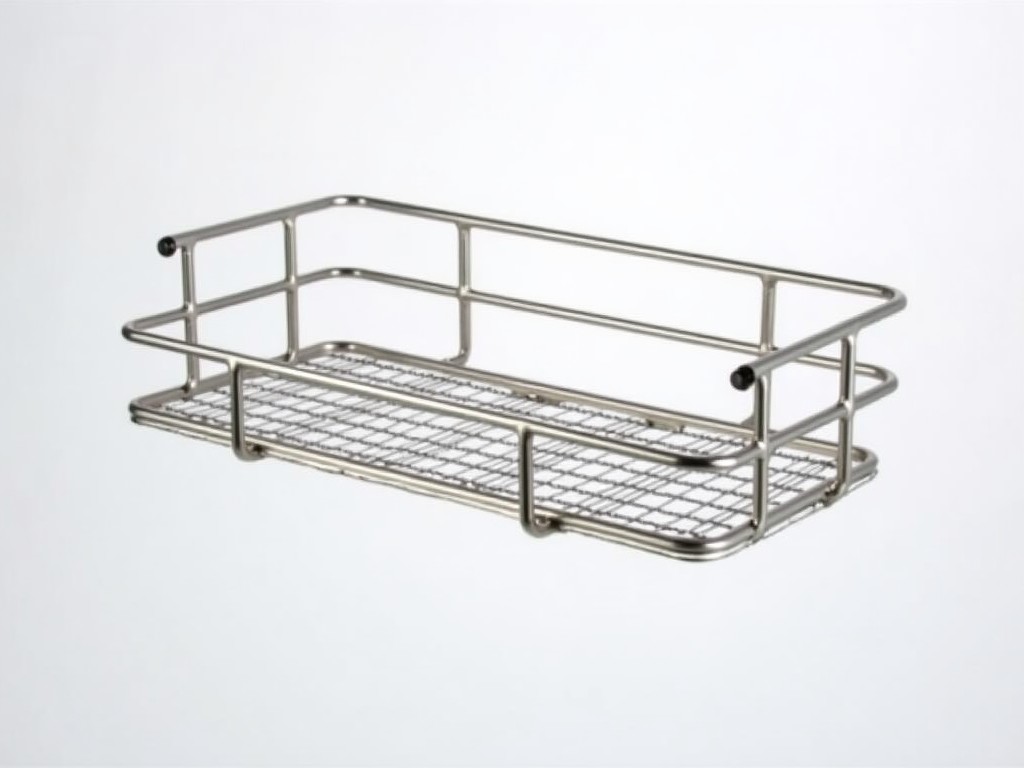
Factory Supply Stainless Steel Shower Caddy
Designed for industrial and commercial wet environments, this stainless steel shower caddy provides a durable, corrosion-resistant storage solution for personnel hygiene areas in manufacturing facilities, food processing plants, and high-humidity workshops. Constructed from austenitic stainless steel grades selected for resistance to chloride-induced pitting and stress corrosion cracking, the unit maintains structural integrity under frequent washdown cycles and exposure to cleaning agents.
Material Composition and Corrosion Resistance
The primary structure utilizes AISI 304 stainless steel, offering balanced performance in typical industrial washdown environments with intermittent exposure to mild acids, alkalis, and chlorides. For applications involving higher chloride concentrations—such as proximity to coastal facilities, seawater rinse systems, or aggressive sanitation protocols—AISI 316L is available as an upgrade, providing enhanced resistance to pitting and crevice corrosion due to its molybdenum content (2–3%). Surface finish is typically No. 4 brushed (Ra 0.4–0.6 µm), minimizing microbial retention and simplifying sanitation procedures.
Structural Design and Load Capacity
The caddy features a wall-mounted configuration with a backplate engineered to distribute load across multiple fastening points, reducing stress concentration on the substrate. Vertical support brackets are formed from 1.5 mm thick sheet, bent to create a rigid trapezoidal profile that resists lateral deflection under load. Horizontal shelves are perforated with 6 mm diameter holes spaced at 25 mm intervals, providing 40% open area for drainage while maintaining sufficient surface area to support standard industrial toiletries, PPE, and cleaning supplies. Each shelf is rated for a uniformly distributed load of 15 kg, validated through finite element analysis simulating worst-case loading conditions.
Dimensions and Mounting Configuration
Standard overall dimensions are 400 mm (width) × 120 mm (depth) × 600 mm (height), accommodating three shelves spaced at 180 mm vertical intervals. The backplate measures 400 mm × 80 mm with four Ø10 mm mounting holes positioned at 50 mm from each corner, compatible with M8 anchor bolts or concrete screws. Custom dimensions are available upon request, including adjustments to shelf count, depth (up to 200 mm), and width (up to 600 mm), subject to structural validation for the revised load distribution.
Manufacturing Considerations
Fabrication involves CNC laser cutting of raw sheet, followed by precision brake forming to achieve consistent bend radii and dimensional accuracy. All welded joints use TIG welding with ER308L filler rod for 304 substrates or ER316L for 316L, ensuring weld metal composition matches or exceeds base metal corrosion resistance. Post-weld, the assembly undergoes passivation in a 20% nitric acid bath (20–25°C for 30 minutes) to remove free iron and restore the chromium-rich passive layer. Final inspection includes visual weld scrutiny under 10x magnification, dye penetrant testing on critical joints, and verification of shelf flatness within ±0.5 mm over 300 mm span.
Typical Applications in Industrial Settings
This product is specified in environments where personnel hygiene must be maintained alongside rigorous equipment sanitation—such as pharmaceutical manufacturing gowning rooms, food and beverage processing hand-wash stations, and chemical plant safety shower annexes. Unlike polymer-based alternatives that may degrade under UV exposure, thermal cycling, or repeated contact with solvents, stainless steel retains mechanical properties and appearance over extended service life, reducing lifecycle costs associated with replacement and downtime. Its non-porous surface also supports compliance with hygiene standards requiring cleanable, non-absorbent materials in wet zones.
Customization Options
- Material grade: AISI 304 (standard) or AISI 316L (upgrade for chloride-rich environments)
- Shelf count: 2 to 5 levels, adjustable spacing
- Dimensions: Width 300–600 mm, depth 100–200 mm, height configurable
- Finish: No. 4 brushed (standard), No. 8 mirror, or electropolished for enhanced cleanability
- Mounting: Backplate for wall studs, concrete, or unistrut systems; optional freestanding base
- Accessories: Integrated soap dish, towel bar, or removable drip tray
Quality Assurance and Testing
Quality control follows a sampling plan aligned with ISO 2859-1, with critical dimensions inspected at receipt and post-fabrication. Material verification includes PMI (Positive Material Identification) scanning to confirm alloy grade before production. Functional testing involves 500-hour salt spray exposure (ASTM B117) for 304 and 1000 hours for 316L variants, with acceptance criteria of no red rust exceeding 1% surface area. Each unit is subjected to a 50 kg dynamic load test (10 cycles) to simulate real-world usage stress, with permanent deformation limited to <1 mm. Documentation, including material test reports and inspection records, is available upon request.
Packaging and Shipping
Units are packaged individually in triple-wall corrugated cartons with internal polyethylene foam corner protectors and edge guards to prevent deformation during transit. For bulk shipments, caddies are stacked on Euro-pallets (800×1200 mm) with interlayer slip sheets and secured via PET strapping. Export packaging includes ISPM 15-compliant pallets and desiccant packs to control moisture ingress. Standard lead time is 3–4 weeks for stock configurations; customized orders require 6–8 weeks depending on material availability and complexity. Shipping terms are EXW factory, with FOB and CIF options available upon request.
Comparison: 304 vs 316L Stainless Steel
| Property | AISI 304 | AISI 316L |
|---|---|---|
| Chromium (Cr) | 18–20% | 16–18% |
| Nickel (Ni) | 8–10.5% | 10–14% |
| Molybdenum (Mo) | None | 2–3% |
| Carbon (C) max | 0.08% | 0.03% |
| Pitting Resistance Equivalent Number (PREN) | ≈18 | ≈24 |
| Typical Use Case | General industrial washdown | High-chloride, marine, or chemical exposure |
For technical inquiries, customization requests, or to obtain a formal quotation with material test reports and dimensional drawings, please contact our engineering team. Provide details on intended environment, required dimensions, load expectations, and any regulatory compliance needs to ensure accurate specification.
Request Technical Consultation
More Products

Send Inquiry
If you are interested in our products, leave your information here and we will be in touch shortly.