Factory Supply Window Fan With Rain Guard
Window-mounted ventilation fans with integrated rain guards provide controlled airflow in industrial and commercial facilities while protecting against weather ingress. These units combine axial flow
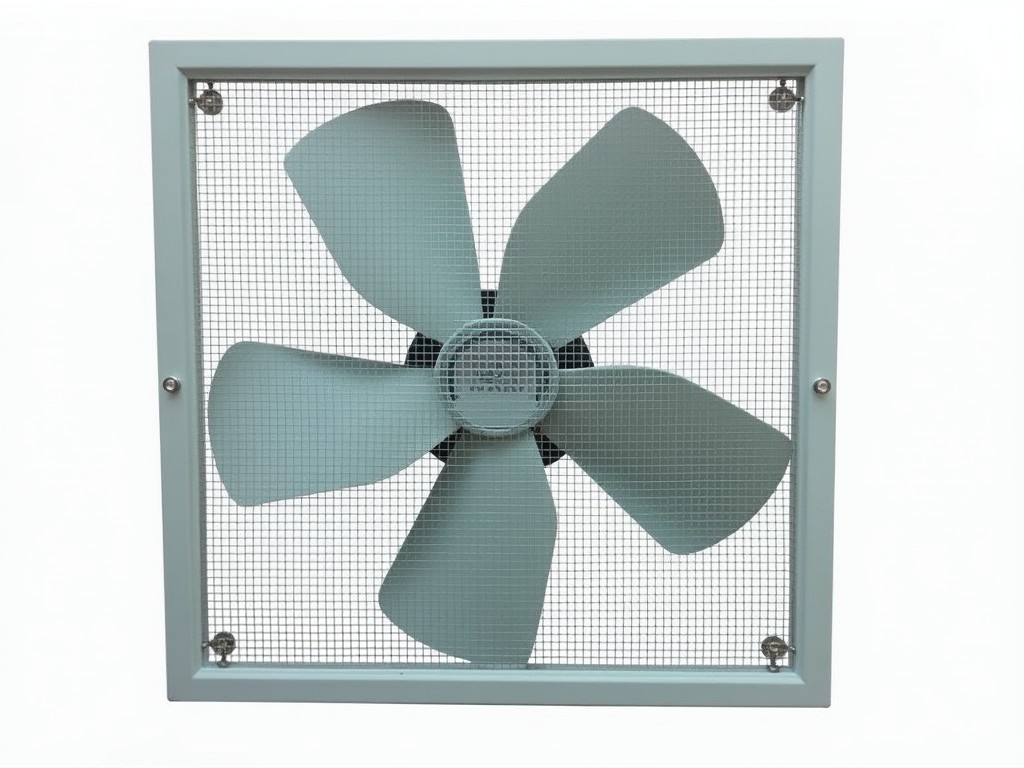
Factory Supply Window Fan with Rain Guard
Window-mounted ventilation fans with integrated rain guards provide controlled airflow in industrial and commercial facilities while protecting against weather ingress. These units combine axial flow technology with a louvered or hooded enclosure that deflects precipitation while maintaining intake or exhaust performance. Designed for permanent or semi-permanent installation in standard window openings, they serve as a cost-effective alternative to ducted systems where ductwork is impractical or prohibitively expensive. The rain guard is not merely an add-on; it is engineered to maintain aerodynamic efficiency under varying wind and rain conditions, ensuring consistent performance without water penetration into the conditioned space.
Unlike residential window fans, industrial models are built for continuous duty cycles, higher static pressure resistance, and exposure to harsh environments such as manufacturing plants, warehouses, and agricultural buildings. Motor selection, blade pitch, and housing materials are chosen based on required airflow (CFM), pressure drop, and ambient temperature ranges. The rain guard geometry is validated through computational fluid dynamics (CFD) to minimize flow disruption while maximizing water deflection—critical in facilities where humidity control or equipment protection is essential. Proper sizing accounts for both free-air delivery and system resistance from filters, ducts, or building envelope leakage.
Key Technical Specifications
| Parameter | Typical Value / Range | Notes |
|---|---|---|
| Airflow Capacity | 800 – 4,500 CFM | Measured at 0 in. wg static pressure; varies by blade diameter and motor RPM |
| Static Pressure Rating | Up to 0.5 in. wg | Suitable for low-resistance applications; higher pressure requires ducted centrifugal fans |
| Motor Type | Totally enclosed fan-cooled (TEFC), single or three-phase | IP55 minimum; thermal overload protection standard |
| Blade Material | Cast aluminum, polypropylene, or galvanized steel | Material selected based on corrosion resistance, weight, and impact resistance needs |
| Housing Construction | Extruded aluminum or powder-coated steel frame | Frame depth typically 6–10 inches to accommodate motor and guard geometry |
| Rain Guard Design | External hood with downward-sloping baffles or integrated louver system | Angle optimized to deflect rain at wind speeds up to 15 mph; minimizes pressure drop (<5% loss) |
| Voltage Options | 115V, 230V, 460V AC; 50/60 Hz | Dual-voltage motors available for international compatibility |
| Operating Temperature | -20°F to 104°F (-29°C to 40°C) | Extended ranges available with special lubrication and insulation |
Applications and Installation Considerations
These fans are commonly installed in facilities where localized ventilation is needed without modifying structural walls or roofs. Examples include paint booths requiring fume extraction, enclosure cooling for electrical cabinets, livestock barns needing air exchange, and temporary workspaces during maintenance outages. The window mount allows rapid deployment and relocation—critical in rental facilities or phased construction projects. Unlike wall-mounted units, window fans avoid penetrating insulated envelopes, preserving thermal integrity while still delivering measurable air changes per hour (ACH).
Installation requires verifying window opening dimensions against the fan’s nominal flange size, typically ranging from 12”x12” to 24”x24”. Shimming may be necessary to ensure level mounting and prevent vibration transfer to the frame. Electrical conduit should be sealed at the penetration point to maintain weather resistance. In high-wind areas, additional mounting brackets or wind load restraints are recommended to prevent disengagement. For exhaust applications, ensure adequate makeup air is available to avoid negative pressure buildup that could impair performance or induce backdrafting through other openings.
Maintenance access is a key design factor: motors and blades should be reachable from inside the building for cleaning and lubrication without removing the entire unit. Filters, if used, are positioned upstream of the fan to protect the impeller. In dusty environments, periodic inspection of blade balance is advised to prevent bearing wear. The rain guard itself requires minimal maintenance but should be checked seasonally for debris accumulation that could obstruct airflow or retain moisture against the housing.
Material Selection and Environmental Suitability
Housing materials are selected based on exposure to moisture, chemicals, and temperature extremes. Powder-coated steel offers cost-effective corrosion resistance for indoor or sheltered locations, while extruded aluminum provides inherent oxidation resistance and lower weight for easier handling. In coastal or chemical processing environments, stainless steel (304 or 316) housings are available upon request to resist chloride-induced pitting or chemical vapors. Blade material must balance strength, weight, and resistance to UV degradation; polypropylene resists corrosion and is non-conductive, while aluminum blades offer higher strength-to-weight ratio but may require anodizing in alkaline environments.
Motor enclosures meet IP55 standards as a baseline, protecting against dust jets and water spray from any direction. For washdown areas or outdoor exposure, IP65 or IP66-rated motors with sealed bearings and corrosion-resistant shafts are specified. The rain guard’s geometry is designed to work in conjunction with the motor’s drainage paths—any water that does penetrate the guard is directed away from electrical components via weep holes or sloped internal surfaces. Thermal protection is embedded in the motor windings to prevent overheating during stalled conditions caused by unexpected blockages.
Performance Validation and Quality Control
Each unit undergoes factory testing to verify airflow, static pressure, and electrical parameters against AMCA 210 or ISO 5801 standards. Testing is conducted in a calibrated wind tunnel or plenum chamber with calibrated anemometers and manometers. Vibration analysis is performed at operating speeds to detect imbalance or bearing defects before shipment. Insulation resistance and ground continuity tests ensure electrical safety compliance with UL or CE requirements, depending on the target market. Rain guard efficacy is validated through simulated rain testing using calibrated nozzles to confirm no water ingress under specified wind and precipitation rates.
Quality control includes material traceability for critical components such as motor windings and fasteners. Housing dimensions are checked via CMM or laser scanning to ensure proper fit in standard window openings. Blade pitch is set using precision jigs to maintain aerodynamic symmetry and prevent uneven loading. Final inspection includes operational run-in for a minimum of 30 minutes to monitor temperature rise, current draw, and abnormal noise. Documentation of test results is available upon request for engineering approval processes.
Customization Options
Standard units accommodate common window sizes, but custom flange dimensions are available to match non-standard openings without requiring costly structural modifications. Blade pitch can be adjusted to optimize for either high airflow (low pressure) or higher static pressure applications—such as when pushing air through filters or long duct runs. Motor horsepower and voltage configurations are tailored to match facility power availability and efficiency goals. For noise-sensitive environments, optionally skewed blades or external silencers can reduce sound pressure levels by 3–5 dBA without significantly impacting airflow.
Additional features include built-in thermostats or humidistats for automatic start/stop based on environmental conditions, manual shut-off switches for safety during maintenance, and variable speed drives (VSDs) for precise airflow control. In explosive atmospheres, motors and enclosures can be certified for Class I, Division 2 or ATEX Zone 2 conditions. Finishes can be customized to match corporate colors or to provide enhanced UV resistance for prolonged outdoor exposure. All customizations are subject to engineering review to ensure performance and safety standards are maintained.
Comparison: Window Fan vs. Alternative Ventilation Methods
| Ventilation Method | Typical Use Case | Advantages | Limitations |
|---|---|---|---|
| Window Fan with Rain Guard | Localized spot ventilation, temporary enclosures, retrofits | Low installation cost, no ductwork, portable, weather-protected | Limited by window size, lower pressure capacity than ducted systems |
| Wall-Mounted Exhaust Fan | Permanent indoor air quality control, fume hoods | Higher pressure capability, sealed enclosure, fixed positioning | Requires wall penetration, higher installation cost, less flexible |
| Roof-Mounted Ventilator | Whole-building exhaust, heat removal | Handles large volumes, uses thermal stratification, low noise at ceiling | Requires roof penetration, higher cost, susceptible to leaks if not sealed |
| Ducted Inline Fan | Centralized systems with long duct runs | Can overcome high static pressure, flexible placement | Requires ductwork, higher fan energy use, complex balancing |

More Products

Send Inquiry
If you are interested in our products, leave your information here and we will be in touch shortly.