Factory Supply Vegetable Washing Basket Steel
Vegetable washing baskets made from steel are essential components in food processing lines where hygiene, durability, and efficient drainage are critical. These baskets are designed to withstand
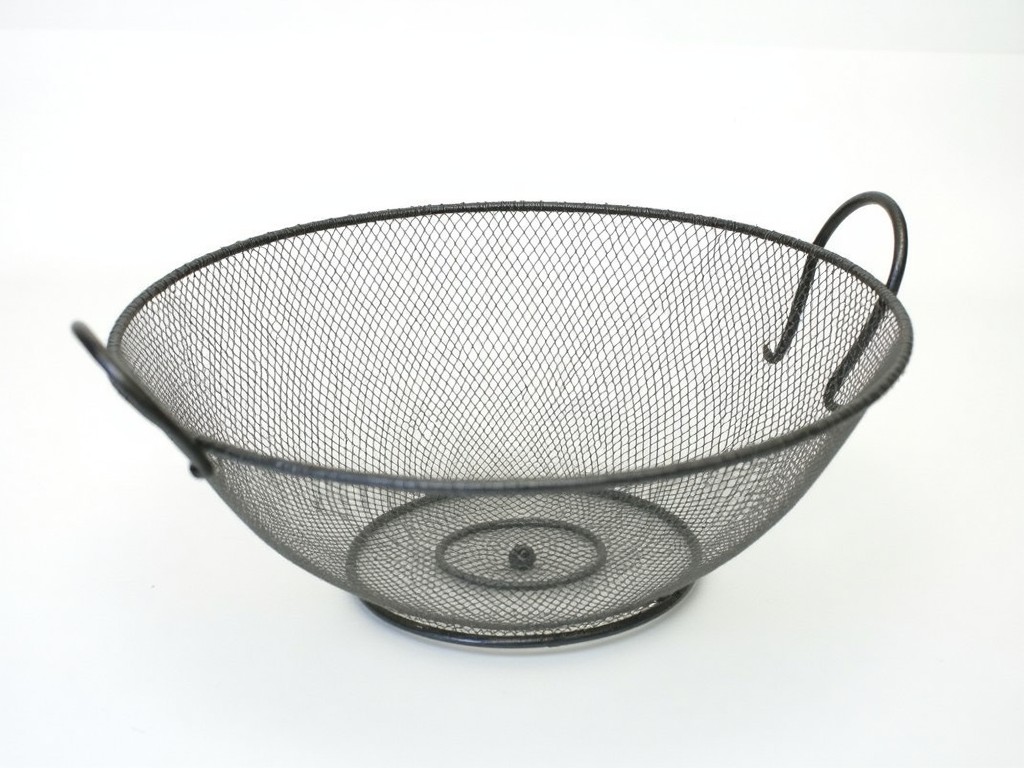
Factory Supply Vegetable Washing Basket Steel
Vegetable washing baskets made from steel are essential components in food processing lines where hygiene, durability, and efficient drainage are critical. These baskets are designed to withstand repeated exposure to water, cleaning agents, and mechanical agitation while maintaining structural integrity under load. Selecting the right basket involves understanding material grades, mesh configuration, load capacity, and compatibility with washing equipment.
Stainless steel grades such as 304 and 316 are commonly specified due to their resistance to corrosion in wet, acidic, or chlorinated environments. The choice between grades depends on the specific washing solution used—316 offers superior resistance to pitting from chlorides, making it suitable for seafood or high-salt wash systems. Wire diameter and mesh opening size directly affect washing efficiency and product loss; finer meshes retain small produce but may increase water resistance and clogging risk.
Basket geometry—including depth, shape, and handle design—must align with conveyor speeds, dump mechanisms, and operator ergonomics. Baskets used in rotary washers require balanced weight distribution to prevent vibration, while those in tunnel washers need smooth surfaces to avoid snagging on guides. Load testing ensures the basket can safely hold the maximum expected weight of produce without permanent deformation, typically rated between 15–50 kg depending on size and wire gauge.
Material and Construction Specifications
The primary material for these baskets is austenitic stainless steel wire, formed through precision bending and welding techniques. Wire diameters typically range from 2.0 mm to 4.0 mm, selected based on required stiffness and open area percentage. Mesh patterns include square, rectangular, or hexagonal weaves, with opening sizes from 5 mm to 25 mm to balance product retention and water flow.
Weld points are critical failure zones; therefore, automated TIG or spot welding is used to ensure consistent penetration without overheating the wire, which could reduce corrosion resistance. Post-weld passivation treatments are standard to remove free iron and restore the chromium oxide layer. All edges are deburred and rounded to prevent produce damage and operator injury during handling.
Handles and reinforcement rings are often made from thicker gauge wire or solid rod to resist deformation under repeated lifting. Some designs incorporate stackable feet or nesting features to optimize storage when not in use. Drainage efficiency is quantified by open area ratio—typically 40–65%—which directly influences wash cycle time and water consumption.
Load Capacity and Structural Performance
Structural performance is evaluated through static load testing and fatigue simulation under cyclic washing conditions. A standard test applies a uniformly distributed load across the basket base while measuring deflection at the center. Acceptable deflection is limited to less than 3% of the basket depth to ensure produce remains submerged and washing action is uniform.
Fatigue life depends on wire diameter, weld quality, and the frequency of impact during dumping or conveyance. Baskets used in high-throughput lines may experience over 10,000 cycles annually; therefore, design safety factors of 3:1 or higher are applied to yield strength. Thermal cycling from hot-to-cold wash transitions can induce stress, particularly at joints, necessitating flexible design features in some models.
Load ratings are not universal; they vary significantly with basket dimensions. A 400 mm diameter basket with 3.0 mm wire may safely hold 25 kg, while a smaller 250 mm version with the same wire may be limited to 12 kg due to reduced moment of inertia. Engineers should consult load-deflection curves specific to each geometry when specifying baskets for automated systems.
Hygiene and Cleanability Features
Hygiene design follows EN 1672-2 and ISO 14159 principles for food machinery, emphasizing smooth surfaces, absence of crevices, and drainability. All internal radii are minimized to prevent debris accumulation, and welds are ground flush where possible. The basket must allow complete drainage and drying to prevent microbial growth between cycles.
Surface roughness (Ra) is typically kept below 0.8 μm on food-contact areas through electropolishing or mechanical polishing. This reduces bacterial adhesion and facilitates CIP (clean-in-place) effectiveness. Some models feature sloped bases or integrated drain channels to eliminate standing water, a critical factor in preventing biofilm formation.
Material compatibility with cleaning agents is verified through immersion testing in alkaline (pH 11–13) and acidic (pH 2–4) solutions at elevated temperatures. 316 stainless steel shows minimal weight loss after 100-hour exposure, while 304 may exhibit slight etching in prolonged chloride-rich conditions. Manufacturers provide material safety data sheets (MSDS) and compliance documentation upon request.
Customization Options and Integration
Standard baskets are available in round, rectangular, and oval configurations with diameters or widths ranging from 200 mm to 800 mm. Depth options typically span 100 mm to 300 mm, allowing adaptation to different produce types—leafy greens may require shallower baskets to prevent bruising, while root vegetables benefit from deeper containers. Custom lengths and shapes are manufactured to match specific conveyor widths or machine inlets.
Handle configurations include fixed loops, fold-down grips, and removable bails for automated unloading systems. Some designs feature quick-release mechanisms compatible with robotic pick-and-place units. Mesh can be customized with variable opening sizes—finer at the base to retain small items, larger at the top to improve flow—or reinforced with double wire in high-wear zones.
Additional features such as ID tags, color-coded handles (using food-safe silicone coatings), or embedded RFID chips for traceability are available for integration into smart processing lines. Mounting brackets or guide shoes can be added for use in guided wash systems. All modifications are engineered to maintain load ratings and hygiene standards.
| Specification | Typical Range | Notes |
|---|---|---|
| Wire Diameter | 2.0 – 4.0 mm | Affects stiffness and open area |
| Mesh Opening | 5 – 25 mm | Selected based on product size |
| Open Area Ratio | 40 – 65% | Impacts wash efficiency and drainage |
| Load Capacity | 12 – 50 kg | Dependent on diameter and wire gauge |
| Material Grade | 304, 316 Stainless Steel | 316 preferred for high-chloride environments |
| Surface Finish | Ra < 0.8 μm (electropolished) | Enhances cleanability and corrosion resistance |
Quality Control and Testing
Quality assurance begins with material verification—each batch of stainless steel wire is accompanied by mill test reports confirming chemical composition and mechanical properties. Incoming wire undergoes spectrographic analysis to validate grade before fabrication. Dimensional checks are performed at multiple stages: wire diameter, mesh pitch, and overall basket dimensions are measured using calibrated calipers and coordinate measuring machines (CMM).
Weld integrity is assessed through non-destructive testing—dye penetrant or magnetic particle inspection—for surface cracks, and tensile testing of sample welds to ensure strength exceeds 80% of the base wire. Load testing is conducted on a sampling basis: baskets are subjected to 1.5 times the rated load for one minute, with permanent deformation limited to <2%. Cycle testing simulates 5,000–10,000 wash/dump cycles to evaluate fatigue resistance.
Final inspection includes visual review for sharp edges, burrs, or contamination, followed by a cleanliness wipe test to verify absence of particulates or oils. Documentation includes a certificate of conformance (CoC) per order, and traceability is maintained via laser etching or tamper-resistant tags. All processes align with ISO 9001 and ISO 22000 frameworks for food-safe manufacturing.
Applications in Food Processing
These baskets are widely used in vegetable washing lines where produce must be agitated in water or sanitizing solutions to remove soil, pesticides, and debris. In leafy green processing, baskets prevent product from being swept onto filters or drains while allowing sufficient water exchange to maintain solution efficacy. The open mesh design ensures uniform exposure to washing action, reducing microbial load more effectively than solid containers.
In root vegetable washing—such as carrots, potatoes, or beets—baskets withstand higher abrasive loads from soil and tumbling action. Reinforced bases and thicker wire options resist deformation from impact with stones or debris. For delicate produce like berries or tomatoes, finer meshes and shallower depths minimize bruising during conveyance and washing.
Beyond washing, these baskets serve in blanching, cooling, and draining operations. Their thermal stability allows use in hot water or steam blanching chambers up to 95°C, while corrosion resistance ensures longevity in cyclic wet-dry environments. Some facilities use them for temporary storage or transfer between processing stages, reducing the need for multiple container types.
For technical specifications, customization requests, or quotation inquiries regarding Factory Supply vegetable washing baskets made from steel, please contact our engineering team. Provide details on required dimensions, material grade, mesh size, load expectations, and integration with existing washing equipment to ensure accurate solution matching.
Submit Inquiry
More Products

Send Inquiry
If you are interested in our products, leave your information here and we will be in touch shortly.