Factory Supply Stainless Steel Wire Mesh Trays
Wire mesh trays are engineered for applications requiring airflow, drainage, and visibility while maintaining structural integrity under load. Stainless steel variants provide corrosion resistance
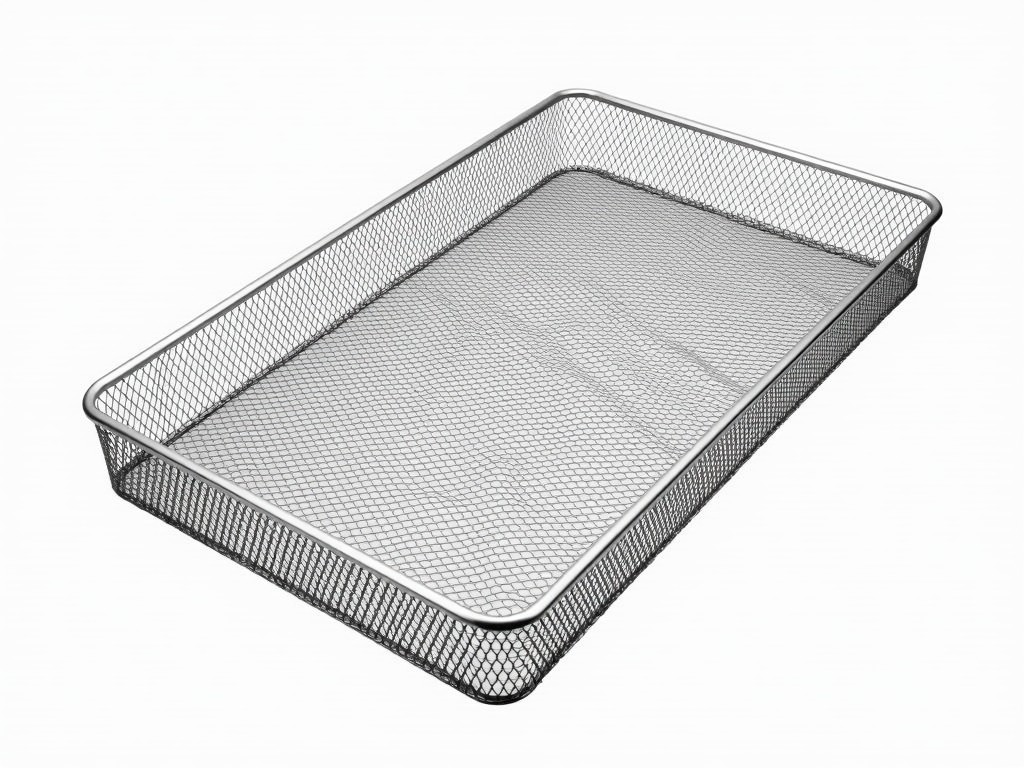
Stainless Steel Wire Mesh Trays for Factory Supply
Wire mesh trays are engineered for applications requiring airflow, drainage, and visibility while maintaining structural integrity under load. Stainless steel variants provide corrosion resistance suitable for food processing, pharmaceutical, chemical, and industrial environments where hygiene and durability are critical.
The open mesh design allows efficient cleaning, reduces liquid retention, and supports thermal transfer in heating or cooling processes. Material selection and mesh configuration directly influence performance in specific operational conditions.
Material and Mesh Specifications
Trays are manufactured from austenitic stainless steel grades, primarily 304 and 316L, selected based on exposure to chlorides, acids, or elevated temperatures. Wire diameter and mesh count determine open area percentage and load-bearing capacity.
Common wire diameters range from 0.8 mm to 2.0 mm, with mesh openings from 4 mm × 4 mm to 25 mm × 25 mm. Open area typically varies between 40% and 70%, affecting both drainage efficiency and mechanical strength.
| Parameter | Typical Range | Notes |
|---|---|---|
| Stainless Steel Grade | 304, 316L | 316L preferred for marine or high-chloride environments |
| Wire Diameter | 0.8 mm – 2.0 mm | Affects tensile strength and open area |
| Mesh Opening | 4 mm × 4 mm – 25 mm × 25 mm | Selected based on part size and drainage needs |
| Open Area | 40% – 70% | Higher open area improves flow but reduces load capacity |
| Load Capacity (Uniform) | 50 kg/m² – 300 kg/m² | Dependent on wire size, mesh, and support spacing |
Structural Design and Fabrication
Tray frames are typically formed from rolled or bent stainless steel strip, providing edge rigidity and preventing mesh deformation under load. Corners are welded or interlocked to maintain dimensional stability during handling and cycling.
Mesh is securely attached to the frame via resistance welding, clinching, or locking edges to prevent delamination. Surface finishes include mill finish, brushed, or electropolished, depending on cleanliness requirements.
Standard flange heights range from 10 mm to 50 mm, with options for reinforced corners, handles, or stacking features. Dimensional tolerances adhere to ISO 2768-m for general fabrication unless otherwise specified.
Industrial Applications
In food processing, these trays support washing, blanching, cooling, and drying operations where water drainage and sanitation are essential. The open design prevents pooling and allows rapid drying, reducing microbial growth risk.
Pharmaceutical manufacturers use them for intermediate product handling, lyophilization tray stacking, and equipment washing. Compliance with cleanability standards drives material and finish selection.
Chemical plants employ them as catalyst supports, filtration aids, or containment baskets in agitated reactors. Resistance to chemical attack and thermal cycling is critical in these environments.
Electronics and automotive factories use smaller mesh trays for component washing, rinsing, and drying lines, where electrostatic discharge (ESD) properties may be considered through grounding or material choice.
Customization Options
Trays can be customized in length, width, height, mesh pattern, wire diameter, and edge configuration to match specific process equipment or handling systems. Common modifications include notches for conveyor guides, lifting lugs, or removable dividers.
For high-temperature applications, heat-resistant alloys or specialized annealing processes may be specified. In cleanroom environments, electropolishing reduces surface roughness to meet particulate control requirements.
Custom designs require submission of dimensional sketches, load expectations, environmental conditions, and regulatory standards. Engineering review ensures compatibility with intended use.
Quality Control and Testing
Dimensional verification includes length, width, height, and squareness using calibrated gauges. Mesh integrity is assessed via visual inspection and pull-off testing to confirm adhesion strength.
Material certification (EN 10204 3.1) is available upon request, confirming chemical composition and mechanical properties of the stainless steel used. Surface finish is measured via profilometry when Ra values are specified.
Load testing is performed per customer specification, applying uniform or point loads to validate deflection limits. All inspection records are retained for traceability.

More Products

Send Inquiry
If you are interested in our products, leave your information here and we will be in touch shortly.