Kitchen Drawer Baskets Stainless Steel 304
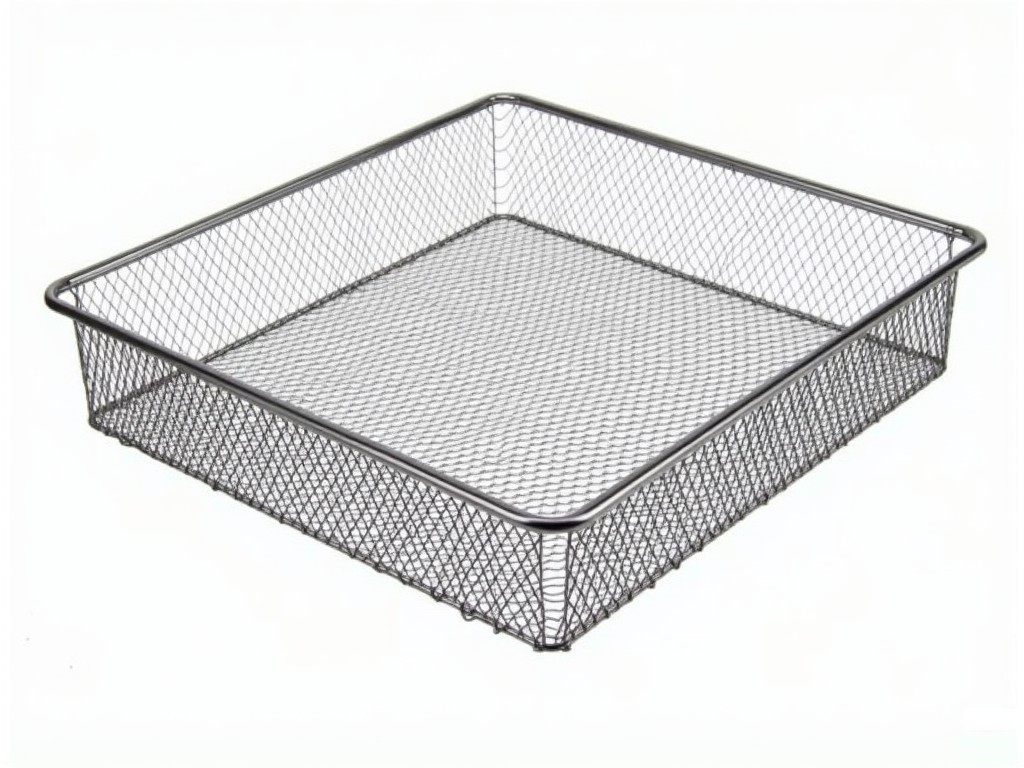
Kitchen drawer baskets made from stainless steel 304 provide a corrosion-resistant storage solution for commercial and residential cabinetry. This material grade contains 18% chromium and 8% nickel,
Stainless Steel 304 Kitchen Drawer Baskets
Kitchen drawer baskets made from stainless steel 304 provide a corrosion-resistant storage solution for commercial and residential cabinetry. This material grade contains 18% chromium and 8% nickel, offering balanced resistance to oxidation and mild chemical exposure in humid environments. The baskets are engineered to maintain dimensional stability under repeated loading cycles without permanent deformation.
Material Composition and Properties
Stainless steel 304 (AISI 304, EN 1.4301) is an austenitic alloy with a typical carbon content below 0.08%. Its non-magnetic condition in the annealed state facilitates easy cleaning and prevents metal particle transfer to food-contact surfaces. The alloy forms a passive chromium oxide layer that self-repairs when exposed to oxygen, reducing maintenance needs in high-moisture areas like kitchens.
Mechanical properties include a tensile strength of 515–725 MPa and yield strength of 205 MPa minimum, allowing the baskets to support typical kitchen utensil loads without sagging. Elongation at break exceeds 40%, indicating good formability during manufacturing processes such as deep drawing and wire bending. These characteristics ensure the baskets retain structural integrity after prolonged use.
Design Features for Drawer Integration
The baskets feature a perforated or mesh base design with open area typically ranging from 30% to 50%, promoting airflow and drainage while containing small items. Side walls are formed with a 10–15 mm flange height to prevent lateral movement of contents during drawer operation. Corner radii are maintained at minimum 2 mm to eliminate sharp edges and facilitate smooth wire forming.
Mounting options include underside brackets or side-mounted slides compatible with standard 16 mm or 19 mm drawer systems. Load distribution is optimized through uniform wire spacing, preventing localized stress concentrations. The open construction allows visual inspection of contents and simplifies cleaning access compared to solid-bottom alternatives.
Typical Dimensions and Configurations
| Dimension | Typical Range | Customization Notes |
|---|---|---|
| Width | 80–600 mm | Adjustable in 10 mm increments |
| Depth | 300–500 mm | Limited by drawer cabinet depth |
| Height | 50–150 mm | Based on utensil type storage |
| Wire Diameter | 2.0–3.5 mm | Selected per load requirement |
Standard configurations include rectangular, square, and L-shaped variants to accommodate corner drawers or offset installations. Custom lengths are achievable through progressive die forming or CNC wire bending without tooling changes for lengths under 1200 mm. Height variations are achieved by adjusting the vertical leg length during the forming process.
Surface Finish and Treatments
The baskets are supplied in a mill finish state with a surface roughness (Ra) typically between 0.4–0.8 μm after rolling and annealing. This finish provides adequate cleanliness for food contact applications while maintaining cost-effectiveness. Optional electropolishing reduces Ra to 0.2–0.4 μm, enhancing corrosion resistance in chloride-exposed environments and improving cleanability.
Passivation treatment using nitric acid solutions removes free iron particles from the surface, optimizing the chromium-to-iron ratio for optimal passive layer formation. This process is particularly beneficial after welding or heavy forming operations that may embed contaminants. All treatments comply with FDA 21 CFR §175.300 for indirect food contact surfaces.
Load Performance and Durability
Uniformly distributed load capacity ranges from 15–30 kg depending on basket dimensions and wire diameter, tested per ANSI/BIFMA X5.6 standards for seating and storage equipment. Point load resistance exceeds 5 kg before permanent deformation occurs, sufficient for concentrated weights like spice jars or small appliances. Fatigue testing shows no failure after 50,000 open-close cycles at 75% of maximum load.
Corrosion resistance is validated through 200-hour salt spray testing (ASTM B117) showing no red rust formation on 304 steel under these conditions. Real-world performance in kitchen environments typically exceeds 5 years without visible degradation when exposed to typical cooking vapors and occasional splashes. Resistance to organic acids from food substances is inherent to the alloy composition.
Installation and Compatibility
Installation requires no specialized tools; baskets secure to drawer frames using #6 or #8 wood screws through pre-drilled mounting tabs or clip-on brackets compatible with Blum, Hettich, or Grass systems. Clearance requirements specify minimum 2 mm side gap and 3 mm vertical clearance above the basket to prevent binding during full extension. Alignment is maintained through self-centering features in the mounting hardware.
Compatibility extends to soft-close and push-to-open mechanisms, as the basket’s mass and center of gravity do not interfere with damping systems. Thermal expansion coefficient of 16.0 µm/m·K ensures minimal dimensional change across typical kitchen temperature ranges (-10°C to 60°C). No lubrication is required for moving parts, as the design avoids metal-on-metal contact in normal operation.
Quality Control and Testing
Dimensional inspection occurs at first article and every 50th piece using calibrated calipers and coordinate measuring machines (CMM) with tolerance of ±0.5 mm on critical interfaces. Visual inspection under 10x magnification identifies surface defects such as scratches, burrs, or incomplete welds exceeding 0.1 mm depth. Material verification includes portable X-ray fluorescence (XRF) to confirm chromium and nickel content within ±0.5% of specification.
Functional testing includes load cycling, salt spray exposure, and slide operation simulation to validate long-term performance. All test records are retained for traceability and available upon request. Non-conforming items are segregated and analyzed to prevent recurrence, supporting continuous improvement in manufacturing consistency.
Applications in Kitchen Environments
These baskets are commonly installed in cutlery drawers to organize utensils by type and size, reducing retrieval time during food preparation. The open design prevents moisture accumulation compared to solid organizers, minimizing bacterial growth risks in damp conditions. Spice racks benefit from the corrosion resistance when exposed to volatile oils and periodic cleaning agents.
In commercial kitchens, the baskets hold standardized containers for mise en place, supporting workflow efficiency in high-volume settings. Their ability to withstand frequent washing and temperature fluctuations makes them suitable for pastry stations where sugar and acid residues are present. The non-reactive surface ensures no flavor transfer to stored items, maintaining food safety standards.
More Products

Send Inquiry
If you are interested in our products, leave your information here and we will be in touch shortly.