Metal French Fry Holder
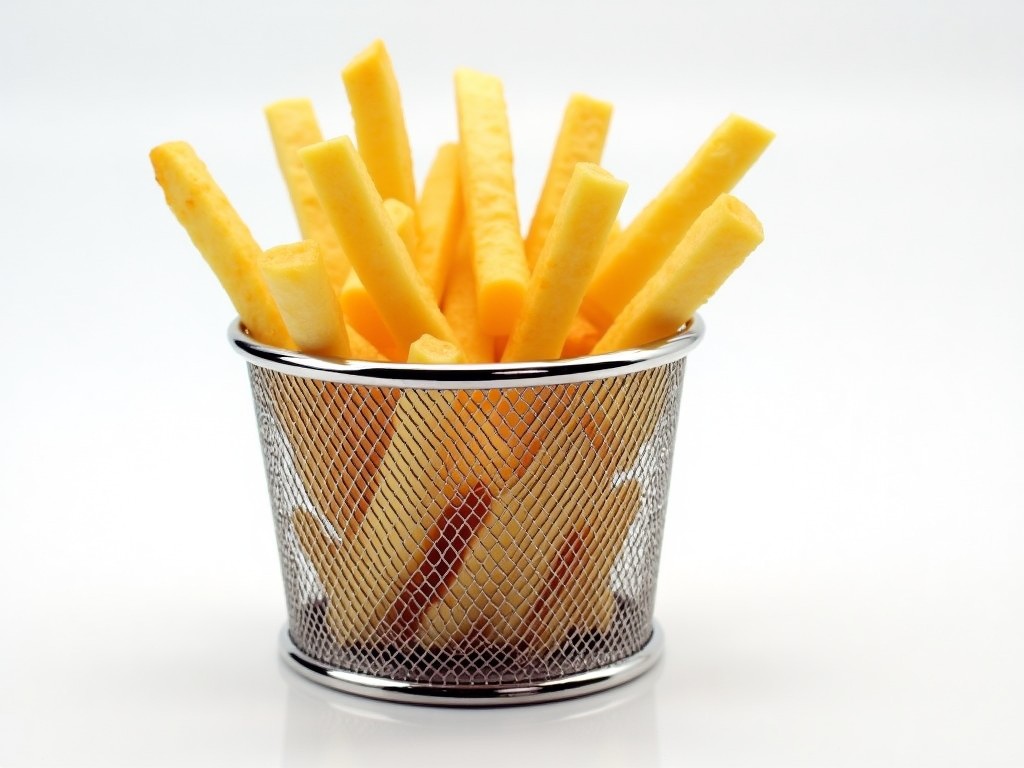
A metal French fry holder is a food service accessory designed to securely contain and display fried potato products in commercial kitchens, restaurants, and catering operations. It serves as a
Metal French Fry Holder
A metal French fry holder is a food service accessory designed to securely contain and display fried potato products in commercial kitchens, restaurants, and catering operations. It serves as a functional alternative to disposable paper cones or baskets, offering durability, hygiene, and consistent presentation. Unlike single-use options, metal holders are engineered for repeated washing, thermal cycling, and mechanical handling without deformation or corrosion under typical service conditions. The design prioritizes structural integrity at elevated temperatures and resistance to oils, salts, and cleaning agents commonly encountered in food preparation environments. Material selection and geometry directly influence heat retention, drainage efficiency, and ease of cleaning—critical factors in maintaining food safety and operational workflow.
Core Design Parameters
The primary dimensional variables in a metal French fry holder include overall height, top opening diameter, base diameter, and wall thickness. Height typically ranges from 80mm to 140mm to accommodate varying fry volumes while ensuring stability during service. Top opening diameters fall between 70mm and 100mm, allowing efficient filling and access without excessive spillage. Base diameters are generally 10–20% larger than the top to lower the center of gravity and prevent tipping when loaded. Wall thickness for food-grade stainless steel variants usually measures 0.6mm to 1.0mm, balancing rigidity with weight and thermal responsiveness. These dimensions are not arbitrary; they are derived from empirical testing of fry pile angles, center of mass calculations, and user ergonomics during high-volume service.
Material Composition and Food Safety Compliance
Food contact surfaces must comply with international regulations such as FDA 21 CFR Part 175.300, EU Regulation 1935/2004, and NSF/ANSI 51 for food equipment materials. The most common material is austenitic stainless steel, specifically grades 304 (18-8) or 316 (marine-grade), selected for their chromium-nickel oxide passive layer that resists oxidation and pitting in chloride-rich environments. Grade 304 suffices for dry or low-salt applications, while 316 is preferred where frequent exposure to saline solutions, vinegar-based sauces, or aggressive detergents occurs. Alternative materials like coated carbon steel or aluminum are generally unsuitable due to potential leaching, coating degradation, or insufficient corrosion resistance under repeated washing cycles. Surface finish is typically polished to Ra ≤ 0.8μm to minimize bacterial retention and facilitate sanitation.
Thermal and Mechanical Performance Characteristics
Metal holders exhibit higher thermal conductivity than paper or plastic alternatives, which affects both heat retention and surface temperature during use. Stainless steel 304 has a thermal conductivity of approximately 16 W/m·K, meaning it draws heat from hot fries more rapidly than insulating materials but also distributes it evenly across the container wall. This property can lead to faster surface cooling of the fries unless the holder is pre-warmed or used with insulated liners—a consideration for holding times exceeding 10 minutes. Mechanically, the yield strength of 304 stainless steel (205 MPa) ensures the holder maintains shape under typical loads of 200–300g of fries, with minimal permanent deformation even after thousands of use cycles. Resistance to denting is further enhanced by rolled or beaded top edges, which increase hoop strength without adding significant weight.
Drainage and Hygiene Design Features
Effective drainage is critical to prevent sogginess and maintain fry texture. Most designs incorporate a perforated base or sloped floor with drainage holes ranging from 3mm to 5mm in diameter, spaced at 10–15mm intervals. The total open area typically constitutes 15–25% of the base surface, allowing excess oil to escape while retaining small fry fragments. Some models feature a raised central pedestal or conical base to elevate the fry mass above the drainage plane, improving airflow and reducing contact with pooled oil. Interior surfaces are seamless or continuously welded to eliminate crevices where food particles or microbes could accumulate. External surfaces may include brushed or satin finishes to hide fingerprints and minor abrasions from handling.
Standard Dimensions and Configuration Options
| Parameter | Typical Range | Notes |
|---|---|---|
| Overall Height | 80–140 mm | Selected based on serving volume and stability needs |
| Top Opening Diameter | 70–100 mm | Affects filling speed and spill risk |
| Base Diameter | 85–120 mm | Usually 10–20% larger than top for stability |
| Wall Thickness | 0.6–1.0 mm | Balances rigidity, weight, and thermal response |
| Base Hole Diameter | 3–5 mm | Optimized for oil drainage without fry loss |
| Open Base Area Ratio | 15–25% | Trade-off between drainage and retention |
Customization Logic and Engineering Considerations
Customization is driven by operational constraints rather than aesthetic preferences. For high-volume fry stations, holders may be designed with interlocking features to enable vertical stacking when empty, reducing storage footprint. In environments with frequent temperature shocks (e.g., moving from freezer to fryer), thermal stress resistance becomes a priority—achieved through controlled material thickness and avoidance of sharp geometric transitions that induce stress concentration. Some clients request integrated handles or tabs for safe handling with gloves, which must be engineered as continuous extensions of the base material to avoid weld points that could fail under thermal cycling. Logo engraving or etching is possible on non-food-contact surfaces using laser or mechanical methods, provided the process does not compromise the passive oxide layer or create crevices. All modifications must be validated against cleaning protocols (e.g., CIP systems) and sanitization efficacy tests.
Quality Assurance and Inspection Protocol
Each unit undergoes dimensional verification using calibrated calipers and coordinate measuring machines (CMM) to confirm critical tolerances: height ±1.0mm, diameters ±0.5mm, wall thickness ±0.05mm. Visual inspection under 10x magnification checks for surface defects such as scratches, pits, or incomplete welds that could harbor contaminants. Passivation treatment is validated via copper sulfate testing or potentiostatic methods to confirm the presence of a continuous chromium-rich oxide layer. For batch production, random samples are subjected to salt spray testing (ASTM B117) for 24–48 hours to assess corrosion resistance, particularly for 316-grade units. All inspection data is retained for traceability, and non-conforming items are segregated based on defect severity—dimensional errors may be reworked, while surface contamination requires re-cleaning or scrapping.
Applications in Food Service Operations
Metal French fry holders are most beneficial in settings where presentation consistency, reusability, and long-term cost efficiency outweigh the convenience of disposables. In quick-service restaurants (QSRs) with high fry turnover, they reduce ongoing procurement costs and waste generation compared to paper cones, despite higher initial investment and washing overhead. In fine dining or gastropub environments, they support premium plating aesthetics while allowing precise portion control and temperature management during service. Mobile food units and concession stands benefit from their robustness during transport and resistance to deformation under vibration or accidental impact. Institutional cafeterias use them to meet sustainability targets by eliminating single-use packaging waste, provided adequate washing infrastructure exists. The decision to adopt metal holders hinges on a lifecycle cost analysis that factors in labor, water, energy, and detergent expenses over the expected service life—typically 2–5 years with proper maintenance.
For technical specifications, customization requests, or quotation details, please contact our engineering team to discuss your specific operational requirements.
Request Technical Consultation
More Products

Send Inquiry
If you are interested in our products, leave your information here and we will be in touch shortly.