Oem Perforated Stainless Steel Angle
Perforated stainless steel angles combine structural integrity with functional openness, serving as load-bearing components that also allow airflow, drainage, or visual transparency. Manufactured to
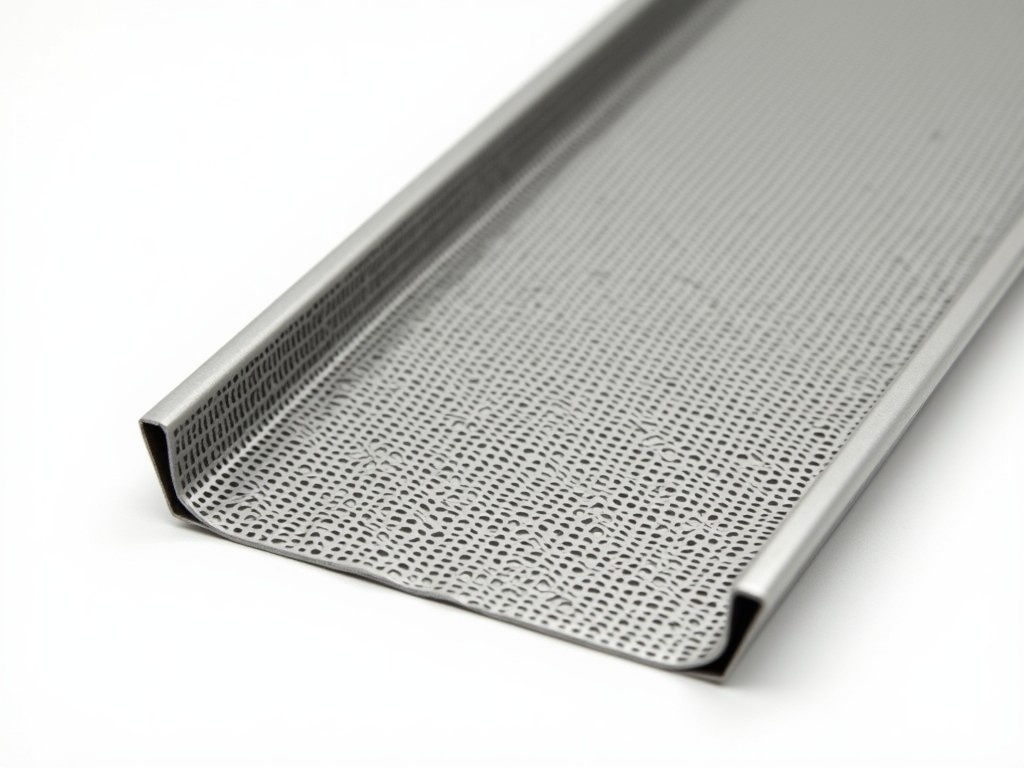
OEM Perforated Stainless Steel Angle
Perforated stainless steel angles combine structural integrity with functional openness, serving as load-bearing components that also allow airflow, drainage, or visual transparency. Manufactured to exact OEM specifications, these profiles are produced from corrosion-resistant alloys and precision-punched to meet dimensional tolerances required in assembly-line integration.
Material Selection and Corrosion Resistance
The base material is selected from austenitic stainless steel grades, primarily 304 and 316L, based on environmental exposure. Grade 304 offers sufficient resistance to atmospheric corrosion and mild chemical environments, while 316L contains molybdenum to withstand chlorides, making it suitable for marine, food processing, or chemical plant applications. Both grades maintain mechanical properties after perforation due to cold-work hardening being localized around hole edges.
Surface finish is typically mill finish (2B) unless otherwise specified. For applications requiring enhanced cleanliness or aesthetic consistency, electropolishing or passivation can be applied post-perforation to remove surface contaminants and improve corrosion resistance in crevices.
Perforation Patterns and Structural Implications
Perforation is achieved through CNC turret punching or laser drilling, ensuring hole placement accuracy within ±0.1mm. Common patterns include staggered rows of round, square, or slotted openings, with open area ranging from 15% to 60% depending on hole size and pitch. The angle’s leg dimensions and thickness are chosen to compensate for material loss, ensuring the section modulus meets design load requirements.
Edge distance — the space between the hole center and the leg edge — is maintained at a minimum of 1.5 times the hole diameter to prevent tearing during forming or installation. Hole orientation relative to the bend axis is critical; perforations are avoided within 5mm of the inner bend radius to preserve structural continuity.
Dimensional Tolerances and OEM Integration
Leg lengths typically range from 25mm to 100mm, with thicknesses from 1.5mm to 6.0mm. Standard tolerances conform to ASTM A480/A480M for thickness and EN 10056-2 for angularity, but OEM specifications often require tighter controls: ±0.2mm on leg length, ±0.1mm on thickness, and ±0.5° on angular deviation. These are verified using laser profilometers and coordinate measuring machines during first-article inspection.
Hole diameter tolerance is ±0.05mm for punched features and ±0.02mm for laser-cut holes. Positional tolerance relative to a datum edge is held to ±0.15mm, enabling consistent mating with mating components such as brackets, frames, or conveyor guides. Lengths are cut to ±1.0mm unless specified otherwise for weld-prep ends.
Common Industrial Applications
In food processing equipment, perforated angles serve as drainage shelves or support frames where liquid runoff must be contained yet allowed to pass through. The 316L variant resists pitting from saline solutions and cleaning agents, while perforations prevent pooling that could harbor bacteria.
HVAC systems use these angles as coil supports or filter frames, where airflow must be maximized without sacrificing rigidity. The open area reduces pressure drop across the assembly, improving fan efficiency. Stainless steel ensures longevity in humid environments where carbon steel would corrode.
In photovoltaic mounting systems, perforated angles reduce wind load by allowing air to pass through the structure, decreasing uplift forces on solar panels. The corrosion-resistant coating-free surface maintains performance over 25+ year lifespans without maintenance.
Customization and Engineering Support
OEM buyers provide CAD models or detailed drawings specifying leg dimensions, thickness, hole pattern, open area percentage, edge treatment, and length. Engineers validate manufacturability by checking hole-to-edge ratios, bend relief requirements, and tooling availability. Prototypes are produced using soft tooling for low-volume validation before transitioning to hard tooling for production runs.
Secondary operations such as deburring, edge rounding, or notch creation are available to eliminate sharp edges that could damage seals or injure personnel during assembly. Custom packaging — including VCI wraps, segregated trays, or labeled bundles — ensures parts arrive line-ready and free from contamination.
Quality Control and Traceability
Each batch is accompanied by material test reports (MTRs) confirming chemical composition and mechanical properties of the raw coil. First-article inspection includes dimensional verification of hole pattern, leg length, thickness, and angularity using optical comparators and CMMs. Statistical process control monitors hole consistency across production runs.
Visual inspection under 10x magnification checks for burrs, micro-cracks, or deformation around hole edges. For critical applications, dye penetrant testing may be performed on request to verify surface integrity. All parts are tagged with heat numbers and lot codes for full traceability to the source mill.
| Parameter | Typical Range / Tolerance | Notes |
|---|---|---|
| Leg Length | 25–100 mm | Custom lengths available; ±0.2mm tolerance |
| Thickness | 1.5–6.0 mm | ±0.1mm; affects load capacity and hole edge integrity |
| Hole Diameter | 1.0–12.0 mm | ±0.05mm (punch), ±0.02mm (laser); min edge distance 1.5× hole dia |
| Open Area | 15–60% | Dependent on hole size, pattern, and pitch; affects flow and weight |
| Angularity | 90° ±0.5° | Critical for frame squareness; measured across 100mm span |
| Surface Finish | Mill (2B), Electropolished, Passivated | Selected based on hygiene or environmental requirements |
To discuss your specific requirements for perforated stainless steel angles, including material grade, perforation layout, dimensional tolerances, or surface finish, provide your drawing or specification sheet. Our engineering team will review for manufacturability, suggest optimizations if needed, and return a formal quotation with lead time and packaging options.
Request Technical Quote

More Products

Send Inquiry
If you are interested in our products, leave your information here and we will be in touch shortly.