Oem Perforated Sheet Metal Fence
Perforated sheet metal fencing combines structural integrity with controlled airflow, visibility, and aesthetic customization for industrial and commercial applications. Unlike solid barriers,
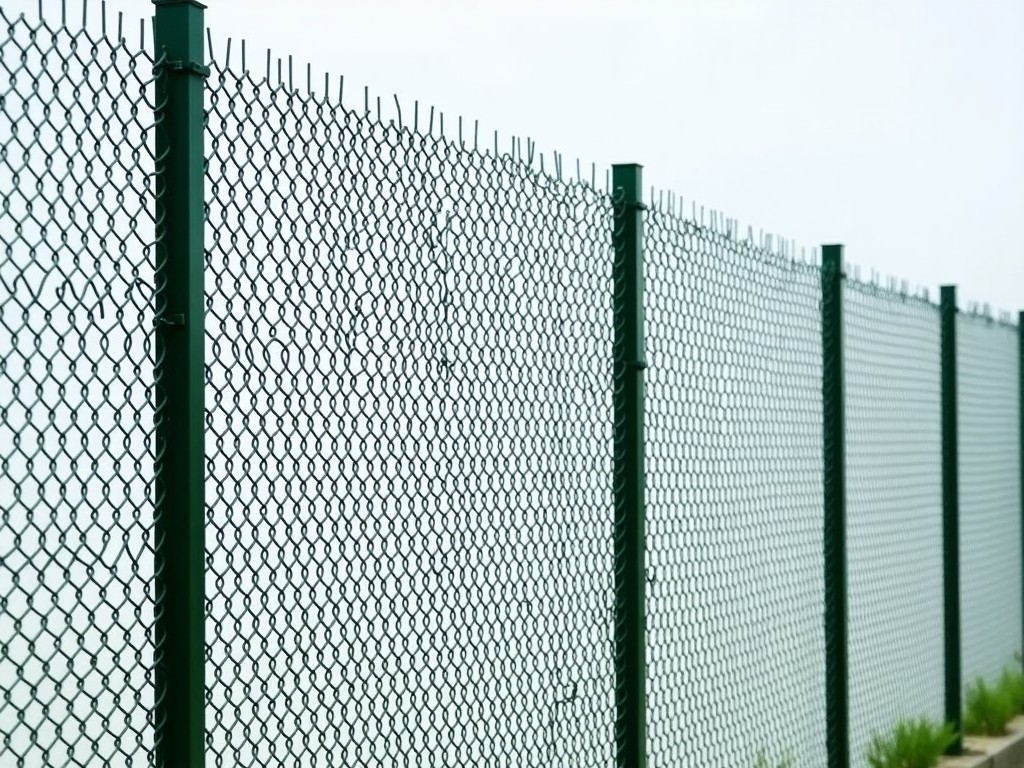
OEM Perforated Sheet Metal Fence
Perforated sheet metal fencing combines structural integrity with controlled airflow, visibility, and aesthetic customization for industrial and commercial applications. Unlike solid barriers, perforated designs allow for passive ventilation, light transmission, and reduced wind load while maintaining security and boundary definition. OEM manufacturers produce these systems to exact project specifications, integrating hole patterns, material thickness, edge treatments, and mounting configurations to meet functional and environmental demands. This approach ensures compatibility with existing infrastructure, compliance with local codes, and long-term performance under site-specific stressors such as corrosion, impact, or thermal cycling.
Material Selection and Mechanical Properties
The base material directly influences corrosion resistance, strength-to-weight ratio, and fabrication feasibility. Common options include hot-dip galvanized steel (Z275 coating), stainless steel grades 304 and 316 for harsh environments, and aluminum alloys like 5052-H32 for lightweight, non-magnetic applications. Galvanized steel offers cost-effective protection in moderate climates, while 316 stainless resists chloride-induced pitting in coastal or chemical-exposed zones. Aluminum provides natural oxide layer protection and is preferred where weight reduction or non-sparking properties are critical. Material thickness typically ranges from 0.8mm to 3.0mm, selected based on required wind load resistance, impact tolerance, and support spacing.
Perforation Patterns and Open Area Ratios
The perforation pattern defines the fence’s functional characteristics: airflow capacity, visibility, sound attenuation, and visual screening. Standard patterns include round, square, slot, and hexagonal holes, each offering distinct trade-offs. Round holes provide balanced flow and structural efficiency; slots enhance directional airflow and are common in acoustic barriers; hexagonal patterns maximize open area while maintaining ligament strength. Open area ratio—the percentage of void space relative to total surface—typically ranges from 15% to 60%, directly affecting pressure drop, light penetration, and wind force reduction. Higher open areas reduce wind loading but decrease privacy and particulate containment; lower ratios increase screening but raise structural demands on posts and foundations.
Edge Finishing and Frame Integration
Raw perforated edges pose safety risks and are prone to corrosion initiation, necessitating proper finishing. Options include folded hems (typically 10–15mm return), welded frames using matching material extrusions, or overmolded polymer caps for UV stability. Folded edges increase local stiffness and eliminate sharp protrusions, while welded frames provide robust mounting points for post attachment and facilitate panel alignment during installation. For modular systems, punched flange holes or T-slot configurations allow bolted assembly without welding, enabling field adjustments and disassembly. Frame design must account for thermal expansion mismatches between materials—particularly when combining aluminum panels with steel supports—to avoid buckling or fastener fatigue over time.
Mounting Systems and Structural Considerations
Installation method affects long-term stability, maintenance access, and adaptability to uneven terrain. Common approaches include direct bolting to structural steel posts, slip-over sleeves on round or square tubing, and adjustable bracket systems allowing vertical and lateral alignment. Post spacing is determined by panel width, wind load calculations (per ASCE 7 or local equivalents), and material deflection limits—typically not exceeding L/180 under design load. For seismic zones or high-vibration environments, isolation pads or slip-fit connections prevent stress transfer to the panel. Corrosion at contact points is mitigated using dielectric barriers (e.g., nylon washers) between dissimilar metals and sealants at fastener penetrations to prevent crevice corrosion.
Customization Logic for OEM Applications
OEM production begins with technical input: site wind maps, required visibility zones, coating life expectations, and integration with gates, access controls, or surveillance systems. Engineers derive perforation geometry from CFD simulations or empirical data to meet target pressure drop or noise reduction goals. Material selection balances initial cost against lifecycle maintenance—e.g., choosing 316 stainless over galvanized steel in a marine environment may increase upfront cost by 40% but eliminate repainting cycles over 25 years. Tolerances are held to ±0.5mm on hole placement and ±0.1mm on material thickness to ensure pattern consistency across large panels. Surface treatments such as powder coating (60–80µm thickness) or anodizing (for aluminum) are specified based on color retention, abrasion resistance, and chemical exposure thresholds.
Quality Control and Inspection Protocols
Consistency in perforation quality is verified through automated optical inspection (AOI) systems that check hole diameter, positional accuracy, burr height, and material deformation. Tolerance stacks are monitored per batch using statistical process control (SPC), with critical dimensions sampled at 1 per 50m². Edge straightness is assessed via laser profiling; coating thickness is measured via magnetic or eddy current probes per ISO 2178 or ISO 2360. Mechanical properties—tensile strength, yield, elongation—are validated via mill test reports and occasional destructive testing on sample coupons. Final assembly includes fit-check against mating components and functional testing of gate integration or locking mechanisms where applicable.
Typical Applications Across Industries
In wastewater treatment plants, perforated fencing with 30–40% open area using 316 stainless steel allows hydrogen sulfide dissipation while preventing unauthorized access to open tanks. Data center perimeters often use 20% open area galvanized panels to enable passive cooling airflow through barriers without compromising physical security. Transportation corridors—such as highway sound walls or rail right-of-ways—employ slot-perforated aluminum panels (45% open area) to reduce traffic noise transmission while maintaining visibility for maintenance crews. Agricultural facilities use powder-coated galvanized steel with 50% open area for livestock enclosure fencing, promoting air circulation to reduce heat stress and ammonia buildup while containing animals. Architectural facades in commercial buildings utilize custom laser-perforated patterns (e.g., logos, gradients) in 1.5mm aluminum for solar shading and visual branding.
Comparison of Common Perforation Patterns
| Pattern | Typical Open Area | Airflow Efficiency | Structural Ligament Strength | Common Use Cases |
|---|---|---|---|---|
| Round | 20–50% | Moderate, omnidirectional | Good | General security, ventilation, acoustic barriers |
| Slot | 30–60% | High, directional | Lower (along length) | Sound barriers, HVAC enclosures, directional airflow control |
| Hexagonal | 40–55% | High, isotropic | Very good | High-open-area screens, architectural facades, filtration pre-filters |
| Square | 25–45% | Moderate | Good | Industrial partitioning, machine guards, storage cage walls |
OEM perforated sheet metal fencing is not a commodity item but a engineered solution tailored to site-specific mechanical, environmental, and operational requirements. Successful implementation depends on aligning material grade, perforation geometry, edge treatment, and mounting method with the expected service life, load conditions, and maintenance accessibility. Buyers should provide detailed inputs—including wind load maps, corrosion exposure zones, required visibility levels, and integration points with gates or sensors—to enable accurate quoting and design validation. Early collaboration with the manufacturer’s engineering team ensures that the final product meets performance expectations without over-specification or costly field modifications.
More Products

Send Inquiry
If you are interested in our products, leave your information here and we will be in touch shortly.