Oem Perforated Fibre Cement Sheet
Perforated fibre cement sheet is a composite building material manufactured from Portland cement, cellulose fibres, silica, and water, formed under high pressure and autoclaved to achieve dimensional
OEM Perforated Fibre Cement Sheet
Perforated fibre cement sheet is a composite building material manufactured from Portland cement, cellulose fibres, silica, and water, formed under high pressure and autoclaved to achieve dimensional stability and durability. The perforation pattern—created through precision drilling or punching after curing—introduces controlled voids that modify acoustic absorption, airflow resistance, and light transmission while retaining the inherent mechanical properties of fibre cement. For OEM applications, these sheets are produced to exact customer specifications regarding hole size, spacing, pattern geometry, edge treatment, and thickness, enabling integration into specialized systems where standard products would require costly field modification.
Material Composition and Performance Characteristics
The base fibre cement matrix typically contains 60–65% Portland cement, 20–25% silica sand, 10–15% cellulose fibres, and minor additives for process control. This composition yields a material with a density of 1.2–1.6 g/cm³, compressive strength exceeding 20 MPa, and flexural strength of 8–12 MPa, depending on thickness and curing regimen. The autoclaved curing process (typically 8–16 hours at 175–190°C and 8–12 bar pressure) ensures complete hydration of calcium silicate phases, resulting in minimal long-term shrinkage (<0.05%) and resistance to rot, insects, and UV degradation. Perforation does not significantly alter bulk density but reduces effective cross-sectional area, which must be accounted for in structural calculations—typically reducing load-bearing capacity by 15–35% depending on open area ratio.
Acoustic performance is a primary driver for perforated fibre cement specification. The Helmholtz resonator effect created by the perforations allows targeted absorption in mid-frequency ranges (250–2000 Hz), with absorption coefficients reaching 0.6–0.9 when backed by an air cavity and absorptive material. Thermal conductivity remains low at 0.14–0.18 W/m·K, comparable to solid fibre cement, making it suitable for exterior cladding where thermal bridging is managed through proper detailing. Fire performance meets Class A1 or A2-s1,d0 under EN 13501-1 due to the non-combustible nature of the inorganic matrix, with perforations having negligible impact on fire spread or smoke development when hole diameters remain below 25 mm.
Perforation Patterns and Customization Parameters
OEM perforation is defined by four key parameters: hole diameter (typically 3–25 mm), hole spacing (center-to-center, 6–50 mm), pattern geometry (round, square, slotted, hexagonal, or custom), and open area ratio (OAR)—the percentage of surface area removed. OAR directly influences functional performance: values below 10% are used for subtle texture or minimal airflow, 10–20% for balanced acoustics and ventilation, and 20–40% for high airflow or significant light transmission. Edge distance—the margin between hole center and sheet edge—is maintained at ≥1.5× hole diameter to prevent cracking during perforation and installation. Patterns are aligned to module dimensions to ensure repeatability across panels, with registration tolerances of ±0.5 mm for high-precision applications.
Customization extends beyond perforation to include sheet dimensions (standard widths 600–1220 mm, lengths up to 3000 mm, thickness 6–20 mm), surface finish (smooth, textured, sanded, or pre-primed), and edge treatment (square, tapered, rabbeted, or grooved for joint systems). For exterior applications, factory-applied finishes may include acrylic primers, silicate-based paints, or hydrophobic coatings to enhance weather resistance. Interior applications often specify untreated surfaces for subsequent painting or lamination. All dimensional tolerances adhere to ISO 9001-controlled processes: length and width ±2 mm, thickness ±0.3 mm, squareness <1 mm/m, and flatness <3 mm over 1000 mm.
Typical Industrial Applications
In architectural acoustics, perforated fibre cement is used for ceiling and wall panels in offices, schools, and healthcare facilities where durable, impact-resistant surfaces are required alongside sound control. The material’s rigidity allows direct fixation to substrates without additional backing, reducing installation complexity compared to gypsum-based alternatives. For exterior façades, perforated panels serve as rain screens or sunshades, where the pattern provides visual interest while facilitating convective cooling behind the cladding—particularly effective in high-solar-gain climates when combined with ventilated cavities. The non-corrosive nature ensures compatibility with metal subframes and fasteners in coastal or industrial environments.
Industrial applications include machine guarding, ventilation panels for electrical enclosures, and protective barriers in manufacturing facilities where chemical resistance, fire safety, and durability are critical. The inert cement matrix resists oils, solvents, and alkaline cleaners, making it suitable for food processing zones and wastewater treatment plants when specified with appropriate surface treatments. In transportation infrastructure, perforated sheets are used in tunnel linings and station canopies for light diffusion and noise reduction, benefiting from the material’s low maintenance and resistance to graffiti and impact. Agricultural applications involve ventilation walls for livestock housing, where the perforation allows airflow while preventing ingress of pests and resisting ammonia-rich environments.
Manufacturing Considerations for OEM Supply
OEM production begins with client approval of perforation shop drawings, which include hole layout, tolerances, and edge details. Test panels are typically produced to validate pattern registration, edge integrity, and surface quality before full-scale fabrication. Perforation is performed on cured sheets using CNC-driven punching or drilling systems to ensure positional accuracy and minimize edge chipping—post-perforation inspection includes visual verification of hole completeness and dimensional checks via optical comparators. Sheets are stacked with protective interleaving to prevent surface abrasion during handling and stored flat in climate-controlled environments to avoid moisture-induced warping prior to shipment.
Quality control follows ISO 9001 protocols with lot-based testing: thickness and density verified via micrometry and water displacement, flexural strength tested on perforated samples per ISO 8336, and moisture content measured to ensure <8% at ex-factory. Dimensional stability is assessed through accelerated weathering cycles (per ISO 11507) when required by project specifications. Packaging is designed for the destination: domestic shipments use corner-protected pallets with stretch film, while export orders include moisture-barrier wrapping, edge guards, and fumigated pallets compliant with ISPM 15. Lead times typically range from 10–20 days for standard specifications, extending to 4–6 weeks for new tooling or specialized finishes, with explicit confirmation provided at quotation stage.
Technical Data Summary
| Property | Typical Value or Range | Test Method / Reference |
|---|---|---|
| Density | 1.2–1.6 g/cm³ | ISO 8336 |
| Compressive Strength | >20 MPa | ISO 8336 |
| Flexural Strength | 8–12 MPa | ISO 8336 |
| Thermal Conductivity | 0.14–0.18 W/m·K | ISO 10456 |
| Water Absorption (24h) | <30% | ISO 8336 |
| Fire Classification | A1 or A2-s1,d0 | EN 13501-1 |
| Standard Thickness Range | 6–20 mm | Manufacturer specification |
| Perforation Hole Diameter | 3–25 mm (custom) | Client drawing |
| Open Area Ratio (OAR) | 5–40% (typical range) | Calculated from pattern |
| Length Tolerance | ±2 mm | ISO 9001 QA |
| Thickness Tolerance |
Ordering and Specification Guidance
To obtain a quotation, provide the following: sheet dimensions (length × width × thickness), perforation pattern details (hole diameter, spacing, layout, and open area ratio), required surface finish (primed, painted, or raw), edge treatment, and quantity. For patterned layouts, a sketch or DXF/DWG file is preferred to ensure accurate translation to tooling. Specify performance requirements such as minimum absorption coefficient at specific frequencies, maximum allowable deflection under load, or fire rating compliance if applicable. Indicate whether sheets will be installed vertically or horizontally, as this affects edge support needs and perforation orientation considerations for drainage or debris accumulation. For export projects, confirm destination country regulations regarding asbestos-free composition (all fibre cement is inherently asbestos-free) and packaging standards.
Samples are available upon request, typically produced from existing tooling to demonstrate perforation quality and surface characteristics. Custom tooling for new patterns incurs a one-time charge, amortizable over larger orders. Lead time confirmation includes pattern approval, production scheduling, and quality hold points. All technical inquiries should be directed to the engineering team to ensure specifications are translated correctly into manufacturing instructions. Final acceptance criteria—including dimensional tolerances, surface quality, and perforation integrity—should be agreed upon prior to production to avoid rework or field modifications.
Ready to discuss your specific perforation requirements?
Share your project details for a technical review and formal quotation.
Request OEM Specification Review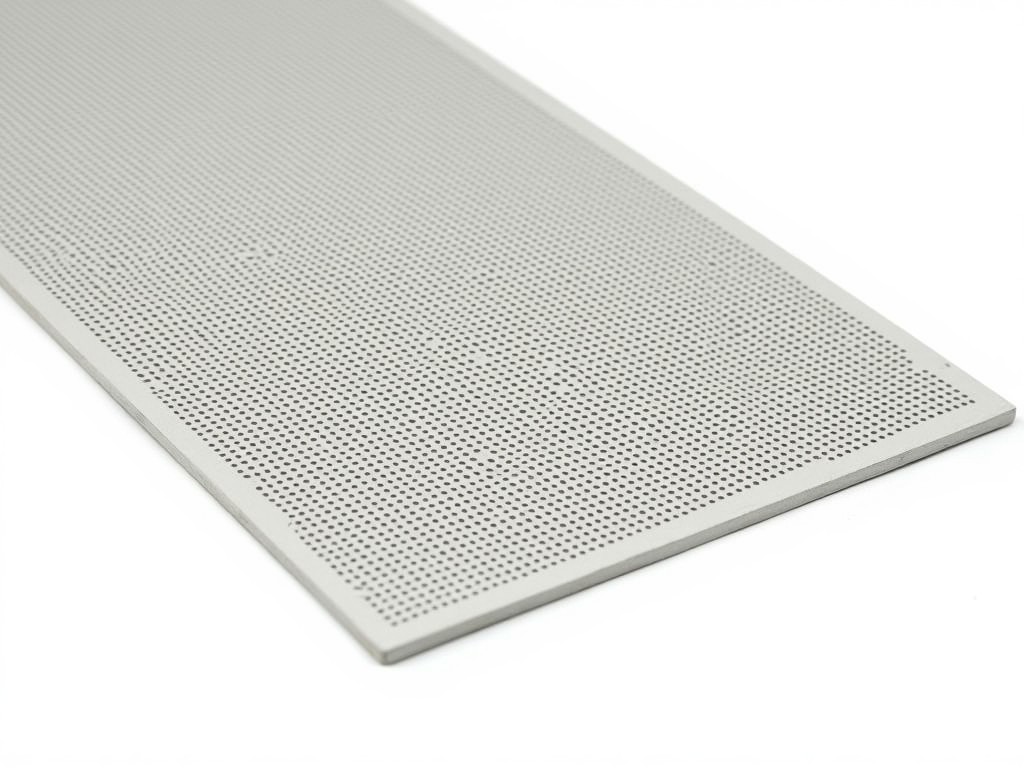
More Products

Send Inquiry
If you are interested in our products, leave your information here and we will be in touch shortly.