Wholesale Perforated Stainless Steel Mesh
Perforated stainless steel mesh combines structural integrity with controlled permeability, making it suitable for filtration, separation, ventilation, and protective applications across industrial
Wholesale Perforated Stainless Steel Mesh
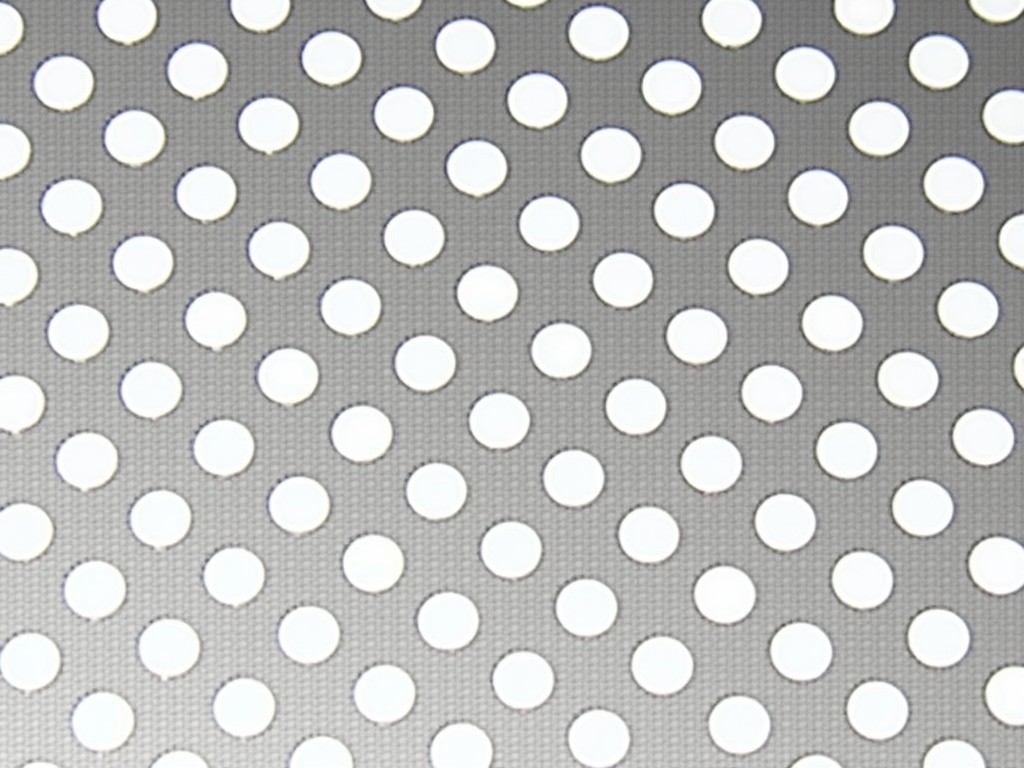
Perforated stainless steel mesh combines structural integrity with controlled permeability, making it suitable for filtration, separation, ventilation, and protective applications across industrial sectors. The product consists of stainless steel sheet punched with a regular pattern of holes, maintaining material strength while enabling precise fluid or particle passage. Wholesale availability ensures consistent supply for large-scale manufacturing, construction, and OEM integration projects requiring repeatable specifications.
Material selection directly influences corrosion resistance, mechanical properties, and service life in specific environments. Common grades include 304 for general indoor and mildly corrosive settings, and 316 for marine, chemical processing, or high-chloride exposure due to added molybdenum. Hole size, open area percentage, and pattern geometry (round, square, slot, hexagonal) are engineered to meet flow rates, pressure drop limits, and particle retention targets defined by process requirements.
Thickness typically ranges from 0.5 mm to 6.0 mm, with standard sheet sizes of 1000×2000 mm or 1250×2500 mm, though both dimensions and hole layouts are customizable to suit stamping, framing, or mounting constraints. Tolerances on hole diameter and pitch are maintained within ±0.05 mm for precision applications such as aerospace filtration or pharmaceutical processing, while general industrial uses may accept ±0.1–0.2 mm. Surface finishes include mill finish, brushed, or electropolished for enhanced cleanability in sanitary industries.
Key Technical Specifications
| Parameter | Typical Range / Options | Notes |
|---|---|---|
| Stainless Steel Grade | 304, 316, 316L, 430 | 316L preferred for welded assemblies requiring post-weld corrosion resistance |
| Sheet Thickness | 0.5 mm – 6.0 mm | Thinner gauges for filtration; thicker for structural guards or walkways |
| Hole Diameter | 0.8 mm – 50 mm | Custom sizes available; micro-perforation <0.8 mm via laser or etching |
| Pitch (Center-to-Center) | 1.2 mm – 100 mm | Determines open area and structural continuity between holes |
| Open Area Percentage | 10% – 70% | Calculated from hole size and pattern; critical for airflow and pressure drop calculations |
| Pattern Type | Round, Square, Slot, Hexagonal, Decorative | Slot patterns offer directional flow; hexagonal maximizes open area with minimal material loss |
| Standard Sheet Size | 1000×2000 mm, 1250×2500 mm | Custom cutting to size available; edge deburring or framing optional |
| Surface Finish | Mill, Brushed #4, Electropolished | Electropolished reduces surface roughness for hygienic cleaning in food/pharma |
Industrial Applications and Functional Benefits
In chemical processing plants, perforated stainless steel mesh serves as support media for catalyst beds, where uniform hole distribution ensures even gas or liquid distribution while preventing catalyst migration. The corrosion resistance of 316 stainless steel withstands exposure to acids, alkalis, and solvents at elevated temperatures, reducing maintenance frequency and unplanned downtime.
Food and beverage manufacturers use electropolished perforated screens in liquid straining, solid-liquid separation, and drying operations. The smooth surface minimizes product adhesion and bacterial harborage, facilitating compliance with FDA and 3-A sanitary standards. Hole sizes are selected based on particle size distribution of ingredients or byproducts to achieve target clarity or texture in final products.
HVAC and architectural applications leverage the mesh for air intake grilles, speaker covers, and facade panels. The open area percentage is calculated to match fan curve requirements, ensuring adequate airflow without excessive pressure loss. Architectural patterns combine functionality with visual design, where hole geometry creates light diffusion or privacy screening while maintaining structural rigidity.
Automotive and aerospace suppliers utilize perforated mesh in catalytic converter housings, brake cooling ducts, and avionics ventilation panels. Tight tolerances on hole placement and diameter are critical for maintaining laminar flow and meeting emission or thermal management specifications. Material traceability and mill certifications are typically required for AS9100 or IATF 16949 compliance.
Customization and Ordering Considerations
Wholesale procurement requires clear specification of material grade, thickness, hole dimensions, pattern layout, open area tolerance, and edge treatment. Suppliers typically request CAD drawings or detailed sketches to confirm hole alignment with mating parts, frames, or mounting systems. For repeat orders, first article inspection reports and material test certificates can be provided to validate consistency across batches.
Minimum order quantities vary based on material thickness and hole complexity; standard perforated sheets in common grades often allow MOQs as low as one pallet (approx. 500–1000 kg), while specialized alloys or micro-perforation may require higher volumes. Lead times range from 2–4 weeks for stock materials to 6–8 weeks for custom tooling or alloy sourcing, with expedited options available for critical projects.
Packaging options include wooden crates, steel banding on pallets, or water-resistant wrapping for export shipment. Edge protection (cardboard or plastic corners) prevents deformation during handling. Custom labeling, barcoding, or country-of-origin marking can be applied upon request to support inventory management and customs documentation.
Quality Assurance and Inspection
Dimensional verification is performed using calibrated pin gauges, optical comparators, or coordinate measuring machines (CMM) depending on hole size and tolerance requirements. For high-precision applications, 100% hole inspection may be conducted via vision systems to detect misshapen, blocked, or off-position perforations. Material thickness is checked at multiple points per sheet using micrometers or ultrasonic gauges to ensure uniformity.
Visual inspection identifies surface defects such as scratches, dents, roll marks, or burrs that could affect performance or safety. Burred edges are removed through deburring, tumbling, or vibratory finishing to prevent injury during installation or maintenance. Chemical passivation or electropolishing may be applied post-fabrication to restore the chromium oxide layer and enhance corrosion resistance in aggressive environments.
Material certification (EN 10204 3.1 or equivalent) is available upon request, confirming chemical composition and mechanical properties of the base stainless steel. For industries requiring traceability, heat numbers are linked to individual sheets or bundles. While specific performance ratings like burst pressure or filtration efficiency depend on application design, the base material properties are verified to meet ASTM A240 or equivalent standards.
For wholesale inquiries regarding perforated stainless steel mesh, provide your application requirements including hole size, pattern, material grade, thickness, quantity, and any needed certifications or finishing. Our technical team will review specifications and respond with a detailed quotation, lead time, and compliance documentation. Contact us to discuss how this solution can be integrated into your manufacturing, filtration, or architectural project.
More Products

Send Inquiry
If you are interested in our products, leave your information here and we will be in touch shortly.