1 2 Inch Wire Mesh Fencing Factory Direct
This page details the specifications, manufacturing considerations, and typical applications of 1 inch by 2 inch rectangular wire mesh fencing supplied directly from production facilities.
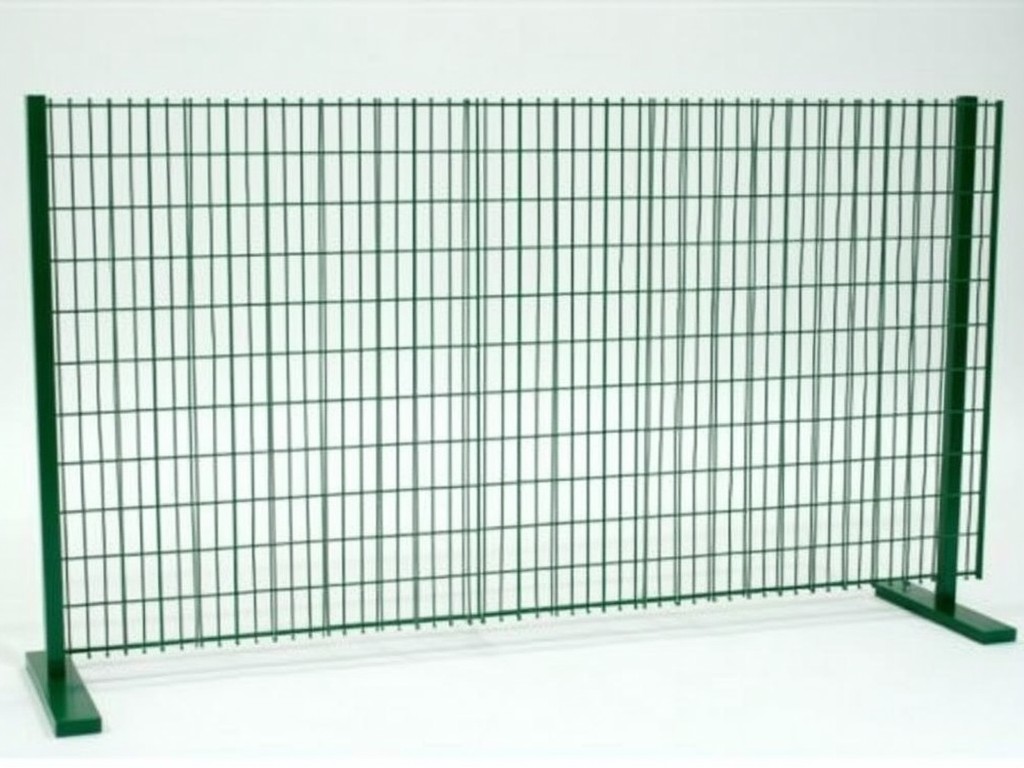
1 2 inch wire mesh fencing Factory Direct
This page details the specifications, manufacturing considerations, and typical applications of 1 inch by 2 inch rectangular wire mesh fencing supplied directly from production facilities. Information is structured to assist engineers and procurement teams in evaluating suitability for industrial perimeter security, machine guarding, and material containment systems.
Mesh Geometry and Structural Characteristics
The designation "1 2 inch" refers to a rectangular opening size measuring 1 inch in the short dimension and 2 inches in the long dimension. This geometry creates a staggered grid pattern where load distribution differs from square mesh of equivalent open area. The aspect ratio influences both flexibility and directional stiffness, which must be considered when specifying support post spacing and tensioning requirements.
Wire diameter is a critical variable not implied by the opening size alone. Commonly available in galvanized steel wire ranging from 1.6mm to 3.0mm diameter, the selection affects tensile strength, impact resistance, and corrosion life. Thicker wire increases rigidity and reduces deflection under load but also raises material cost and installation effort due to higher weight per square meter.
The rectangular shape provides greater resistance to lateral intrusion compared to square mesh of similar open area when force is applied parallel to the 2-inch dimension, as the longer span requires more deformation to create a pass-through gap. This characteristic is often leveraged in applications where directional threat assessment informs design.
Material Selection and Corrosion Protection
Base material is typically low-carbon steel wire conforming to ASTM A641 or equivalent standards for cold-drawn steel. Mechanical properties such as tensile strength (typically 350–550 MPa) and elongation at break influence performance under dynamic load or impact. Suppliers should provide mill test reports upon request to verify compliance.
Corrosion protection is most commonly achieved through hot-dip galvanizing per ASTM A123/A123M, with zinc coating weights ranging from 60 to 275 g/m² depending on environmental exposure. For coastal or industrial atmospheres with high chloride or sulfur dioxide levels, alternative coatings such as Galfan (zinc-aluminum) or polymeric overcoats may be specified to extend service life beyond 15–20 years.
Stainless steel variants (grades 304 or 316) are available for applications requiring non-magnetic properties, chemical resistance, or aesthetic consistency in architectural settings. While significantly more expensive, stainless eliminates the need for coating maintenance and avoids risks associated with zinc runoff in sensitive environments.
Manufacturing Process and Quality Control
Production begins with wire drawing to precise diameter tolerances, followed by weaving on automated looms that interlace longitudinal (warp) and transverse (weft) wires at right angles. The rectangular opening is achieved by varying the spacing between warp and weft wires during weaving—typically 25.4mm for the short pitch and 50.8mm for the long pitch.
Post-weaving, the mesh undergoes galvanizing if not pre-coated. Continuous hot-dip lines ensure uniform coating adhesion and thickness. For roll goods, the mesh is then slit to width and wound onto cores with interleaving paper or film to prevent abrasion during handling. Final inspection includes visual examination for defects, dimensional verification of opening sizes, and pull-off testing of coating adhesion where applicable.
Quality control protocols often reference ISO 9001 standards, with sampling plans based on ANSI/ASQ Z1.4. Critical parameters such as wire diameter, opening dimensions, squareness, and coating weight are monitored at defined intervals. Non-conforming material is segregated and either reworked or scrapped depending on deviation severity.
Typical Industrial Applications
In machine guarding, 1x2 inch mesh provides a balance between visibility and containment, preventing access to moving parts while allowing adequate light and airflow. The rectangular opening reduces the likelihood of finger entrapment compared to square mesh when oriented correctly, as the short dimension limits penetration depth.
For perimeter security at substations, water treatment facilities, or storage yards, the mesh is often welded to intermediate rails and stretched between terminal posts. The 2-inch dimension, when aligned vertically, increases resistance to climbing due to the reduced foothold geometry. Post spacing typically ranges from 2.5 to 3.5 meters, depending on wire gauge and expected load.
In material handling systems, such as conveyor enclosures or bulk storage barriers, the mesh contains particulate matter while permitting ventilation. The open area (approximately 58% for 2.0mm wire) allows dust and heat to dissipate, reducing buildup that could compromise equipment function or create hazardous conditions.
Customization Options
Beyond standard roll widths (commonly 0.9m, 1.2m, and 1.8m), custom slitting to specific dimensions is available to minimize edge waste in fabrication. Lengths can be supplied as continuous rolls (up to 50m for lighter gauges) or cut-to-length panels with finished edges to prevent fraying.
Wire diameter, material grade, and coating type are fully customizable based on project requirements. For example, a 2.5mm stainless steel 316 mesh with electropolished finish may be specified for food processing environments requiring frequent washdowns and resistance to acidic cleaning agents.
Additional value-added services include panel framing with steel or aluminum edges, pre-punching for mounting hardware, and assembly into welded or knitted security barriers. These options reduce on-site labor and improve installation consistency, particularly for large-scale projects requiring hundreds of linear meters.
Comparison: 1x2 Inch Mesh vs. Alternative Geometries
| Characteristic | 1x2 Inch Rectangular Mesh | 1x1 Inch Square Mesh | 2x2 Inch Square Mesh |
|---|---|---|---|
| Open Area (approx., 2.0mm wire) | 58% | 50% | 68% |
| Minimum Intrusion Diameter | 25.4mm (short dimension) | 25.4mm | 50.8mm |
| Directional Stiffness | Higher along 25.4mm axis | Uniform | Uniform |
| Typical Use Case | Directional security, machine guarding | General purpose, small part containment | Perimeter fencing, animal enclosures |
| Weight per m² (2.0mm wire) | ~4.8 kg | ~5.6 kg | ~3.9 kg |
Installation Considerations
Proper tensioning is critical to prevent sagging and maintain structural integrity. For rolls, installation typically begins at a terminal post, with the mesh unrolled and secured using staples, hog rings, or welded attachments to intermediate rails. Tension should be applied evenly to avoid distortion of the rectangular openings, which could reduce effectiveness.
When used in panels, framing members should be selected to match the mesh’s mechanical properties. Overly rigid frames can induce stress concentrations at connection points, while excessive flexibility may allow vibration-induced fatigue. Galvanized or powder-coated steel angles are common choices for compatibility with corrosion protection systems.
Expansion and contraction due to temperature fluctuations must be accommodated, particularly in long runs. Installation guidelines often recommend leaving 10–15mm of slack per 10 meters of length to prevent buckling in cold weather or over-tensioning in heat. Fasteners should allow for limited movement unless the design explicitly accounts for thermal load.
Ordering and Lead Times
Factory direct supply typically involves quotation based on detailed specifications: wire diameter, material grade, coating type, roll width, length, and any value-added processing. Providing CAD drawings or sketches for custom panels helps ensure accurate pricing and reduces the risk of miscommunication.
Standard galvanized mesh in common widths is often available from stock with lead times of 5–10 business days. Custom materials, non-standard widths, or coated stainless variants may require 3–6 weeks for production, depending on raw material availability and coating line scheduling. Expedited options are available for critical projects at additional cost.
Minimum order quantities vary by product configuration. Rolls typically start at 50 linear meters per size, while custom panels may have minimums based on material utilization efficiency. Sampling is available upon request—small sections (e.g., 30x30cm) can be sent for approval before full production, with freight charges usually borne by the requester.
For technical consultation, specification support, or to request a quotation for 1x2 inch wire mesh fencing, please provide your project requirements including dimensions, material preferences, coating needs, and intended application. Our engineering team will review your inputs and respond with detailed options, lead times, and pricing.
Submit Inquiry
More Products

Send Inquiry
If you are interested in our products, leave your information here and we will be in touch shortly.