3 Ft X 100 Ft Black Wire Backed Silt Fence
Silt fence is a temporary sediment control barrier used on construction sites to prevent soil erosion and protect waterways from suspended solids carried by stormwater runoff. This specific
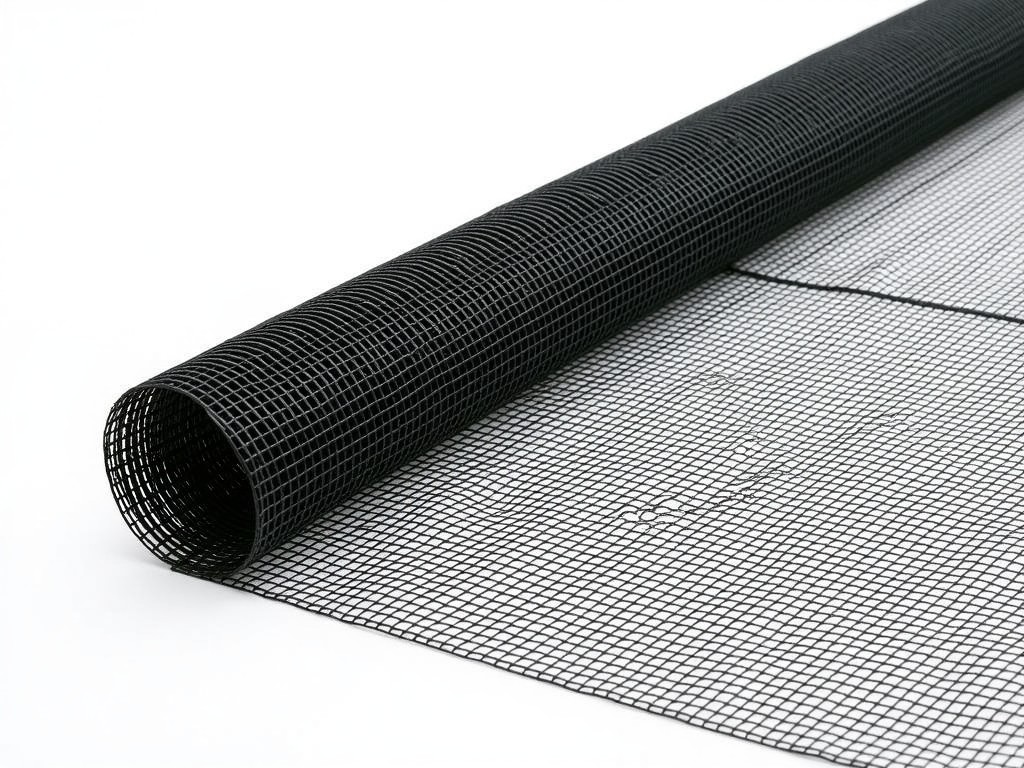
3 ft x 100 ft Black Wire Backed Silt Fence
Silt fence is a temporary sediment control barrier used on construction sites to prevent soil erosion and protect waterways from suspended solids carried by stormwater runoff. This specific configuration—3 feet in height and 100 feet in length with a black polypropylene geotextile fabric backed by a wire mesh reinforcement—is engineered for moderate to high-flow sediment retention applications where durability and longevity under UV exposure are critical.
Material Composition and Structural Design
The geotextile fabric is manufactured from stabilized polypropylene filaments, woven into a uniform slit-film or monofilament structure with an apparent opening size (AOS) typically ranging from 0.21 mm to 0.42 mm, allowing controlled water permeability while retaining sediment particles larger than 0.05 mm. The black coloration provides enhanced UV resistance compared to standard fabrics, slowing photodegradation and extending functional lifespan in direct sunlight exposure. The wire backing consists of 14-gauge steel wire mesh with 2-inch by 4-inch grid spacing, thermally fused or mechanically bonded to the geotextile along its full length to prevent separation under hydrostatic load and installation stress.
Performance Characteristics
This silt fence configuration is designed to withstand sustained water flow velocities up to 5 feet per second and temporary surge loads without catastrophic failure, based on standard ASTM D6461 testing protocols for sediment retention efficiency. The wire reinforcement significantly increases tensile strength in the machine direction—typically exceeding 300 lb/ft—compared to non-reinforced fabrics, which reduces sagging and maintains barrier integrity when impounding water behind the fence. Flow-through rate remains sufficient to prevent hydraulic overtopping under typical rainfall intensities, with permeability values generally between 0.1 and 0.3 cm/sec depending on fabric specification and sediment loading.
Installation Requirements and Best Practices
Proper installation is critical to performance; the fence must be trenched to a minimum depth of 6 inches with the bottom flap of the geotextile laid laterally upstream and compacted to prevent undercutting. Posts—typically 1.25-inch diameter wooden stakes or 1.5-inch steel T-posts—should be spaced no more than 8 feet apart on center and driven to a depth of at least 24 inches to resist overturning moments from hydrostatic pressure. The wire-backed edge must face the direction of water flow to provide structural support where sediment accumulation creates the highest load, and overlapping adjacent sections by at least 6 inches ensures continuity of the barrier system.
Typical Applications
This product is commonly specified for sediment control on residential subdivision developments, highway widening projects, commercial site preparation, and utility corridor installations where disturbed soil areas exceed 5,000 square feet and sheet flow concentrations necessitate linear barriers. It is particularly effective in perimeter control around stockpiles, along contour lines on slopes steeper than 3:1, and at storm drain inlets where drop inlet protection alone is insufficient. The 3-foot height provides adequate freeboard for most small-to-midway drainage swales, while the 100-foot roll length minimizes seams in long linear runs, reducing potential failure points.
| Parameter | Typical Value | Test Standard / Reference |
|---|---|---|
| Geotextile Material | UV-stabilized polypropylene | ASTM D4355 |
| Apparent Opening Size (AOS) | 0.21–0.42 mm | ASTM D4751 |
| Wire Backing Gauge | 14-gauge steel | ASTM A641 |
| Mesh Opening Size | 2 in × 4 in | Manufacturer specification |
| Tensile Strength (MD) | >300 lb/ft | ASTM D4632 |
| Flow Through Rate | 0.1–0.3 cm/sec | ASTM D4491 |
| UV Stability (Retained Strength) | ≥70% after 500 hrs | ASTM D4355 |
Quality Control and Manufacturing Considerations
Manufacturing consistency is verified through inline monitoring of fabric weight, tensile elongation, and wire bond integrity during production. Each roll is labeled with batch-specific identification enabling traceability to resin lot, extrusion parameters, and bonding process conditions. Visual inspections confirm uniform wire attachment without gaps or delamination, and dimensional checks verify nominal height and length tolerances within ±2%. While third-party certifications such as DOT or EPA approvals are project-dependent, the materials used comply with standard specifications for geotextile sediment control barriers referenced in FHWA and EPA stormwater management guidelines.
For project-specific requirements such as custom roll lengths, alternative wire gauges, or fabric types with higher filtration efficiency, technical consultation is recommended to ensure compatibility with site hydrology, soil type, and expected sediment load. Proper selection and installation reduce the risk of regulatory non-compliance, environmental damage, and costly rework associated with inadequate sediment control measures.
More Products

Send Inquiry
If you are interested in our products, leave your information here and we will be in touch shortly.