358 Security Anti Climb Fence Mesh
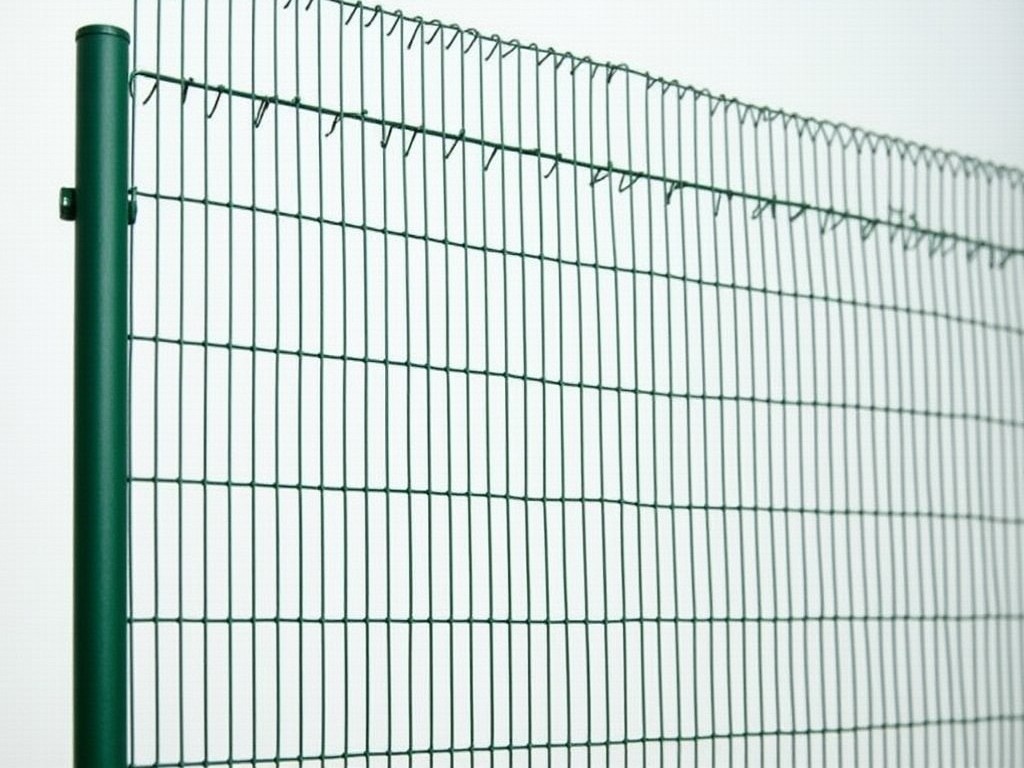
358 security anti-climb fence mesh is a welded wire panel system defined by its specific aperture dimensions: 76.2 mm x 12.7 mm (3" x 0.5"). This geometry creates a rigid grid that prevents hand and
358 Security Anti-Climb Fence Mesh
358 security anti-climb fence mesh is a welded wire panel system defined by its specific aperture dimensions: 76.2 mm x 12.7 mm (3" x 0.5"). This geometry creates a rigid grid that prevents hand and foot holds while maintaining structural integrity under impact loads. The designation "358" refers to the mesh opening size in millimeters—3 inches by 0.5 inches—engineered to deter climbing attempts without compromising visibility or airflow. Unlike standard chain-link or larger mesh fencing, the tight vertical spacing eliminates footholds, making unauthorized scaling impractical even for determined intruders.
Material Composition and Corrosion Protection
The base material is typically low-carbon steel wire, selected for its balance of tensile strength and weldability. Vertical wires are usually 4 mm diameter, while horizontal wires are 3 mm, creating a reinforced structure where the thicker verticals resist bending and the horizontals maintain aperture stability. To ensure longevity in outdoor environments, the mesh undergoes hot-dip galvanization per ISO 1461, forming a zinc coating typically between 55–85 μm thick. For enhanced durability in harsh climates—such as coastal or industrial zones—a polymer powder coating (often polyester or PVC) is applied over the galvanized layer, adding 100–150 μm of UV-stable protection.
Structural Performance and Load Resistance
The 358 mesh resists deformation through its welded joint design, where each intersection is electrically fused to create a monolithic panel. Unlike woven or knotted meshes, welding prevents progressive unraveling if a single wire is cut. Typical panels withstand static loads exceeding 1.5 kN per vertical wire without permanent deflection, and impact tests show resistance to dynamic forces equivalent to a 50 kg object striking at 7 m/s—simulating a forced breach attempt. The rigid frame, usually formed from 25x25x2 mm or 30x30x2.5 mm steel tubing bent into a U-channel, reinforces the panel edges and provides mounting points for posts.
Standard Dimensions and Panel Configuration
Panels are manufactured to standard heights ranging from 1.2 m to 3.0 m in 0.6 m increments, accommodating site-specific security levels and terrain variations. Widths are typically 2.5 m or 3.0 m, designed to span between posts without sagging while allowing efficient handling during installation. The frame depth varies by application: lighter-duty installations may use 25 mm channels, while high-risk sites—such as correctional facilities or substations—often specify 30 mm or 40 mm frames with reinforced corner gussets. All panels are prefabricated to exact tolerances, ensuring vertical alignment and consistent aperture geometry across the installation.
Installation Methodology and Post Systems
Installation relies on steel posts set in concrete foundations, with spacing matching panel width—usually 2.5 m or 3.0 m center-to-center. Posts are typically C-channel or H-beam sections, ranging from 60x60x2.5 mm to 100x100x3.5 mm, selected based on wind load, panel height, and soil conditions. Panels are secured to posts using proprietary anti-tamper brackets that clamp the frame without welding, allowing for future adjustment or replacement while preventing removal from the outside. These brackets often incorporate shear-off bolts or one-way screws that resist standard tools, increasing the time and effort required for unauthorized access.
Comparison with Alternative Perimeter Solutions
Compared to chain-link fencing, 358 mesh offers superior climb resistance due to its small vertical aperture, though it requires more rigid posts and precise installation. Unlike palisade or spear-top fencing, it maintains a low visual profile while providing equivalent deterrence—critical in urban or aesthetically sensitive environments. Concrete walls offer higher impact resistance but lack flexibility, drainage, and ease of repair; 358 mesh allows for ground adaptation and modular replacement. For high-security zones needing both detection and delay, it is frequently integrated with buried sensor cables or microwave barriers mounted directly to the frame.
Applications Across Security Sectors
This mesh is widely deployed in substations and power generation facilities where preventing unauthorized access to energized equipment is paramount—its non-conductive coating options reduce electrical risk. Correctional institutions use it for perimeter and internal zone separation due to its resistance to cutting and climbing. Data centers and telecommunications hubs specify 358 mesh to comply with physical security standards like ISO 27001, protecting critical infrastructure without obstructing camera views or environmental sensors. It is also common in military storage, government compounds, and high-value logistics centers where a balance of visibility, durability, and delay is required.
Customization Options for Project Requirements
Wire diameters can be adjusted—increased to 5 mm vertical and 4 mm horizontal for high-impact zones, or reduced for temporary installations where weight and cost are factors. Aperture size remains fixed at 76.2x12.7 mm to preserve the anti-climb function, but panel dimensions can be tailored to uneven terrain or obstructions. Coating systems are selectable: standard hot-dip galvanized for inland environments, galvanized-plus-powder-coated for aggressive atmospheres, or stainless steel (grade 304 or 316) for marine or chemical exposure. Frame profiles, post types, and fastening hardware are all configurable based on engineering calculations for wind speed, seismic activity, and expected load cycles.
Quality Control and Manufacturing Consistency
Production begins with wire drawing to precise tolerances, followed by straightening and cutting to length. Welding uses automated resistance machines calibrated to deliver consistent fusion without burn-through or weak spots—each joint is inspected via statistical sampling for tensile strength exceeding 80% of the parent wire. Post-welding, panels undergo coating adhesion tests (ASTM D3359) and thickness measurements via magnetic or eddy-current gauges. Final inspection includes dimensional verification of aperture size, squareness, and frame flatness, ensuring panels stack correctly and install without forcing. All measurements are traceable to calibrated equipment, with records retained for project audits.
Environmental and Lifecycle Considerations
The steel content is fully recyclable at end-of-life, supporting circular economy principles in infrastructure projects. Galvanized coatings provide 20–50 years of service life in rural to moderate urban environments before maintenance is needed, while powder-coated systems extend this to 30–70 years depending on UV exposure and coating thickness. Unlike some alternatives, 358 mesh does not require regular tensioning or realignment after installation if properly mounted, reducing long-term operational burden. Maintenance typically involves visual inspection for coating damage and occasional cleaning—no lubrication or part replacement is needed under normal conditions.
Technical Data Summary
| Parameter | Typical Value | Notes |
|---|---|---|
| Mesh Aperture | 76.2 mm x 12.7 mm (3" x 0.5") | Fixed geometry for anti-climb performance |
| Vertical Wire Diameter | 4.0 mm (standard) | Customizable from 3.0–5.0 mm |
| Horizontal Wire Diameter | 3.0 mm (standard) | Customizable from 2.5–4.0 mm |
| Frame Section | 25x25x2 mm or 30x30x2.5 mm U-channel | Larger sizes available for high-load applications |
| Zinc Coating (Galvanized) | 55–85 μm | Per ISO 1461; thicker available upon request |
| Powder Coating Thickness | 100–150 μm | UV-stable polyester or epoxy-polyester |
| Standard Panel Height | 1.2 m – 3.0 m | In 0.6 m increments |
| Standard Panel Width | 2.5 m or 3.0 m | Custom widths available |
| Post Spacing | 2.5 m or 3.0 m | Matches panel width |
| Design Wind Load | Up to 2400 Pa | Dependent on post size and foundation |
For project-specific configurations, material certifications, or installation guidance, contact our technical team to discuss your perimeter security requirements. We provide detailed engineering support to ensure the 358 mesh system meets your site’s structural, environmental, and operational demands.
More Products

Send Inquiry
If you are interested in our products, leave your information here and we will be in touch shortly.